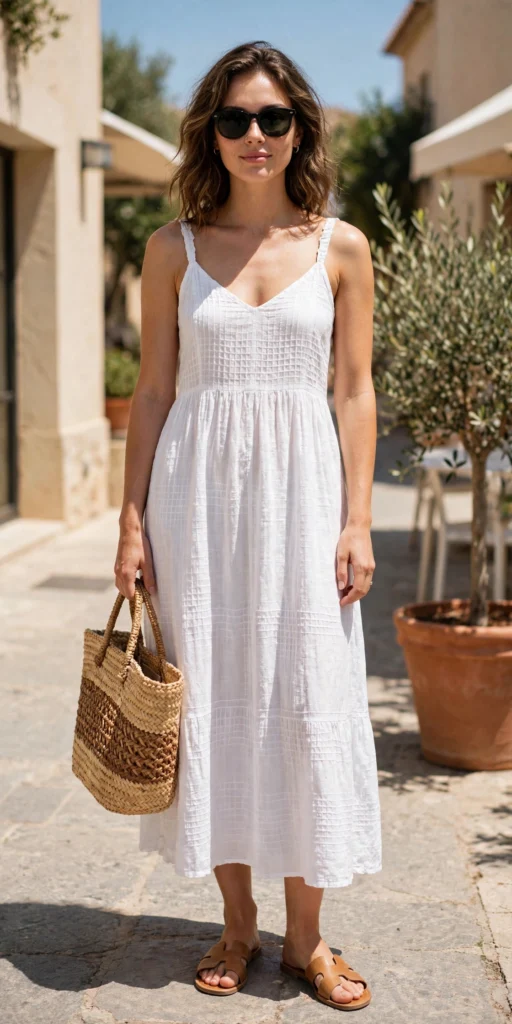
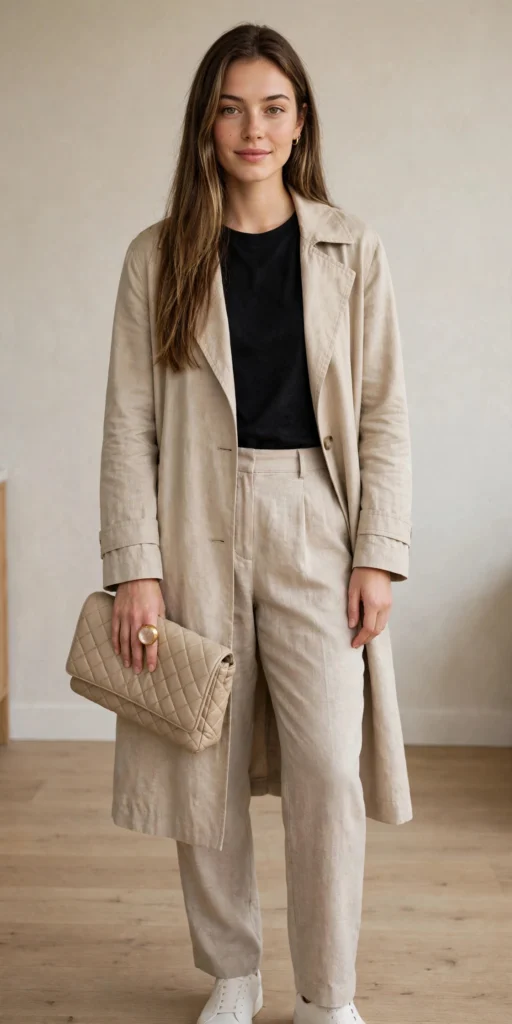
A hat looks polished when three things line up: it fits your head, it suits your face shape and your outfit’s proportions, and your hair works with it rather than fighting it. Get those three right and almost any hat style can look intentional. Get one wrong — a hat that sits too high, a brim that swallows your face, hair flattened into a strange shape underneath — and the whole outfit feels off, even if the hat itself is beautiful.
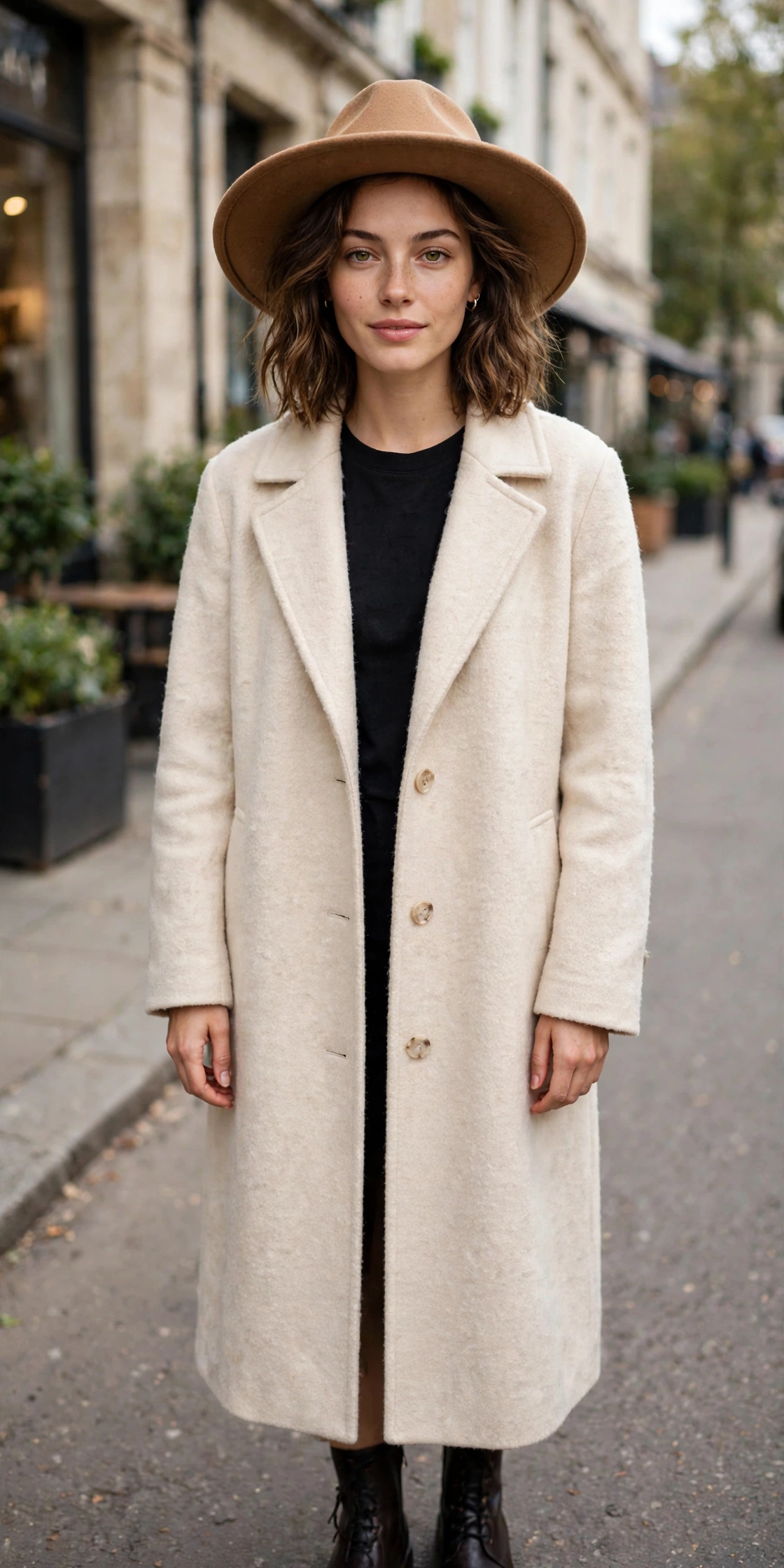
Learning how to wear a hat for women is mostly about fit and balance, not about owning an expensive hat. A well-fitting straw hat from a summer market beats a designer wide-brim that perches on top of your head like a lid. This guide covers the fitting rules, the face-shape starting points, hair fixes, and outfit pairings that make a hat look like part of your look instead of an afterthought.
Start with fit: where a hat should sit
A hat should sit level on your head, not tilted back like a halo and not pulled down over your eyebrows. For most styles, the inner band should rest about a finger’s width above your eyebrows and ears, with the hat feeling snug enough to stay on in a light breeze but not so tight it leaves a red line. If you can shake your head gently without the hat sliding, the fit is close. If it slides at the slightest movement, it is too loose; if it pinches, it is too small.
Measure your head before buying if you can: wrap a soft tape around your head just above your eyebrows and ears, where the hat will sit. That number, in inches or centimeters, matches the size charts most hat brands use. Between sizes, size up and use sizing tape inside the band — a strip of foam or fabric tape that takes up a little space — rather than squeezing into the smaller size. A hat that is slightly loose with tape is comfortable all day; a hat that is too tight gives you a headache by lunch.
The crown matters as much as the band. A crown that is too tall makes your head look long; a crown that is too short can look squashed. As a starting point, the crown height should roughly balance your face length: taller crowns suit longer faces, shorter crowns suit rounder or shorter faces. Try the hat on with your normal hairstyle, not with hair freshly washed and flat if you usually wear volume, because hair changes how a hat sits by a surprising amount.
Wind is the practical enemy of polished hat-wearing. For breezy days, choose a hat with a chin cord or an inner drawstring, or use a small hat pin through the band and your hair. A hat that you keep grabbing at looks nervous; a hat that stays put looks confident. If you love a wide-brim style but live somewhere windy, save it for calm days and choose a closer-fitting style — a bucket hat, a beret, or a cap — when the wind picks up.
Face shape: useful starting points, not strict rules
Face-shape advice works best as a starting point for trying things on, not as a law. Your features, hair, and personal taste matter more than any chart. Still, these starting points help you narrow down a shop full of hats:
- Oval face: most styles work. Wide brims, fedoras, cloches, and berets all tend to balance well. Start with what you like and check proportions in the mirror.
- Round face: hats with height — a fedora with a pinched crown, a taller cloche, or a wide-brim with an angular shape — tend to lengthen the face. Avoid very round, flat hats that echo the face shape, and avoid tiny hats that sit high on the head.
- Square face: softer, rounder shapes — floppy brims, rounded cloches, berets worn to one side — tend to soften a strong jaw. Avoid very angular, boxy crowns that repeat the jawline.
- Long or oblong face: wider brims and lower crowns tend to balance length. A wide-brim sun hat or a fedora with a shorter crown works well. Avoid very tall, narrow crowns that add more length.
- Heart-shaped face: medium brims and hats that sit straight rather than tilted tend to balance a wider forehead and narrower chin. Bucket hats, fedoras, and berets are good starting points.
Try hats on in front of a full-length mirror, not just a small shop mirror. Step back and look at your whole silhouette: the hat should relate to your shoulders and your outfit’s volume. A huge brim with a slim, fitted outfit can look top-heavy; a tiny hat with a voluminous coat can disappear. Balance is the goal, and it is easier to see from a few feet away than from six inches.
Hair under a hat: the part most guides skip
Hat hair is real, and it is the reason many women leave hats in the closet. The fix is to style your hair for the hat, not to hope the hat preserves your hairstyle.
For long hair, a low bun, a low braid, or loose waves worn under the hat hold up best. High buns and high ponytails push the hat up and make it sit like a lid — avoid them unless the hat is a cap with a ponytail opening. For a wide-brim hat, wear hair down or in a low, loose style so the brim has room to sit level. For a beret, side-swept hair or a low side part works well, since berets are usually worn tilted to one side.
For short hair, a little texture product before putting the hat on helps the hair spring back when the hat comes off. Keep a small comb or a travel brush in your bag for a quick fix after removing the hat indoors. For curly hair, a silk or satin lining inside the hat — or a silk scarf worn under the hat — reduces frizz and friction, and a looser hat fit prevents curls from being crushed flat.
The hat-on, hat-off moment deserves a plan. If you will take the hat off indoors, choose a hairstyle that survives: loose waves, a low braid you can undo, or a style with enough texture that a little flattening reads as intentional. If the hat stays on all day, as with a sun hat outdoors, hair matters less — focus on comfort and sun coverage instead.
Matching the hat to the outfit
A hat should echo something in your outfit — a color, a texture, or a level of formality — without matching everything exactly. A camel felt hat with a camel coat looks deliberate; a camel hat with a neon outfit looks like a clash unless that contrast is the point. Neutral hats (black, camel, navy, grey, natural straw) are the easiest to pair widely, and they are the best first investment if you are building a hat habit.
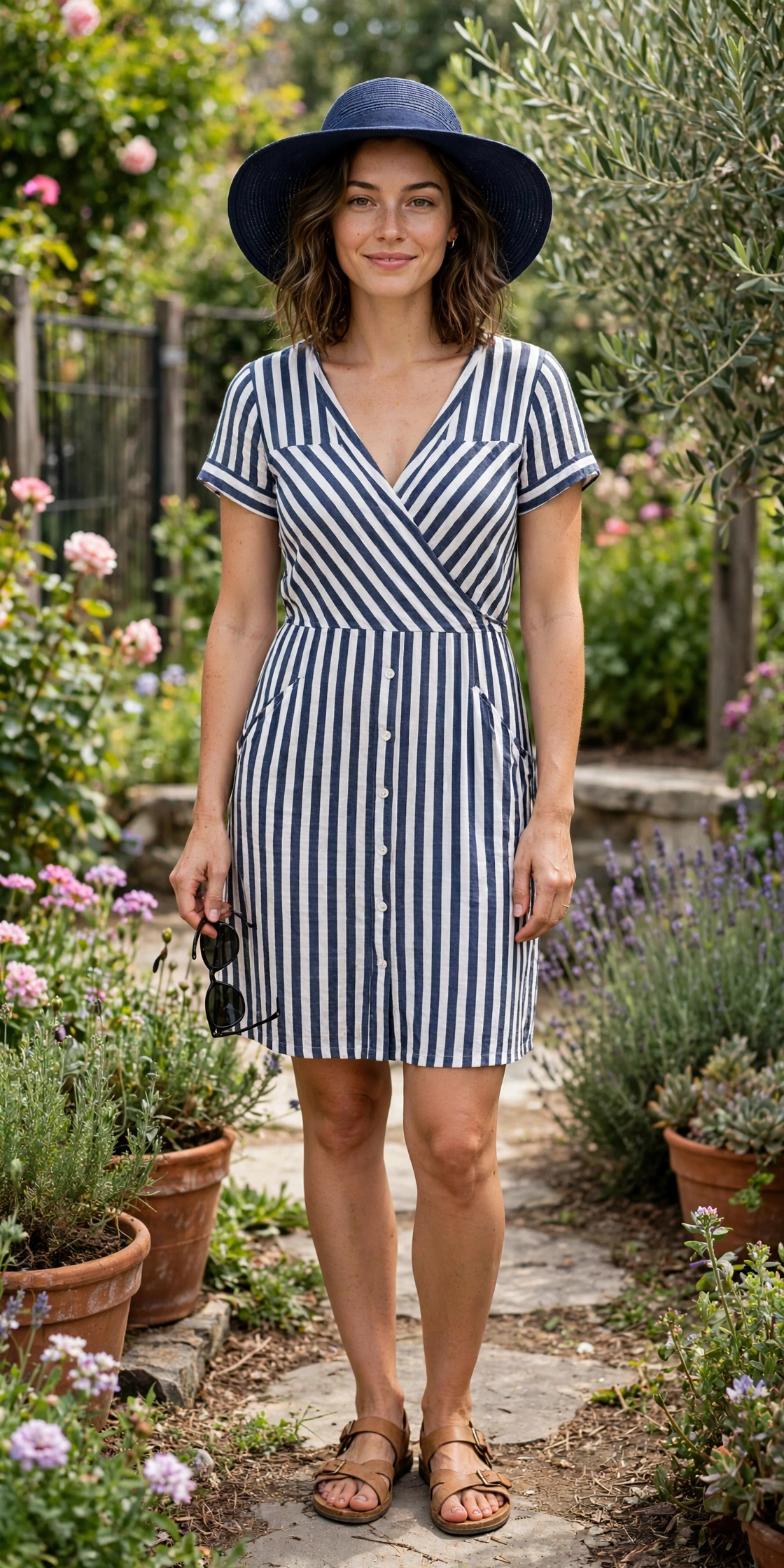
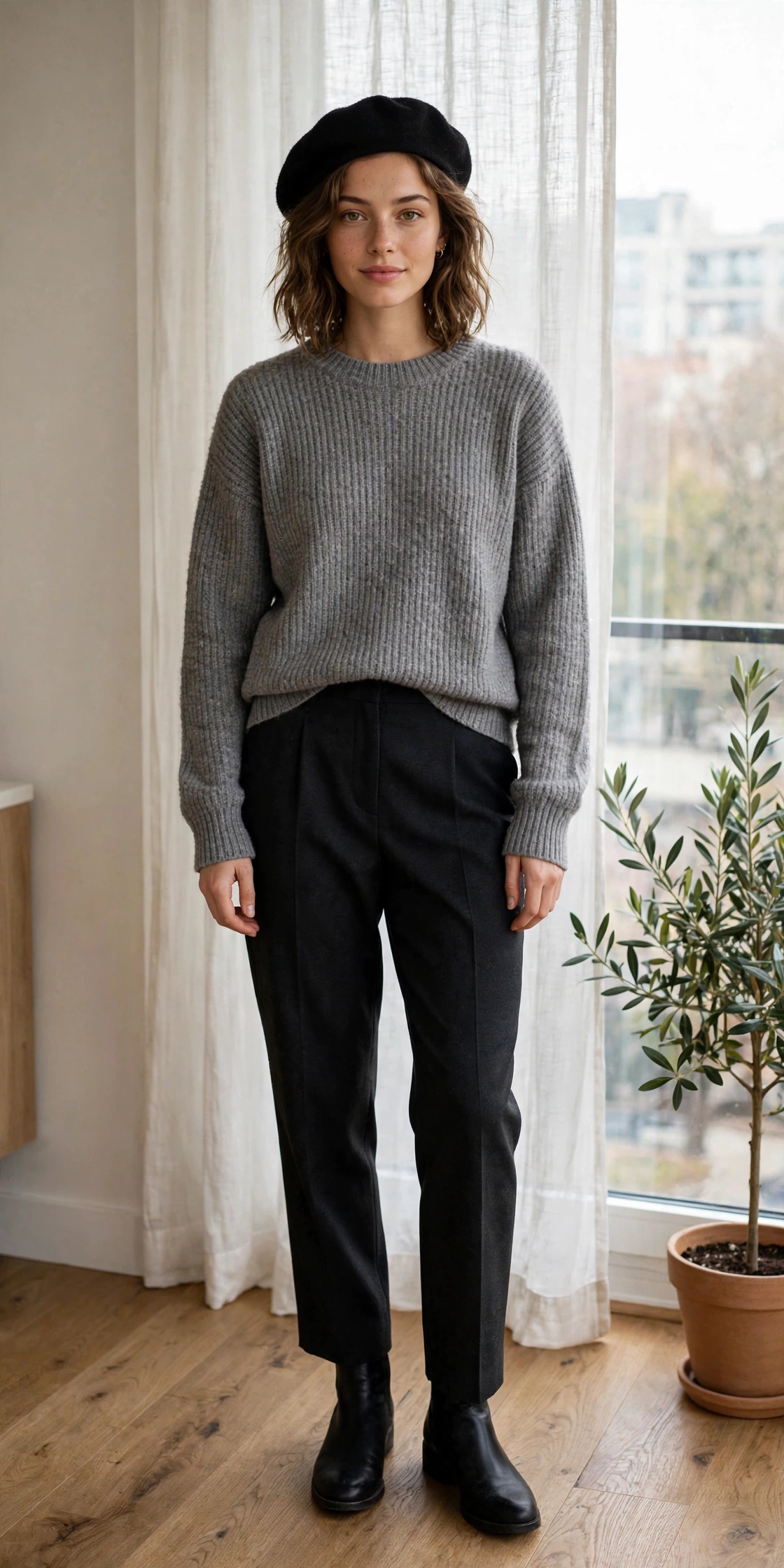
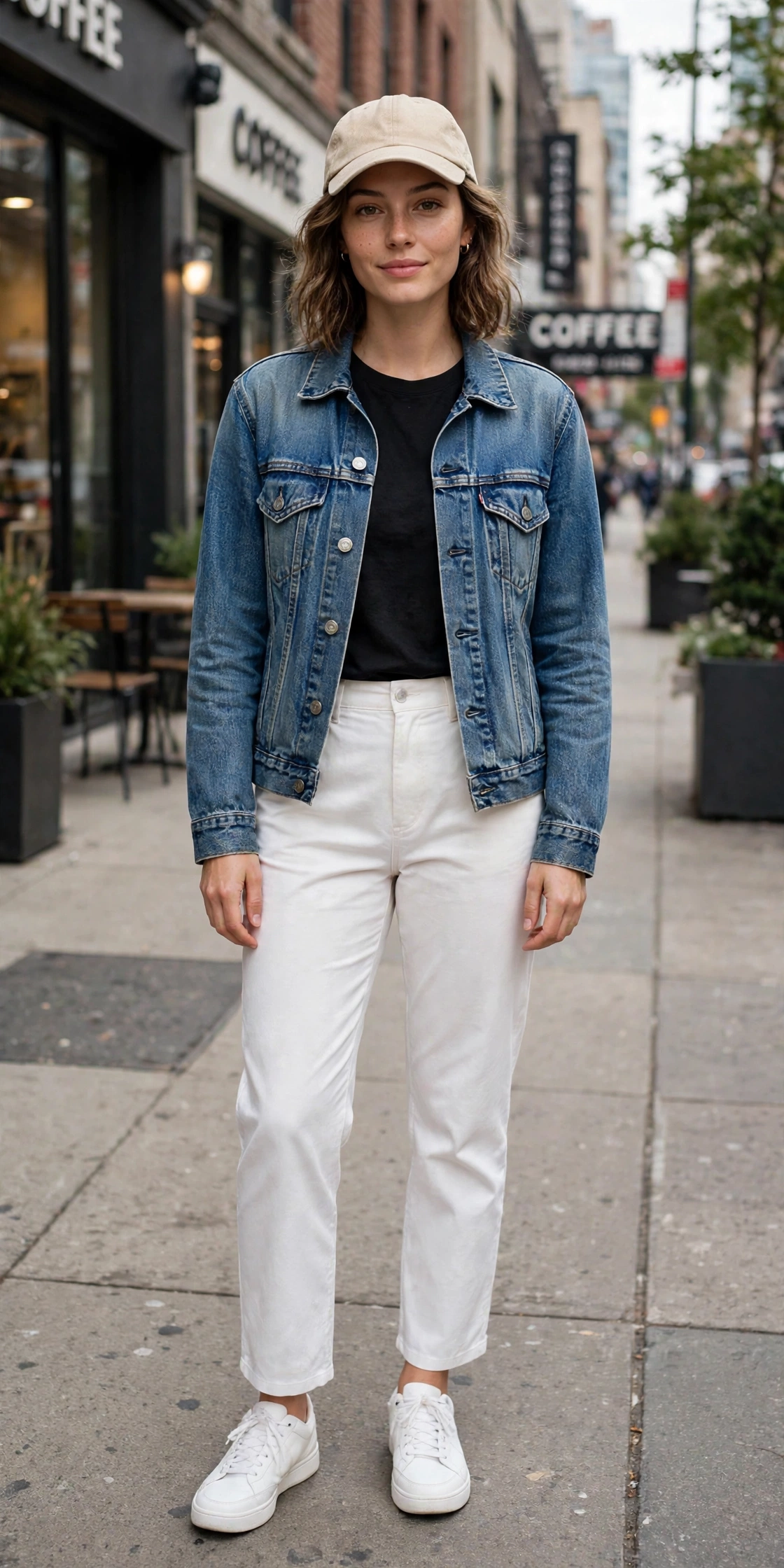
Formality matters. A structured felt fedora suits coats, tailored trousers, and boots. A straw sun hat suits summer dresses, linen, and sandals. A beret suits sweaters, coats, and anything with a slightly Parisian feel. A baseball cap suits denim, casual dresses, and athleisure — and it can dress down a smarter outfit if that is the effect you want. Mixing levels deliberately works (a cap with a blazer is a real, current look), but it works when the rest of the outfit is clean and simple, not when everything is competing. For office outfits, see how to style a blouse for the office.
Proportions are the quiet rule. A wide brim pairs well with longer coats and wider trousers, because the volumes balance. A small hat — a beret, a cloche, a cap — pairs well with fitted outfits, because it does not overwhelm them. If you are petite, a very wide brim can swallow your frame; try a medium brim first and check the full-length mirror. If you are tall, you can carry a wider brim easily, and a tiny hat can look lost — go a little bolder.
Hat styles and when each one shines
Wide-brim sun hat. Best for sun protection and summer outfits. Look for a brim of at least three inches for real shade, and a chin cord for wind. Wear it level, with hair down or in a low style, and keep the rest of the outfit simple so the brim is the statement.
Fedora. The most versatile structured hat. Works in felt for cooler months and straw for summer. Wear it straight or with a slight tilt, with the front of the brim a little lower than the back — the classic fedora angle. Pairs with coats, blazers, jeans, and boots.
Beret. Soft, unstructured, and worn tilted to one side, usually with the beret sitting back on the head rather than pulled forward. It suits sweaters, coats, and dresses, and it is forgiving on hair because it does not crush everything underneath. Choose wool felt for winter, cotton or straw blends for warmer months.
Bucket hat. Casual, close-fitting, and practical. The brim is short and slopes down, so it shades the face without catching wind. Works with denim, casual dresses, and outdoor outfits. Keep it simple — a plain or subtly patterned bucket hat pairs with more than a loud print.
Cloche. A close-fitting, bell-shaped hat that sits low on the forehead. It suits vintage-inspired outfits and shorter hairstyles, and it looks best worn low, almost to the eyebrows, with the rest of the outfit neat and fitted.
Baseball cap. The casual default. For a polished cap look, choose a clean, plain cap in a neutral color, wear it straight or slightly back, and pair it with a tidy outfit — a cap with messy, oversized clothes reads sloppy, while a cap with a good jacket and clean jeans reads intentional. Curved brims suit most faces; flat brims suit a more streetwear look.
Beanie. For cold weather, not sun. A beanie should cover the ears without pulling down over the eyebrows, and a folded brim adds structure. Pair it with coats and scarves, and keep hair loose or in a low braid underneath to avoid a flattened top.
Polished-hat checklist: the mirror test
Before you leave the house, run this quick check in a full-length mirror in daylight if possible:
- The hat sits level, about a finger above your eyebrows, and does not slide when you move your head.
- The brim does not hide your eyes or cast your whole face into shadow — you should be able to see your face clearly.
- The hat’s volume balances your outfit: not top-heavy, not invisible.
- Your hair looks intentional under and around the hat, not squashed or sticking out in odd directions.
- The hat echoes something in your outfit — color, texture, or formality — without matching everything.
- You can walk, sit, and get in and out of a car without constantly adjusting it.
If one item fails, fix that one thing rather than changing the whole outfit. Most hat problems are fit problems, and fit problems have simple fixes: sizing tape, a different hairstyle, or a slight change in angle.
Common mistakes and easy fixes
Wearing the hat too high is the most common mistake — it looks like the hat is balancing rather than worn. Push it down until the band sits firmly, and check from the side, not just the front. Wearing a hat that is too small is the second: if the band leaves a deep line or the hat perches on top of your hair, size up. Ignoring the weather is the third: a felt hat in summer heat or a straw hat in rain both look and feel wrong, so match the material to the season. And forgetting sun protection is a practical miss — a fashion hat with a tiny brim does not protect your face, so if sun is the point, choose a brim that actually shades.
Finally, wear the hat with confidence and then stop thinking about it. A hat draws the eye, and the most polished hat-wearers are the ones who put it on, check the mirror once, and get on with their day. If you spend the day tugging at it, the hat owns you; if you forget about it, you own the look.
How to wear a hat for women on holiday and in photos
Holidays are where hats earn their keep, and they are also where hat mistakes show up in photos. For a beach or sightseeing holiday, pack one versatile hat rather than three fussy ones: a medium-brim straw hat or a packable bucket hat covers sun, photographs well, and survives a suitcase better than a wide, stiff brim. When you are learning how to wear a hat for women in photos, angle matters — tilt a wide brim slightly up at the front so your face is visible, rather than letting the brim shadow your eyes. Stand in open shade rather than harsh direct sun for photos, so the hat shades you without turning your face dark. And take one test photo before the real ones: a quick check on your phone shows whether the hat sits level, whether your hair looks intentional, and whether the brim is hiding your face — all fixes that take ten seconds before the photo and cannot be fixed after it.
Building a small hat collection
You do not need many hats. Three well-chosen ones cover most of life: a neutral felt fedora or beret for cooler months, a straw sun hat for summer, and a casual cap or bucket hat for active days. Buy the neutral, versatile one first, wear it until you know what you like about it and what you would change, and only then add a second style. Quality matters more than quantity with hats, because a well-made hat holds its shape, fits comfortably for hours, and looks polished year after year, while a cheap hat that loses its shape after one season looks tired no matter how stylish it was at first.
How to wear a hat for women without getting hat hair?
Style your hair for the hat: low buns, low braids, or loose waves hold up best, and high buns push hats up. Use a little texture product for short hair, a silk lining or scarf for curly hair, and carry a small brush for a quick fix after taking the hat off indoors.
Should a hat sit above the eyebrows or on them?
About a finger’s width above the eyebrows is the usual starting point for most styles, with cloches worn a little lower. The hat should sit level and feel snug without pinching, and you should be able to see your face clearly under the brim.
What hat suits a round face best?
Hats with height and some angles — fedoras with a pinched crown, taller cloches, or structured wide-brims — tend to lengthen a round face. Avoid very round, flat hats that repeat the face shape, and try several styles on in a full-length mirror rather than trusting a chart alone.
Can you wear a hat indoors and still look polite?
It depends on the setting. Sun hats and caps usually come off indoors, especially in restaurants, theaters, and places of worship. Fashion hats like berets and cloches are more often kept on at social events. When in doubt, watch what others do, and remove the hat if it blocks someone’s view.
How do you keep a wide-brim hat on in wind?
Choose a hat with a chin cord or inner drawstring, use a hat pin through the band and your hair, or pick a closer-fitting style on windy days. A hat you keep grabbing at looks nervous; a secure hat looks confident, so fit and fastening matter as much as style.
Does a hat have to match your outfit exactly?
No. It should echo something — a color, a texture, or a level of formality — without matching everything. Neutral hats in black, camel, navy, or natural straw pair with the widest range of outfits and are the best first investment.