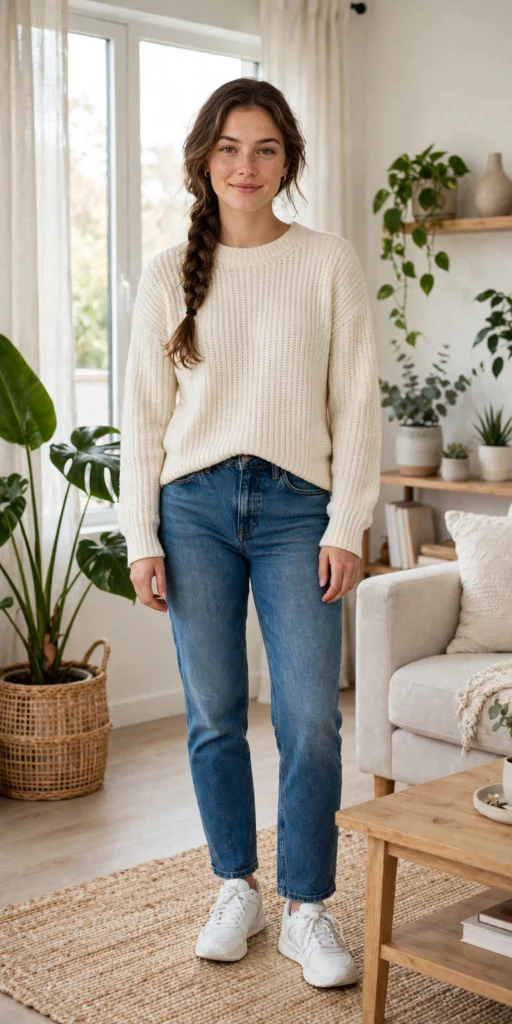
A black mohair sweater is one of the easiest cold-weather pieces to own, because it does three jobs at once: it looks polished, it feels soft against the skin, and it warms you without the bulk of a heavy coat. If you have ever pulled on a thick knit and felt instantly shapeless, this is the opposite problem solved. Mohair has a light, airy halo — that soft fuzz around the yarn — so the fabric holds warmth in tiny air pockets while staying surprisingly light on the body. The black color keeps it neutral, which means it pairs with almost everything already in your closet, from jeans to skirts to trousers you wear to work.
That combination is why this piece works for so many different days. Wear it on a quiet weekend with jeans and boots, and it reads relaxed. Add a collared shirt underneath and a structured coat on top, and the same sweater can go to the office. The trick is not buying the fanciest version. It is choosing the right fit, the right weight, and the right care routine, then styling it in ways that keep the soft texture from looking messy. This guide walks through all of that, step by step, with checks you can do in your own mirror before you leave the house.
Why this knit feels different from a regular wool sweater
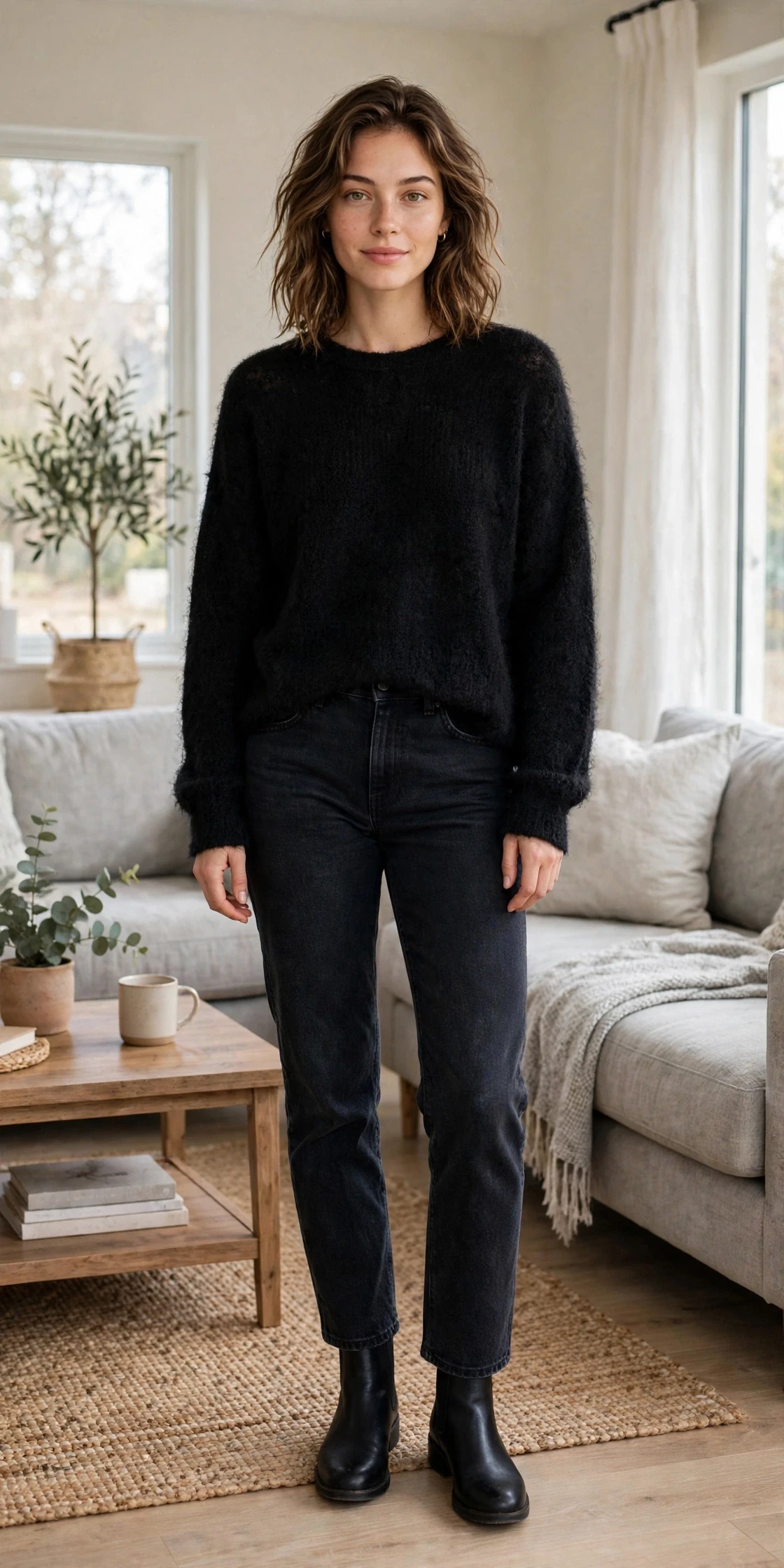
Regular wool can feel dense and a little stiff, especially in a tight gauge. Mohair comes from the Angora goat, and its fibers are longer, smoother, and lighter. When those fibers are brushed, they create the fuzzy surface people associate with this kind of knit. That fuzz is not just decoration. It traps air, and trapped air is what keeps you warm. So a thin, fluffy knit can feel as warm as a much heavier one, which is useful when you are moving between a cold street, a heated office, and a warm car.
There is a trade-off, and it helps to know it up front. The same soft surface that makes the sweater feel luxurious also picks up lint, pet hair, and stray threads more easily than a smooth knit. It can also shed a little when it is new. That shedding usually settles after the first few wears and a gentle wash. If you keep a lint roller by the door and store the sweater folded rather than hung, you will deal with most of the fuss in under a minute a day.
Weight matters more than brand names here. A very chunky version will add visual width at the shoulders and chest, which can be lovely if you want a cozy, oversized look, but it can overwhelm a petite frame or a tailored outfit. A fine-gauge version drapes closer to the body and layers neatly under a coat. A mid-weight version sits in between: warm enough for a cold day on its own, still slim enough to fit under a jacket without bunching at the elbows. If you can only buy one, start with mid-weight. You can test the weight in a store by holding the sweater up to the light and by feeling how much it weighs in your hands. A good mid-weight piece feels light for its size, almost like it could float, rather than heavy and dense.
Finding a fit that flatters instead of hiding you
Fit is where most people go wrong with soft knits. Too tight, and the fuzz clings and shows every line underneath. Too loose, and you lose your shape entirely and look like you are wearing a blanket. The sweet spot is a fit that skims your body with a little air between the fabric and your skin. You should be able to pinch about an inch of fabric at the side seam without pulling hard. If you cannot pinch any fabric, the size is too small. If you can gather a whole handful, it is probably too large for a polished look, though it might still work as a lounge piece. For more on getting the fit right, see our Women’s Sweater Fit Guide.
Shoulder seams tell the truth faster than any size label. Stand straight, arms at your sides, and look in a mirror. The seam should sit right at the edge of your shoulder bone, or just a fraction past it for a relaxed fit. If the seam droops halfway down your upper arm, the sweater will look borrowed. If it pulls inward toward your neck, the chest and shoulders will feel tight when you reach forward. Sleeve length is the second check. With your arms relaxed, the cuff should reach your wrist bone. A cuff that covers half your hand looks sloppy unless you deliberately push it up, and a cuff that stops an inch short will ride up further every time you move.
Length is a personal choice, but there are useful rules of thumb. A hem that ends at your hip bone works with most jeans and trousers because it does not cut your legs short. A slightly longer hem, ending mid-fly, pairs well with leggings or slim pants because it gives coverage. A cropped length works best with high-waisted bottoms, where the waistband meets the hem without a gap of skin showing when you raise your arms. Test this before you buy: raise both arms above your head in the fitting room. If the hem rides up and stays there, or if your midriff shows more than you want, try a longer cut or a different size.
Neckline changes the whole mood. A crew neck is the most versatile and the easiest to layer over a collared shirt. A V-neck opens up the chest and works well with a necklace or a scarf. A turtleneck version adds warmth and looks elegant, but it can feel warm indoors, so think about how much time you spend in heated rooms. A boat neck shows a little collarbone and pairs nicely with an updo. If you are choosing one neckline, a crew neck is the safest starting point because it suits the most outfits and the most body shapes.
The mirror and daylight test before you keep it
Store lighting is flattering on purpose, so do a second check at home in daylight. Put the sweater on with the bottom and shoes you plan to wear most often, then step in front of a full-length mirror near a window. Look at the overall shape first, not the details. Does the sweater make your proportions look balanced, or does it cut you in half at an awkward spot? Does the black look rich and even, or does it show lint and loose fibers right away? Turn sideways and check the back. Mohair can cling at the back waist if the fit is too snug, and that is easy to miss from the front.
Next, do the movement test. Sit down, stand up, reach for something on a high shelf, and bend to pick something up. The hem should return to place without you tugging it. The shoulders should not pull when you reach forward. If you plan to layer, put the coat or jacket on now and check the same movements again. A sweater that looks perfect on its own can bunch badly under a coat if the sleeves are too full or the body is too long. This five-minute test saves the most common return: a sweater that was only tried on standing still under bright lights.
Five easy outfits that always work
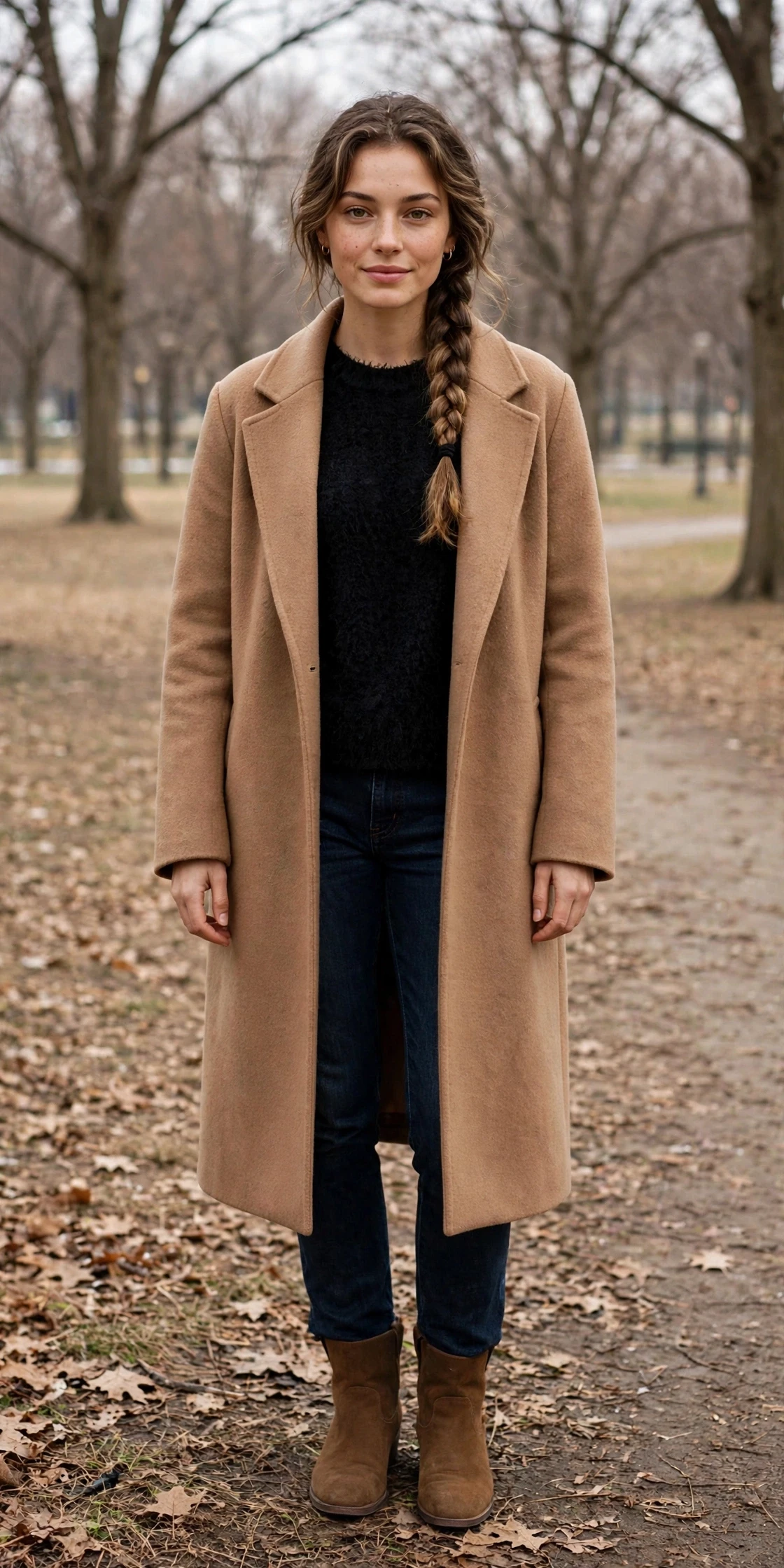
One: jeans, ankle boots, and a long coat. This is the everyday uniform for cold weather. Choose straight or slim dark jeans so the softness of the knit is balanced by a clean leg line. Tuck in just the front of the sweater for a little shape, or leave it untucked if the hem is short. Add a wool coat in camel, grey, or black, and a simple leather bag. The look works because nothing competes with the texture of the sweater. For help choosing a coat length to pair with it, see our Coat Length Guide for Women.
Two: a midi skirt and loafers. This pairing surprises people, because a fuzzy sweater with a flowing skirt sounds too soft, but the contrast is exactly what makes it work. A pleated or A-line midi skirt in black, grey, or a muted print gives structure, while loafers keep it grounded and easy to walk in. Tuck the sweater in fully for this outfit, and add a thin belt if the skirt has belt loops. The result is polished enough for lunch, a museum visit, or a casual office day, without feeling dressed up.

Three: wide-leg trousers and a collared shirt. For work, layer the sweater over a white or pale blue collared shirt, letting just the collar and a sliver of cuff show. Pair it with wide-leg black or charcoal trousers and pointed flats or low heels. The shirt collar sharpens the soft knit, and the trousers give the outfit a long, clean line. Keep jewelry simple — small hoops or studs — so the texture stays the focus.
Four: a dress as a base layer. On a very cold day, wear a thin black mohair sweater over a sleeveless dress, treating the sweater as a top layer rather than a traditional knit. This works best with a simple slip dress or a sleeveless shift in a dark color. The sweater adds warmth without hiding the dress completely, and the hem of the dress below the sweater creates a layered effect that looks intentional. Add tights and boots to finish it.
Five: an all-black evening look. Black on black can look flat if everything is the same fabric, so mix textures. Pair the mohair sweater with sleek leather-look trousers or a satin skirt, and add one statement piece — a bold earring, a red lip, or a structured bag. The fuzz of the mohair against a smooth fabric creates contrast, and the monochrome palette keeps it elegant. This is a good option for dinner out when you want to feel warm and still look put together.
How to wash and store it so it stays soft
Mohair is not hard to care for, but it does not like heat or rough handling. Hand washing is the safest method, and it takes less time than most people expect. Fill a basin with cool water and a small amount of gentle wool detergent. Turn the sweater inside out, press it gently into the water, and let it soak for ten to fifteen minutes. Do not rub, twist, or wring it, because friction causes felting and pilling. Rinse with cool water until the water runs clear, then press the water out by rolling the sweater in a clean towel.
Drying is where most damage happens. Never hang a wet mohair sweater, because the weight of the water will stretch it out of shape. Lay it flat on a dry towel, reshape it to its original measurements — smooth the shoulders, straighten the hem, and line up the sleeves — and let it air dry away from direct heat and sunlight. Turn it once halfway through drying so both sides dry evenly. Once it is completely dry, you can steam it lightly to remove wrinkles, holding the steamer a few inches away rather than pressing an iron directly onto the fuzz.

For storage, fold the sweater and place it in a drawer or on a shelf, with tissue paper between layers if you stack several knits. Do not hang it for long periods, because gravity will slowly pull the shoulders down and stretch the body. If you need to protect it from moths, use cedar blocks or lavender sachets rather than strong-smelling mothballs, which can leave an odor in the fibers that is hard to remove. At the end of the season, wash or air the sweater, fold it clean, and store it in a breathable cotton bag rather than a sealed plastic container, which can trap moisture.
Pilling is normal for soft fibers, and it is not a sign that you bought a bad sweater. Use a fabric shaver or a gentle sweater comb, working in one direction and with light pressure, and the surface will look fresh again. Do this on a flat surface, not while wearing the sweater, so you do not stretch the fabric. If a thread pulls loose, do not cut it or pull it. Use a crochet hook or a needle to push it gently back to the inside of the garment, where it will stay out of sight.
Mistakes to avoid with a black mohair sweater
First, avoid pairing it with another fuzzy texture on top. A mohair sweater under a fluffy coat or over a brushed fleece top creates a shapeless, overly soft silhouette with no contrast. Choose one fuzzy piece per outfit and let the rest be smooth: denim, leather, cotton, or a structured coat. Second, avoid wearing it with a rough bag strap that rubs the same spot all day. A heavy crossbody strap across the shoulder can cause pilling and wear in one area, so carry a handbag or a tote on your forearm instead when you wear this sweater.
Third, be careful with jewelry and fastenings. Chunky bracelets, rings with raised stones, and bag zippers can snag the long fibers. Put jewelry on after the sweater, and check that bag hardware is not catching at the waist. Fourth, do not wash it in hot water or put it in the dryer, even on a low setting, unless the care label specifically says it is safe. Heat is the fastest way to shrink and felt mohair, and the damage is usually permanent. Finally, avoid spraying perfume directly onto the knit. Spray perfume on your skin before you dress, because alcohol and fragrance oils can stain or dry out delicate fibers over time.
A quick shopping checklist
Before you buy, run through this list. First, check the fiber content on the label. Look for a meaningful percentage of mohair, often blended with wool, nylon, or acrylic for strength. A blend is normal and often more durable than pure mohair, which can be very delicate. If the label says only a tiny amount of mohair, the sweater may not have the soft halo you are expecting. Second, check the weight by holding the sweater in your hands. It should feel light for its size, not heavy and dense. Third, check the seams and finishing. Turn the sweater inside out and look for neat, even stitching with no loose threads at the underarms or hem.
Fourth, think about the color depth. Black mohair can look slightly grey or faded if the dye is uneven, especially in the fuzz. Hold it up in natural light and check that the color looks rich and consistent across the body and sleeves. Fifth, consider your lifestyle. If you have pets that shed, a black fuzzy sweater will show their hair more than a smooth knit, so be honest about how much lint rolling you are willing to do. If you work in a job that requires frequent hand washing or messy tasks, a fine-gauge version that you can layer and change out of easily may be more practical than a chunky one.
Which version should you choose?
If you want one sweater for everyday wear, choose a mid-weight crew neck in a straight or slightly relaxed fit, with a hem that ends at your hip bone. This version layers under coats, tucks into skirts and trousers, and works for both casual and work outfits. If you run cold and spend a lot of time outdoors, choose a turtleneck or a chunkier version, and accept that it will be a statement piece rather than a layering piece. Wear it on its own with jeans and boots, and let it be the focus of the outfit.
If you want something for the office, choose a fine-gauge crew neck or V-neck that fits close enough to layer under a blazer without bunching. Pair it with tailored trousers and simple shoes, and keep the rest of the outfit structured. If you are petite, avoid very long, oversized styles that swallow your frame, and look for a shorter hem and a lighter weight. If you are tall, a slightly longer hem and a relaxed fit will balance your proportions better than a cropped style. In every case, the best test is the mirror test above: the sweater should make you feel comfortable and confident, not hidden or squeezed. Browse more styles in our Sweaters and Knitwear category.
Frequently asked questions
Is a black mohair sweater warm enough for winter?
Yes, for most winter days, especially when you layer it under a coat. Mohair traps air in its fuzzy fibers, so a mid-weight version feels warmer than its weight suggests. On very cold, windy days, add a thermal base layer underneath and a windproof coat on top, and you will stay comfortable without needing a heavy, bulky knit.
Does mohair shed a lot?
A new mohair sweater may shed a little, especially in the first few wears. This usually settles after washing and wearing. Use a lint roller on dark clothing underneath, and avoid wearing it with light-colored, fuzzy fabrics that will pick up loose fibers. If shedding continues heavily after several washes, the yarn quality may be lower, and it is worth checking the return policy.
Can I wear a black mohair sweater to work?
Yes, if you choose a fine or mid-weight version in a neat fit. Layer it over a collared shirt, pair it with tailored trousers or a midi skirt, and keep accessories simple. Avoid very oversized or chunky styles for a formal office, because they read more casual. A crew neck or V-neck in a smooth, even knit looks the most professional.
How do I stop my sweater from pilling?
You cannot prevent pilling completely with soft fibers, but you can reduce it. Wash gently by hand or on a delicate cycle in a mesh bag, avoid rubbing the fabric against rough straps or seatbelts repeatedly, and use a fabric shaver regularly. Storing the sweater folded rather than hung also helps, because it prevents stretching that can make pilling worse.
Is mohair itchy?
Good-quality mohair is usually soft and not itchy, especially when blended with wool or nylon. Sensitivity varies, so if you have very sensitive skin, try the sweater on with a thin layer underneath first, or choose a version with a smoother finish. A lightweight camisole or long-sleeve base layer solves most mild itchiness without adding bulk.
Your final checklist before you wear it out
Before you head out, do one last check. Lint-roll the front, back, and sleeves, especially if you have pets or if the sweater is new. Check that the hem sits evenly, the shoulders are in place, and no threads are loose at the cuffs. Make sure your bag strap is not rubbing the same spot, and that your jewelry is not snagging the fibers. Then step back and look at the whole outfit in a full-length mirror. If the sweater feels soft, looks balanced, and moves with you, you have found the right one. A black mohair sweater does not need to be complicated. Choose a good fit, care for it gently, and style it simply, and it will become one of the most useful pieces in your cold-weather wardrobe.