Here is a small daily frustration that adds up: you buy trousers that look perfect on the hanger, then discover on the first workday that your phone does not fit, your keys dig into your hip when you sit, or the so-called pocket is a sewn-shut slit that was never meant to hold anything. Pockets are not a minor detail on work trousers. They are the difference between a pair you reach for every morning and a pair that sits in the drawer because carrying your essentials feels awkward all day.
The problem is that pocket quality is almost invisible in online photos. A listing can show a pocket opening and still hide the fact that the pocket bag is only two inches deep. A store mirror can hide it, too, if you only check the front view while standing still. That is why work trousers pockets deserve a proper test, not a glance. This guide gives you that test, plus a clear picture of which pocket styles suit which jobs, how to judge depth and placement without a measuring tape, and how to style trousers that carry real things without looking bulky.
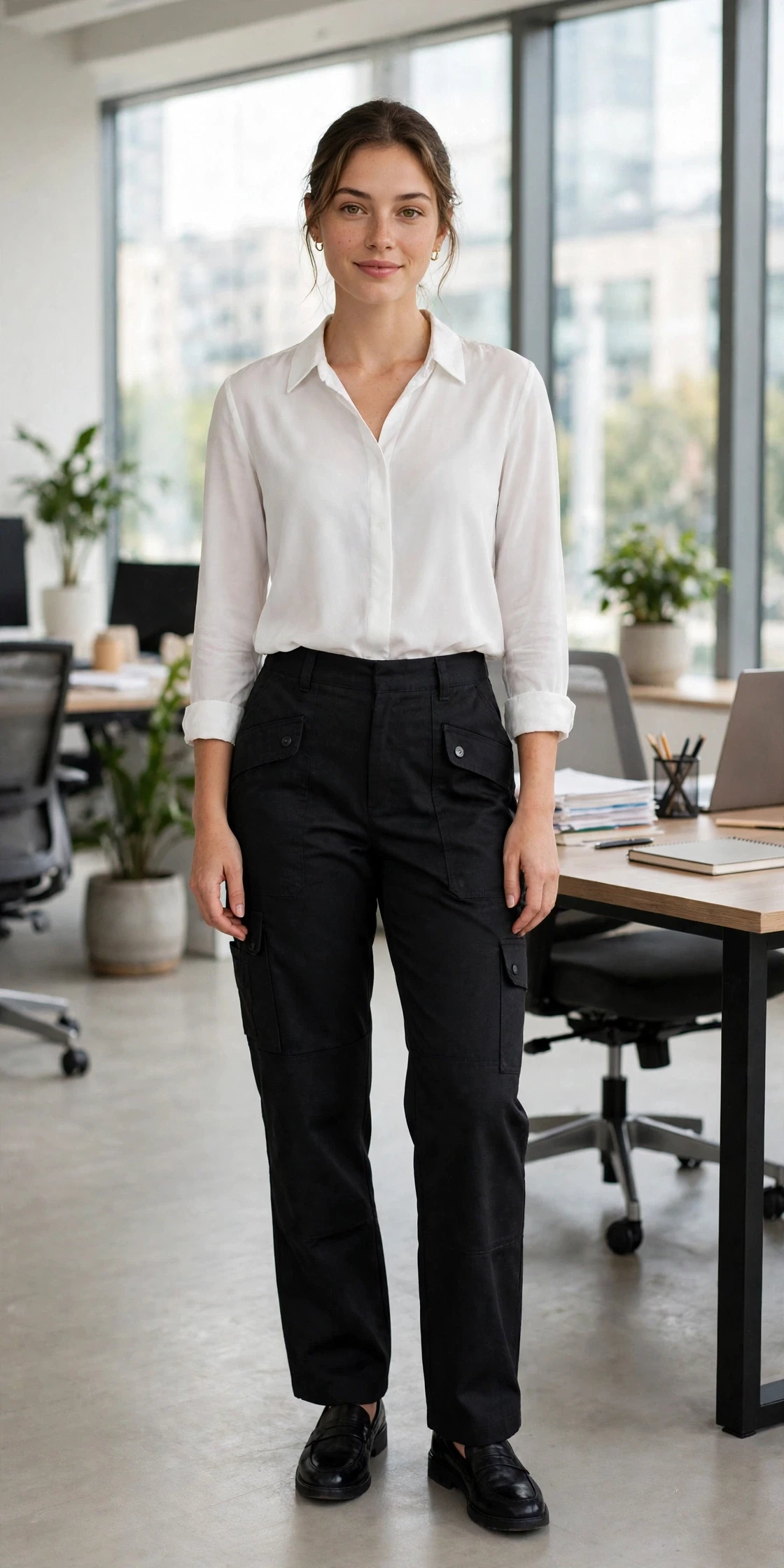
Start with the basic truth: a useful pocket has three qualities. It is deep enough to hold your phone without the phone peeking out or sliding out when you sit. It is placed where your hand naturally falls, not so high that you have to bend your wrist or so low that the opening pulls open. And it is made from a pocket bag — the inner pouch — that is sturdy enough not to tear or bunch after a few months. If any one of those three fails, the pocket will annoy you, even if the trousers fit beautifully everywhere else.
The pocket styles you will actually find
Side-seam pockets are the most common on work trousers. They sit in the seam at your hip, with the opening angled or straight along the side. Done well, they are discreet: they do not add visible bulk, and they keep your hands free. Done badly, they gape open when you sit, or they sit so far forward that they pull the front of the trousers out of shape. Test them by putting your hands in while standing, then sitting. The opening should stay closed-ish when your hands are out, and the fabric around it should not pucker into a fan shape.
Slant pockets are a variation of the side pocket, with the opening cut on a diagonal across the front hip. They are easier to slip a hand into quickly, which suits jobs where you are on your feet and reaching for a phone or a pen often. The diagonal line can also flatter, because it draws the eye across rather than straight down. The risk is the same as with any side pocket: if the bag is shallow, the diagonal opening makes it easier for things to slip out when you bend.
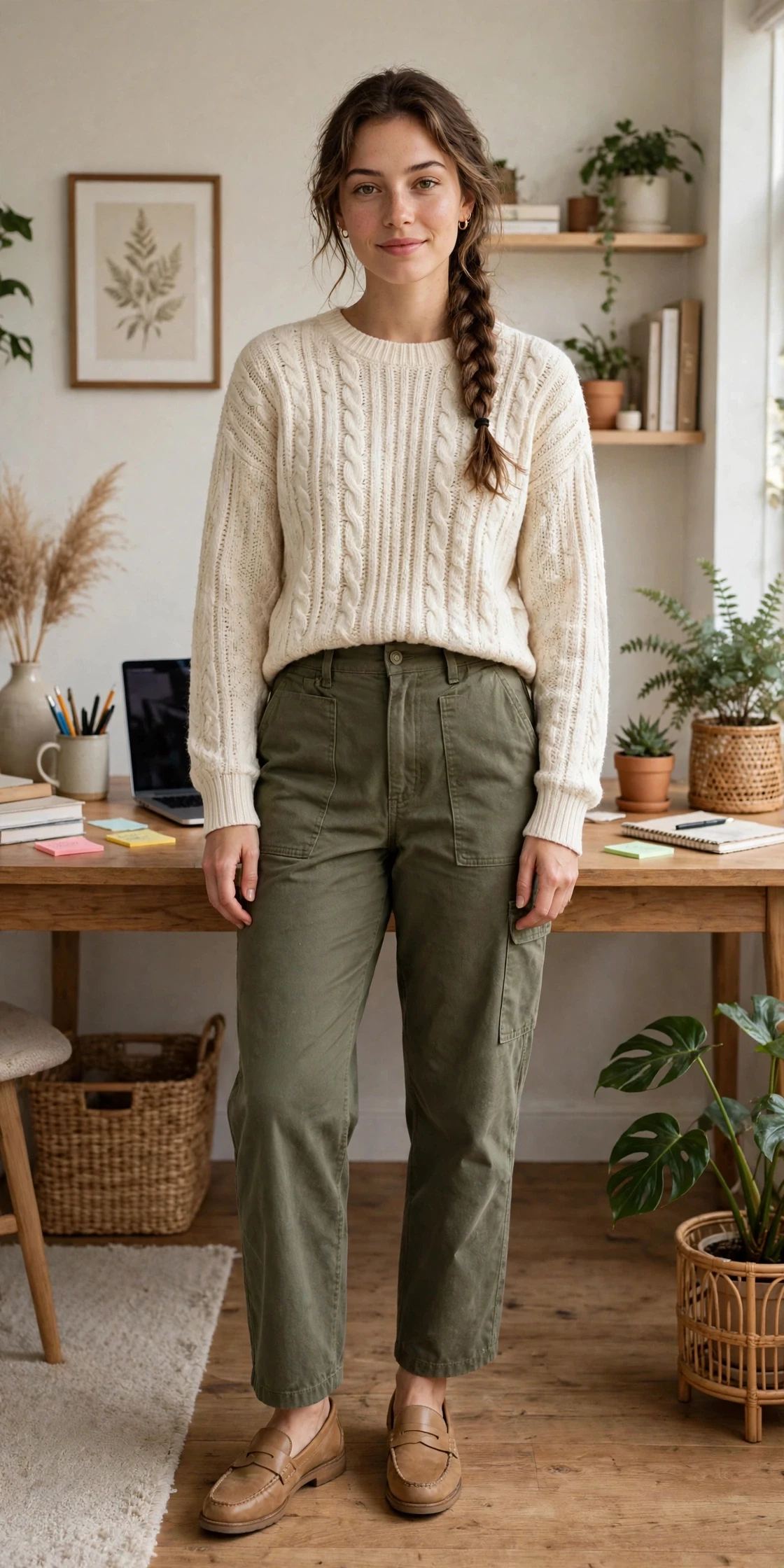
Front patch pockets are sewn onto the outside of the trousers, like a visible square or rectangle. They are common on more casual work styles and on utility-inspired trousers. They hold a lot, and they are easy to access, but they add visual bulk at the hip and thigh. If you want a polished office look, a large patch pocket can fight against that goal. If your job is hands-on, though, the extra capacity and the easy access often matter more than a sleek line.
Back pockets come in two main forms: welt pockets, which are a neat slit with a finished edge, and patch pockets on the back. A welt back pocket looks tailored and professional, and it is good for flat items like a card holder or a folded note. It is rarely deep enough for a phone, and putting a phone in a back pocket is uncomfortable when you sit anyway. Back patch pockets hold more and are easier to reach, but they can add bulk where you sit, so test them sitting down before you buy.
Cargo pockets sit on the thigh and close with a button, snap, or flap. They are the roomiest option by far, and they suit jobs where you carry tools, a small notebook, or a radio. For a typical office, cargo pockets can look too casual and can make the thigh look wider. For field work, teaching outdoors, warehouse supervision, or healthcare roles where you move between rooms, they can be genuinely useful. The key question is not whether cargo pockets are fashionable, but whether your day needs that much carrying space.
There are also hidden or zip pockets, sometimes inside a waistband or inside a side pocket. A zip pocket is excellent for a key or a card you do not want to lose, because it closes securely. It is less useful for a phone you grab twenty times a day, because zipping and unzipping slows you down. Think of zip pockets as a safe for one small valuable, not as your main pocket.
The sit, walk, and reach test
Do this test in the fitting room, and do it with the actual items you carry. Bring your phone, your keys, and whatever else lives in your pockets on a normal day. Put them in the pockets and stand in front of the mirror. Look at the outline from the front and the side. A good pocket holds items without creating a visible rectangle or a bulge that changes the shape of the trousers. A small bulge from a phone is normal. A sharp corner poking through thin fabric, or a pocket bag outline showing through the leg, is a sign the fabric or the pocket placement is off.
Now sit down. This is the test most people skip, and it is the one that matters most for desk work. Sit in a chair the way you sit at work, cross your legs if you normally do, and lean forward as if typing. Does the phone press into your hip? Does it slide toward the opening? Do the keys jingle against your thigh bone? Stand up again and check whether the pockets have stayed in place or whether the bags have twisted. A pocket bag that twists when you sit will bunch up inside the leg and feel lumpy by midday.
Walk a few steps, including up and down a step if the store has one. Listen and feel. A pocket that is too shallow will let a phone bounce near the opening. A pocket with a weak opening will gape with each step. Reach into the pocket quickly, as you would to answer a call, and put the phone back without looking. If you fumble, the opening may be too small, too high, or angled awkwardly for your hand.
Finally, check the pocket bag itself. Turn the pocket inside out if you can, or at least reach in and feel it. It should be smooth, with no rough seams that catch on keys, and deep enough that your whole hand fits in up to the wrist without your fingers hitting the bottom too soon. A simple rule: your phone should disappear completely into the pocket, with at least an inch of bag below it. If the top of the phone sticks out, the pocket is decorative, not functional, no matter what the label claims.

Depth, size, and placement by job
Different jobs need different pockets, and naming your job honestly helps you shop faster. If you work at a desk most of the day, you need two good side pockets for a phone and keys, plus one back pocket for a card or a pass. Depth matters more than number: two deep pockets beat four shallow ones. Look for side pockets that hold a phone fully, and avoid trousers where the front pockets are sewn shut for appearance. Those tacked-shut pockets are meant to be opened by removing the stitching, but many people never do, and some are sewn so tightly that opening them damages the seam. If you see a pocket that is tacked, ask yourself whether you will actually open it before the first wear.
If you are on your feet, moving between rooms or buildings, you need pockets you can access without stopping. Slant side pockets and a roomy back pocket work well, because you can reach them while walking. A zip pocket for keys prevents the classic problem of keys falling out when you bend to pick something up. Test bending: crouch as if picking up a box, and see whether anything shifts toward the opening. If it does, that pocket needs a deeper bag or a closure.
If your work is hands-on — in a workshop, a kitchen, a garden center, or a healthcare setting — capacity and durability matter most. Cargo pockets, reinforced pocket bags, and a loop or clip for a tool can be worth the more casual look. Check that cargo pockets do not swing or flap when you walk fast. A flap that bounces against your thigh all day is distracting, and a button that pops open under weight is worse than no pocket at all. Reinforced stitching at the pocket corners is a good sign: those corners take the most stress when a pocket is full.
If you wear a uniform or a dress code that requires a tailored look, the challenge is carrying things without breaking the line. In that case, choose trousers with deep side pockets in a slightly heavier fabric that hides the outline, and carry less in the pockets themselves. A slim phone, a single key, and a card are manageable. A bulky key ring, a thick wallet, and a phone together will distort almost any tailored trouser. Consider a small crossbody bag or a jacket pocket for the overflow, rather than forcing everything into trouser pockets and ruining the fit.
Fabric and construction clues that predict pocket failure
Thin, stretchy fabric shows pocket outlines more easily than a structured twill or a mid-weight ponte. That does not mean stretch fabric is bad — it is comfortable and forgiving — but it means the pocket bags need to be well placed and the fabric needs enough weight to drape over a phone without clinging to its shape. If you love a stretch pair, try it with your phone in the pocket in the store, under bright light, and look from the side. If you can read the phone’s shape through the leg, the fabric is too thin for pocket carrying, or the pocket sits too far forward.
Pocket bag material matters, too. Cheap, thin pocket bags tear at the corners, bunch up after washing, and feel scratchy. A sturdy cotton pocket bag lasts longer and stays smooth. You can feel the difference by reaching in: a good bag feels like a smooth pouch, not like a crumpled tissue. If the bag feels papery or already bunched when new, it will only get worse after washing.
Stitching is the last clue. Look at the pocket opening and the corners. Stitching should be even, with no skipped stitches or loose threads. Bar tacks — those small, dense stitches at stress points — at the top and bottom of a pocket opening are a sign of thoughtful construction. Their absence does not guarantee failure, but their presence is reassuring, especially on trousers you will wear hard.
Waistband construction affects pockets, too. A waistband that is too tight will pull side pockets open, because the fabric has nowhere else to go. If the trousers fit at the waist only when you hold your breath, the pockets will gape all day. A comfortable waist with a little ease lets the pockets lie flat. This is another reason to test pockets sitting down: a waist that feels fine standing can become tight and distorting when you sit and the fabric shifts.
Work trousers pockets: how to test depth in the store
Take a simple, repeatable test with you. First, phone test: the phone must fit fully inside, with room below it, and must not slide out when you sit and lean forward. Second, hand test: your whole hand should slide in and out without catching, and you should be able to close your fingers around the phone inside the pocket. Third, sit test: sit, cross your legs, stand, and check that the pocket bags have not twisted. Fourth, outline test: look from the front and side with items inside, and decide whether the bulge is acceptable for your workplace. Fifth, empty test: take everything out and check that the pockets lie flat again. A pocket that stays puckered after emptying has a construction problem.
Use this test every time, even for trousers from a brand you trust, because pocket depth varies by style, not just by brand. A brand can make one excellent pair and one pair with shallow pockets in the same season. The test takes ninety seconds and prevents months of annoyance.

Styling trousers that actually carry things
Carrying things well is partly about styling choices. Start by editing what you carry. Many people carry a thick wallet, a full key ring, loose change, a phone, and a pen, all in two pockets, and then blame the trousers for bulging. Move the wallet to a bag, slim the key ring to the keys you use daily, and keep change in a small pouch in your bag. Your pockets will look better, and your trousers will last longer, because less weight means less stress on seams.
Choose shoes and tops that balance the trousers. If the trousers have cargo pockets, keep the top simple and fitted enough to show your waist, so the outfit does not look shapeless. If the trousers are tailored with discreet side pockets, you can wear a looser top or a blazer without losing the polished line. A tucked-in blouse with tailored trousers shows the waistband and the pocket openings, so make sure the waistband sits smoothly and the pockets lie flat when tucked. An untucked top that ends at the hip can hide pocket bulk, but it can also hide the waistline entirely, so check the overall proportion in a full-length mirror.
Color helps, too. Dark colors hide pocket outlines better than light colors, especially in thin fabrics. If you need light-colored trousers for summer or for a uniform, choose a slightly heavier fabric and test with your phone in bright light, as described earlier. A patterned fabric can also disguise a pocket outline, but a large pattern can draw attention to the hip area, so a small, subtle pattern is usually the safer choice for work.
Belt choice matters when pockets are involved. A wide, stiff belt can push down on side pocket openings and make them gape. A slim, flexible belt, or trousers with a clean waistband and no belt loops if your workplace allows it, keeps the pocket area smoother. If you need a belt for fit, make sure it is not the only thing holding the trousers up: trousers that depend entirely on a tight belt will pull at the pockets all day.
Care that keeps pockets working
Wash trousers with pockets empty and, if possible, turned inside out, so pocket bags do not twist and tangle in the wash. Fasten any cargo flaps or buttons before washing, so they do not snag other items. Avoid over-drying on high heat, which can shrink pocket bags at a different rate from the outer fabric and cause bunching. Line drying or low-heat drying keeps the inner and outer fabrics more consistent.
Check pockets every few months. Turn them inside out, shake out lint and crumbs, and look for small holes at the corners or along the bottom seam. A tiny hole caught early can be stitched in two minutes. A hole left alone will grow until a key or a coin falls through into the leg lining, which is far harder to fix. If a pocket bag tears badly, a tailor can replace it for a modest cost, which is usually cheaper than replacing good trousers.
Ironing around pockets needs care. Press from the outside with the pocket lying flat, and avoid pressing a crease directly over a pocket bag, which can leave a permanent ridge. If a pocket bag has bunched after washing, reach in, smooth it flat while the fabric is still slightly damp, and let it dry flat. That simple step prevents most of the lumpy feeling people blame on cheap trousers.
When to repair, when to replace
Repair a pair if the fit is good, the fabric is still strong, and only the pocket is failing. A tailor can deepen a shallow pocket bag, replace a torn bag, or reinforce a corner. Deepening is possible when there is enough fabric inside the leg to extend the bag without changing the outer shape, so ask a tailor rather than assuming. Replace a pair if the fabric is thinning at the thighs, the waistband has lost its shape, or multiple pockets are failing at once. At that point, repairs cost more than the remaining life of the trousers is worth.
Also replace a pair if the pockets were never functional and you find yourself carrying a bag everywhere just to compensate. That defeats the purpose of work trousers with useful pockets. Life is easier when the trousers themselves do part of the carrying, and you should not have to work around a design flaw every day.
Frequently asked questions
Why are so many women’s work trousers made with tiny pockets?
Fashion history and cost both play a role. Small pockets use less fabric and keep a slim silhouette in photos, which sells well online. The trade-off is daily usefulness. The good news is that more makers now advertise pocket depth and show phones inside pockets, because shoppers have pushed back. Reading reviews that mention pocket size, and testing in store, helps you find the exceptions.
How deep should a work pocket be?
Deep enough for your phone to disappear fully, plus at least an inch of bag below it. For most phones, that means a pocket bag around seven inches deep or more from opening to bottom, though the exact number depends on your phone size and where the opening sits. The sit test matters more than any number: if the phone stays put when you sit, lean, and bend, the depth is working for you.
Are cargo pockets appropriate for an office?
It depends on your office. In a formal office, cargo pockets usually look too casual. In a creative, hands-on, or casual office, a slim cargo style in a dark, neat fabric can work, especially if the pockets lie flat when empty. When in doubt, choose discreet side pockets for the office and save cargo styles for field or casual days.
Should I open pockets that arrive sewn shut?
Yes, if you intend to use them. Those temporary stitches are meant to keep the trousers looking crisp during shipping and display, not to stay forever. Snip carefully with small scissors, following the stitch line, and do not pull, which can tear the seam. If the stitching looks like a permanent seam rather than a loose tack, check with the store before cutting.
Can a tailor make pockets deeper?
Often, yes, if there is room inside the leg and the outer shape allows it. A tailor can extend a pocket bag or replace it with a deeper one. The cost is usually modest compared with new trousers. Ask for an estimate and a test: have the tailor pin the deeper bag in place so you can sit and check the outline before the final stitching.
What is the best way to carry keys without bulk?
Use a slim key ring with only daily keys, keep the keys in one side pocket, and put the phone in the other side pocket so the two do not clank together. A small key pouch or a carabiner clipped inside a pocket can also keep keys from jingling or scratching your phone. Avoid a heavy, multi-tool key ring in trouser pockets; it distorts the fit and wears out the pocket bag faster.
Work trousers pockets checklist
Before you leave the store, run this list: phone fits fully and stays put when sitting; hand slides in and out easily; pockets lie flat when empty; no sharp outline shows from the side; back pocket is comfortable when sitting; closures, if any, stay shut when walking; and the waistband does not pull the pockets open. If a pair passes all seven, it is a keeper. If it fails two or more, try another size or another style, even if the color and price are tempting. A pair of work trousers that carries your day without fuss is worth waiting for, and once you find it, you will notice the difference every single morning.