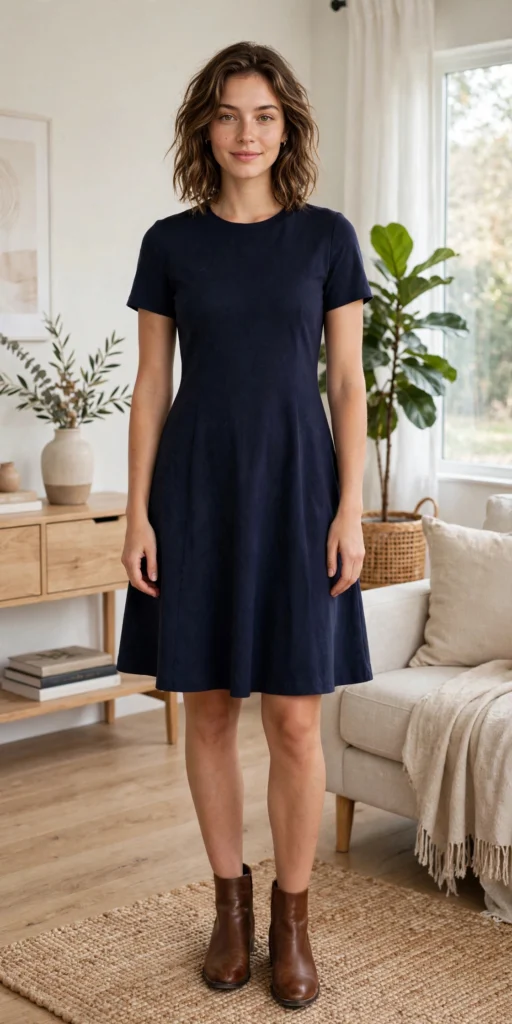
If you have ever tried on a dress that fit at the shoulders but pulled tight at the waist, or one that looked lovely on the hanger and then clung in all the wrong places, you already understand why this shape exists. The short answer to what is a trapeze dress is simple: it is a dress that is fitted, or nearly fitted, at the shoulders and chest, then flares outward in a straight, widening line toward the hem, like the shape of a trapeze. There is no cinched waist, no belt built into the cut, and no tight skirt to fight with when you sit, walk, or eat lunch.
That shape did not appear by accident. It became popular in the 1960s, when fashion moved away from stiff, waist-cinched styles toward looser, easier silhouettes. The idea was freedom of movement and a clean line, not a body squeezed into a mold. Today the shape survives because it solves a practical problem: it gives you a dress that looks put together without requiring a perfect waist measurement or a shapewear layer underneath. It swings a little when you walk, it does not ride up as easily as a pencil skirt, and it suits a wide range of bodies because it does not depend on one narrow point fitting exactly right.
This guide explains the cut in plain terms, shows how it differs from similar shapes people often confuse it with, and walks through choosing the right length, fabric, and styling for your height, your workplace, and your everyday life. By the end, you will be able to spot this shape in a store in seconds and know whether a particular version will work for you before you even try it on.
What is a trapeze dress up close: how to recognize it in a store
Start at the shoulders. On a true trapeze cut, the shoulders and the upper chest fit in a normal, comfortable way. The seams sit where shoulder seams usually sit, and the neckline can be almost anything: crew, V, boat, or scoop. The key change happens below the bust. Instead of curving in at the waist, the fabric continues outward at a gentle angle. If you lay the dress flat, the outline looks like a wide triangle with the top cut off — narrow at the top, wider at the bottom.
Compare that outline with a dress on the next rail. An A-line dress also widens toward the hem, but it usually starts its flare from a fitted waist or from a seam just under the bust, so the waist is still defined, even if softly. A shift dress, by contrast, hangs straight down with little flare at all, like a rectangle. A fit-and-flare dress fits tightly through the waist and then flares sharply at the skirt. The trapeze version is the most relaxed of the group: it never pulls in at the waist, and the flare starts high, near the chest, so the whole dress moves as one flowing piece.
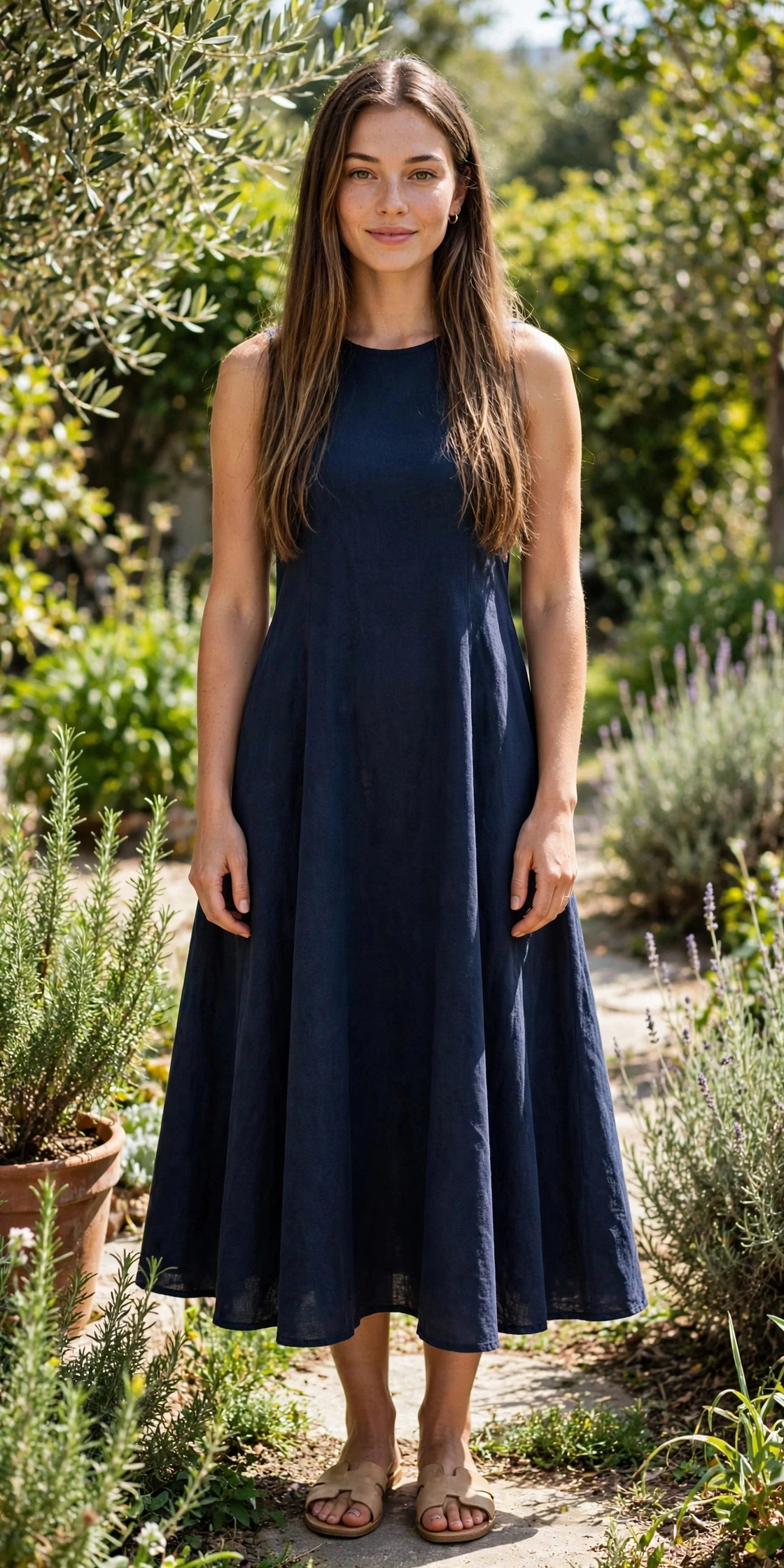
Fabric changes how dramatic that triangle looks. In a stiff cotton or a structured linen blend, the flare holds its shape and stands slightly away from the body, which gives a crisp, almost architectural look. In a soft jersey or a fluid rayon, the flare drapes and swings, and the outline looks softer and less geometric. Both are valid versions of the same cut. The stiff version reads more polished and works well for work or events. The fluid version reads more casual and is often more comfortable on hot days, because air moves under the skirt.
Length also changes the effect. A knee-length version is the most versatile for everyday wear, because it balances the volume of the skirt with visible legs. A midi version, ending below the knee or mid-calf, looks elegant and covers more, but it needs the right shoes so the proportions do not feel heavy. A mini version shows the flare most dramatically, because the short hem swings freely, but it can feel less practical for sitting at a desk or bending down. A maxi version in this cut feels like a tent if the fabric is heavy, and like a flowing column if the fabric is light, so fabric choice matters even more at full length.
Who this shape tends to suit, and why
The reason this cut flatters so many people is that it does not ask one part of your body to do all the work. If your waist measurement changes through the month, or if you simply do not like tight waistbands, a dress without a waist seam removes that daily negotiation. If you carry weight around your middle, the flare skims past it instead of highlighting it. If you have narrow hips, the flare adds gentle volume below, which balances broader shoulders. If you have a fuller bust, the cut still works, but the fit at the chest matters more: the dress must fit across the bust without pulling, or the whole flare will hang off-center.
Height plays a role, but it does not rule this shape out for anyone. If you are petite, choose a knee-length version and keep the flare moderate. A very wide, very long version can overwhelm a smaller frame and make your legs look shorter than they are. A shorter hem and a shoe with a little height, even a low wedge or a block heel, restores the balance. If you are tall, you have more room to play: a midi length that looks long on someone else may hit you right at the knee, and a wider flare will look proportional rather than oversized.
Posture and movement matter, too. Because the dress hangs from the shoulders, good shoulder fit is everything. If the shoulder seams droop, the whole dress looks sloppy, no matter how nice the fabric is. If they pull, the neckline will gape when you move. Try this check in a fitting room: put the dress on, stand straight, then sit down and stand up again. The hem should fall back into place without you tugging it. Reach both arms forward as if you were typing or driving. The chest should not pull tight across the bust, and the back should not ride up. Walk a few steps and watch the skirt in the mirror. It should swing gently and settle, not twist around your legs.
Choosing fabric for the season and the occasion
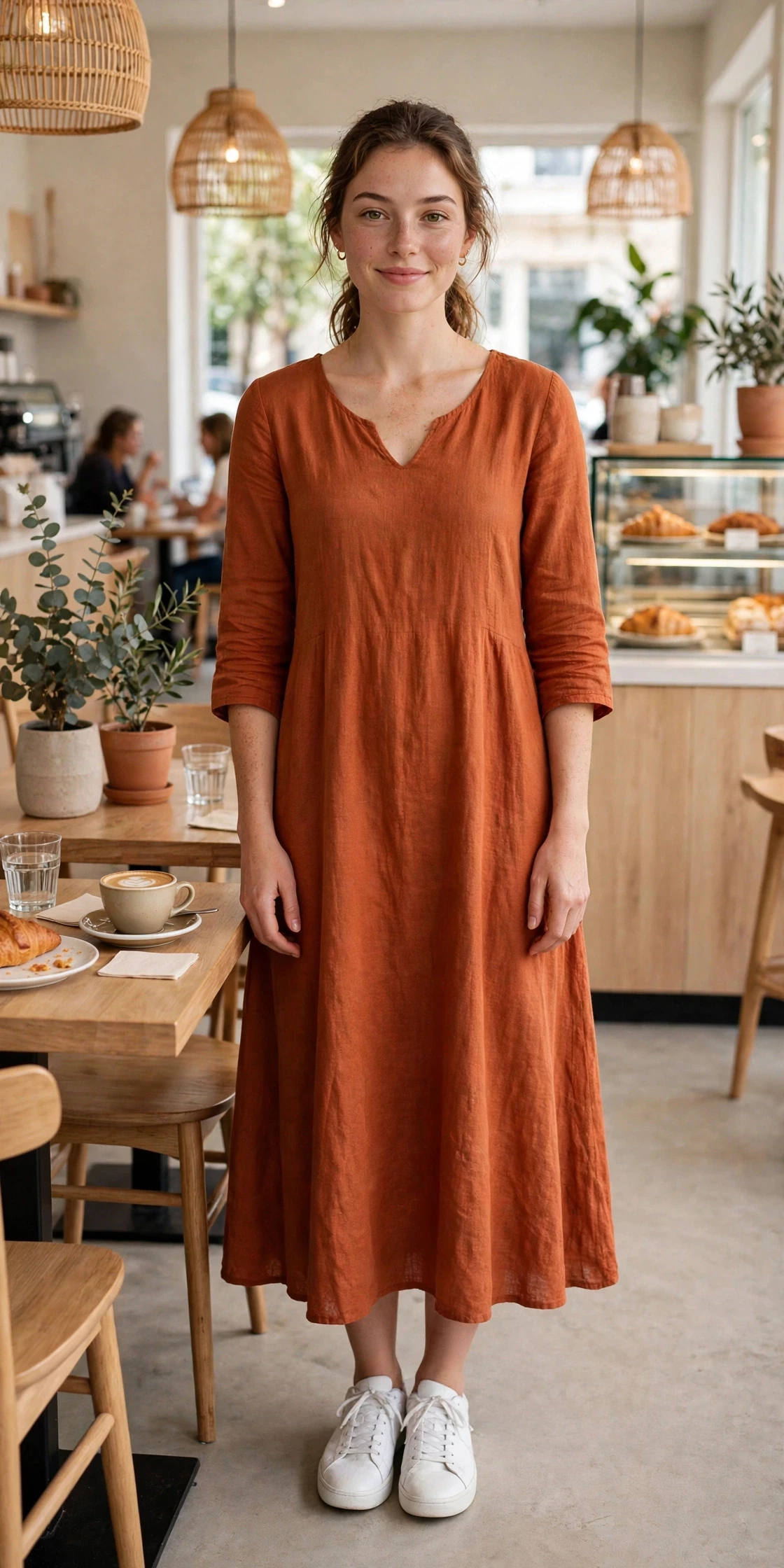
For warm weather, look for cotton, linen blends, or light rayon. These breathe, they drape, and they keep the flare from feeling heavy. A cotton version in a solid color is a workhorse: it washes easily, it pairs with sandals or sneakers, and it can be dressed up with a light jacket. Linen gives a more textured, relaxed look, but it wrinkles, so it suits casual days better than a long office meeting unless you enjoy that lived-in texture.
For cooler weather, look for ponte knit, heavier jersey, or a wool blend. Ponte is a double-knit fabric that holds its shape, which helps the flare stay crisp without stiffness. A wool blend adds warmth and structure, and it pairs well with tights and boots. Avoid very thin jersey in winter, because it clings when you add tights and a coat, and the flare loses its shape under the coat anyway. If you love a thin version, save it for indoor days or layer it with a long cardigan that does not squash the skirt.
Pattern choice changes how much attention the shape gets. A solid color shows the silhouette most clearly, which is ideal if you are still learning whether you like the cut. A small print, like a tiny floral or a subtle stripe, adds interest without fighting the shape. A large, bold print can make the flare look even wider, because the eye follows the pattern outward. That can be beautiful, but it can also feel like a lot if you prefer a quieter look. If you try a bold print, keep shoes and accessories simple so the dress stays the star.
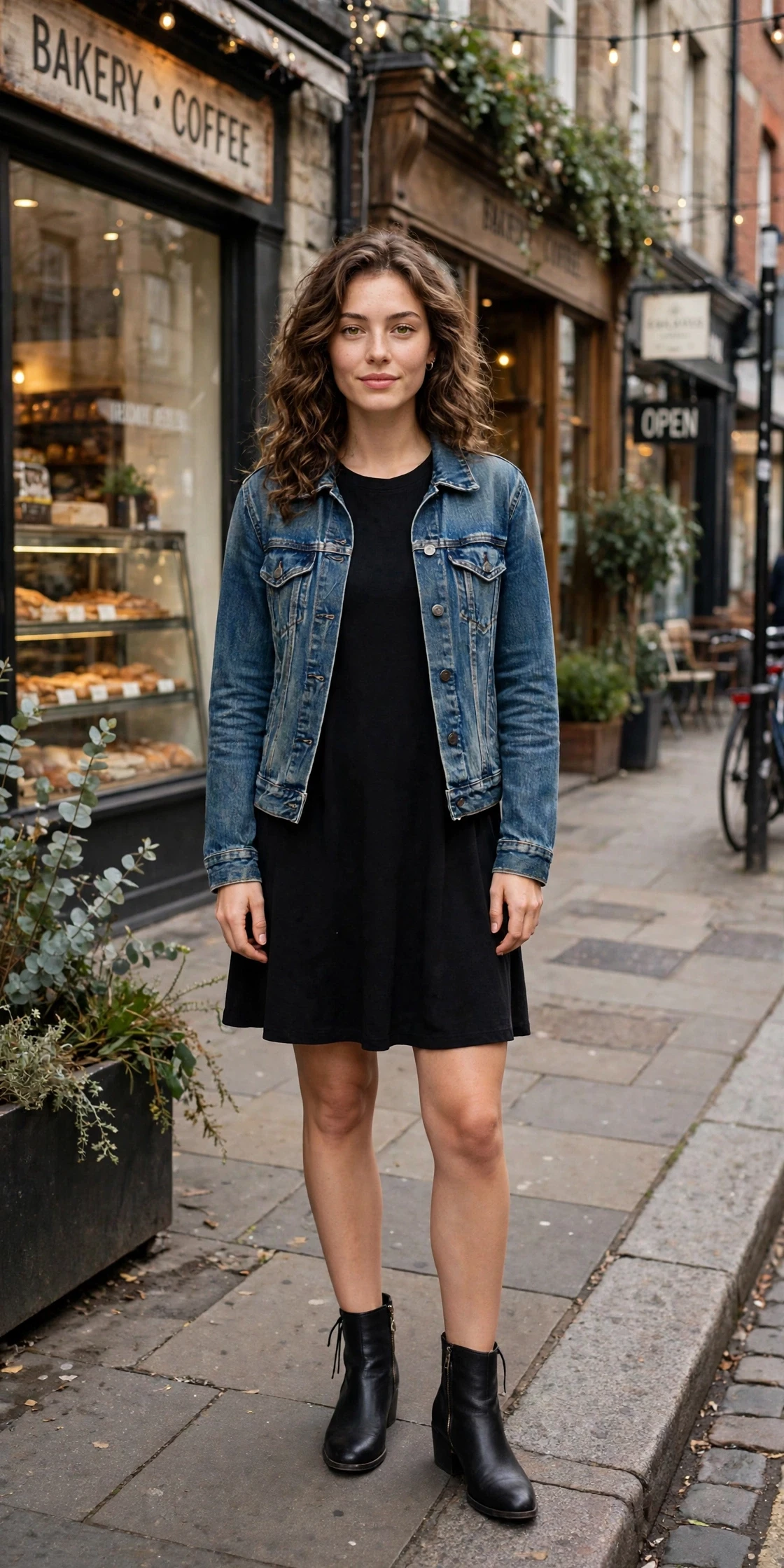
Color works the same way. Dark colors — navy, black, charcoal, deep green — make the shape look more streamlined and are easiest for work. Bright colors and pastels make the flare feel playful and summery. A black version is the most forgiving first purchase, because it works across seasons with a change of shoes and a jacket. After that, a second color you actually love, rather than one a trend list tells you to buy, will get worn far more often.
Styling it without losing the shape
The biggest styling mistake with this cut is adding too much volume on top. A long, boxy jacket or a thick, oversized cardigan can turn the dress into a shapeless block, because the flare is already doing the volume work. Choose a shorter jacket that ends near the waist, or a cropped denim jacket, a fitted blazer, or a short cardigan that leaves the skirt visible. If you want a longer layer, pick a slim one that hangs straight and does not add bulk at the hips, like a long, open cardigan in a light knit.
Shoes set the tone. Flat sandals and white sneakers keep the dress casual and comfortable for walking. Ballet flats work for a neat, simple look. Block heels or low wedges add height without making the outfit feel formal, and they help a midi length look balanced. Ankle boots work well with a knee-length version in cooler weather, especially if the boots are slim and do not fight the hem. Avoid very chunky boots with a very wide flare unless you want a deliberately bold, heavy-bottomed look, because the proportions can tip too far.
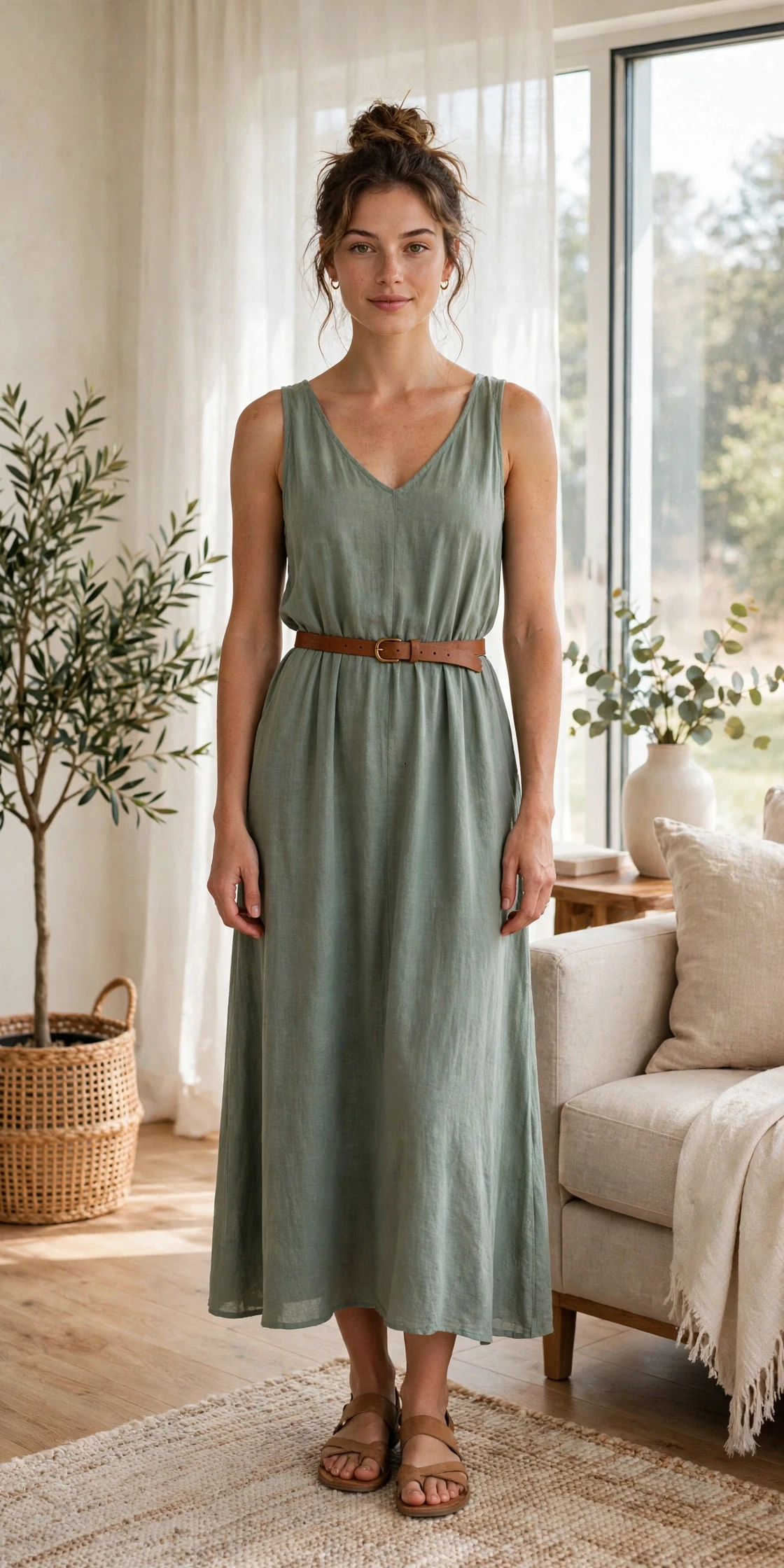
Accessories should stay light. A simple necklace, small earrings, and a crossbody bag are enough. A wide belt is tempting, but it changes the cut entirely — more on that below. A thin belt, worn loosely at the natural waist, can add a touch of definition without destroying the flare, but it is optional, not required. If you wear a scarf, drape it long and slim rather than wrapping it thickly around your neck, so the top of the dress stays clean.
For work, the formula is simple: a solid color, a knee or midi length, a structured fabric like ponte or a cotton blend, and a cropped blazer or a short cardigan. Keep shoes closed-toe and simple, and keep the bag medium-sized and structured. That combination looks professional without feeling stiff, because the dress itself stays comfortable through a long day of sitting, standing, and walking between meetings. If your workplace is more formal, choose a darker color and a longer length, and skip sneakers and denim jackets for that day.
Fitting problems and how to fix them
It looks like a tent. This is the most common complaint, and it usually means the fabric is too stiff for the length, or the flare is too wide for your frame. Try a softer fabric, a shorter length, or a version with a narrower flare. A thin belt at the waist, worn loosely, can also break up the tent effect without turning the dress into a different shape. If the dress still looks like a tent in a softer fabric, the size may be too large: remember, this cut hangs from the shoulders, so sizing up for the waist is rarely needed.
It looks shapeless. A trapeze dress is supposed to be relaxed, not invisible. If you feel lost in it, check three things: shoulder fit, neckline, and shoes. A defined shoulder seam and a neckline that shows a little collarbone or a V shape gives the top of the dress structure. A shoe with a little height or a pointed toe gives the bottom a finish. A structured bag also helps. If all three are soft and round — droopy shoulders, a high round neck, flat round-toe shoes — the whole outfit can look unfinished.
It pulls across the bust. Size up, or look for a version with a little stretch or a slightly deeper V neck. Do not try to fix bust pulling by going down a size in the hope that the flare will hide it. The flare starts at the chest, so pulling there distorts the entire line. If you are between sizes, choose the larger one and have the shoulders taken in if needed; a tailor can adjust shoulders more easily than they can add room across the bust.
It rides up when you sit. This happens most with short, fluid versions in slippery fabric. A knee-length version in a slightly heavier fabric, or a version with a little structure at the hem, stays put better. If you love a short fluid version, wear it with shorts underneath for confidence, or save it for days when you will mostly be standing and walking.
It feels too long. For a midi version, the sweet spot is usually just below the knee or at the slimmest part of the calf. If the hem hits at the widest part of your calf, it can make legs look shorter. Hemming a trapeze dress is usually simple because the hem is a straight, flared edge, but ask the tailor to keep the flare angle the same so the dress does not suddenly become a straight skirt.
Care, storage, and making it last
Care depends on fabric, so always check the label first, but a few habits help every version. Wash cotton and jersey versions inside out on a gentle cycle, and skip high heat in the dryer, which can shrink the flare unevenly. Hang linen versions to dry when you can, and steam rather than iron if the fabric is delicate. For wool blends, follow the label exactly — many need a gentle wool cycle or dry cleaning — and fold rather than hang heavy versions, so the shoulders do not stretch out of shape.
Storage matters because this dress hangs from the shoulders. Use a sturdy, wide hanger that matches the shoulder width, not a thin wire hanger that leaves dents. Button or zip the dress fully before hanging so it hangs straight. If the dress is heavy, fold it over a padded hanger or store it folded in a drawer with tissue paper at the folds, so the flare does not crease in one place. Keep it out of direct sunlight in the closet, which fades dark colors unevenly across the wide skirt.
To make it last, rotate it with other dresses rather than wearing the same one every week, and repair small issues early: a loose hem, a missing button, or a seam pulling at the shoulder. Because the cut is simple, repairs are usually simple too, and a well-kept version in a classic color can stay in rotation for years without looking dated.
A quick comparison table
| Shape | Waist | Flare starts | Best for |
|---|---|---|---|
| A-line | Fitted or softly defined | Waist or under bust | Everyday polish with a defined waist |
| Shift | Not defined | Little flare; hangs straight | Simple, straight, minimal look |
| Fit-and-flare | Tightly fitted | Below the waist | Showing the waist, then adding volume |
| Trapeze | Not defined | Near the chest | Comfort, movement, and a relaxed line |
Frequently asked questions
Does this shape suit a fuller figure?
Yes, often very well, because it does not rely on a tight waist fit. The key is fit at the shoulders and chest, and a fabric with enough structure to hold the flare without clinging. A knee-length version in a ponte or cotton blend is a reliable starting point.
Can I wear it to work?
Yes, if you choose a solid color, a knee or midi length, and a structured fabric. Pair it with a cropped blazer or short cardigan and closed-toe shoes. A fluid, very casual version in a bright print is better saved for days off.
What shoes work best?
Flat sandals, white sneakers, ballet flats, and block heels all work, depending on the occasion. For a midi length, a shoe with a little height helps balance the proportions. Slim ankle boots pair well with a knee-length version in cooler weather.
How is it different from an A-line dress?
An A-line dress usually has a fitted or softly defined waist, and its flare starts at the waist or just under the bust. A trapeze dress has no defined waist, and its flare starts higher, near the chest, so the whole dress flows as one relaxed piece.
Should I belt it?
You can, but you do not need to. A thin belt worn loosely can add a touch of definition, while a wide, tight belt changes the shape into something closer to a fit-and-flare dress. If you love the relaxed feel, skip the belt and let the cut do the work.
What length should I choose first?
Knee length is the safest first choice for most people, because it balances the flare and works for both casual and work settings. If you are tall or prefer more coverage, a midi length is the next best option, paired with a shoe that adds a little height.
Final checklist
Before you buy, run through this quick list. Does the dress fit at the shoulders and across the chest without pulling? Does the hem fall at a length you like — knee for versatility, midi for coverage, or mini for a playful look? Is the fabric right for the season you will wear it most? Does it move with you when you sit, walk, and reach? And does it pair with shoes you already own, so you do not need a whole new wardrobe to wear it? If the answer to most of those is yes, you have found a version worth taking home.
A trapeze dress is not a trend to master or a rule to follow. It is a practical, comfortable shape that happens to look good on a lot of people because it starts from comfort, not constraint. Choose a solid color first, learn how the flare moves on your body, and then experiment with prints, lengths, and layers. Once you understand the cut, you will spot it instantly — and you will know, before you reach the fitting room, whether it is the right dress for you.
If you are building a small closet around versatile pieces, this shape earns its place beside other everyday staples. You can also browse more ideas in the Dresses category.