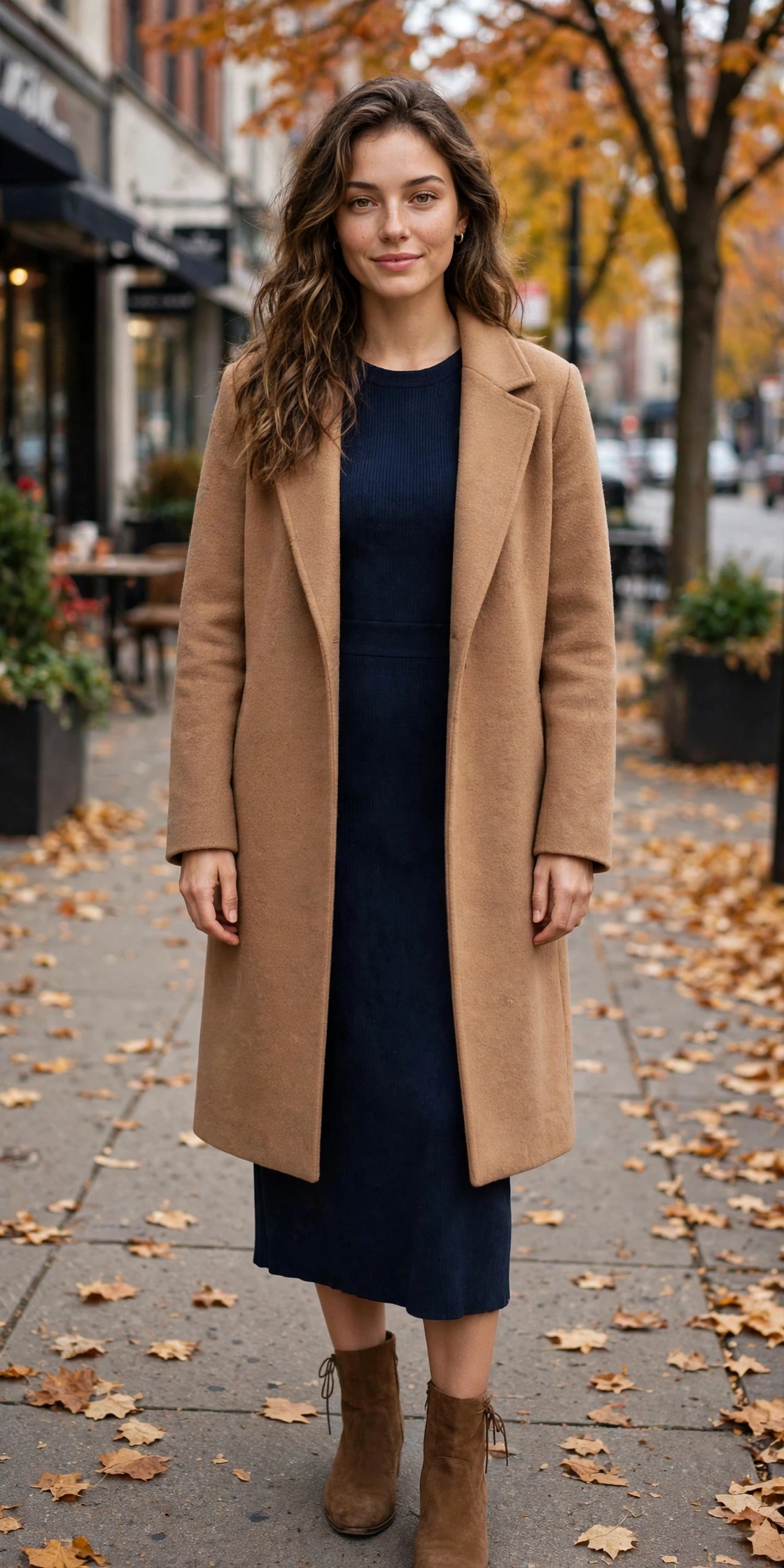
The right coat length depends mainly on your height, your proportions, and how you will wear the coat day to day. As a quick answer: if you are under 5 feet 4 inches, hip-length and knee-length coats are usually the easiest to wear without overwhelming your frame; if you are between 5 feet 4 inches and 5 feet 7 inches, most lengths work well, including thigh-length and midi styles; and if you are 5 feet 8 inches or taller, longer midi and full-length coats tend to look balanced and give the best coverage in cold weather. Those are starting points, not strict rules. Your torso length, leg length, the thickness of the layers underneath, and whether you walk, drive, or commute on foot all matter just as much as the number on a height chart.
This guide walks through every common coat length, explains how each one behaves on different heights, and gives you practical fitting checks you can use in a store or at home. It also covers fabric weight, climate differences across the United States, outfit ideas, common mistakes, and care, so you can choose once and wear the coat for years rather than buying a new one every winter.
Coat lengths at a glance
Coat length is usually measured from the shoulder seam or the back of the neck down to the hem, but in everyday shopping it is described by where the hem falls on the body. The names below are the ones you will see most often in women’s outerwear in the USA.
| Length | Where the hem falls | Best for |
|---|---|---|
| Cropped | At or just above the waist | Mild weather, driving, high-waisted outfits |
| Hip-length | At the hip bone | Everyday wear, active days, shorter frames |
| Thigh-length | Mid-thigh | Balanced warmth and movement |
| Knee-length | At or just above the knee | Cold weather, workwear, dresses and skirts |
| Midi | Below the knee to mid-calf | Maximum warmth, elegant layering |
| Maxi / full-length | Near the ankle | Very cold climates, long coats over formal outfits |
A cropped coat keeps your legs free and is easy to sit in, which makes it a good choice for driving and for outfits where the waistline is part of the look. A hip-length coat is the most versatile everyday option because it covers the waist and hips without restricting your stride. Thigh-length coats add warmth over the upper legs while still allowing easy walking and stair climbing. Knee-length coats are the classic winter workhorse: they cover a dress or skirt, protect against wind, and still allow a normal walking pace. Midi and maxi coats give the most warmth, but they change how you move, how you sit, and what shoes work best, so they need a little more thought before you buy.
When you compare two coats, check the stated length in inches as well as the name. One brand’s knee-length may be another brand’s midi, especially if the coat is designed for a taller model. If you shop online, look for the back length measurement and compare it with a coat you already own that fits well. Lay that coat flat, measure from the centre back neck seam to the hem, and use that number as your personal reference.
How height changes the look of a coat
Height does not change the coat itself, but it changes the proportion of coat to leg that other people see, and it changes how much fabric is moving around your knees and ankles when you walk.
Under 5 feet 4 inches
Shorter frames are often overwhelmed by very long, heavy coats, not because long coats are forbidden, but because a large amount of fabric can hide the leg line and make the whole outfit look like one block. Hip-length, thigh-length, and knee-length coats usually keep the balance clearer. If you love a midi coat, look for a slimmer cut, a defined waist or belt, and a front opening that shows a vertical line of your outfit underneath. A coat that ends just below the knee, rather than at mid-calf, is often easier to walk in and easier to pair with boots without a lot of bunching at the ankle.
Pay attention to details that add visual weight: very wide lapels, large patch pockets at hip level, and heavy fur-look collars can shorten the perceived torso. A single-breasted front, a clean collar, and pockets placed slightly higher can help a longer coat feel lighter. Also check the sleeve length. On a shorter frame, sleeves that cover the hands make the coat look too big even if the body length is right.
5 feet 4 inches to 5 feet 7 inches
This middle range is the most flexible. Most coat lengths sold in standard sizes are cut with this height range in mind, so cropped through midi coats usually need fewer alterations. The main decision here is lifestyle rather than proportion. If you walk a lot, climb stairs, or carry a bag across your body, hip-length to knee-length coats are the most practical. If you wear dresses to work or want one coat for cold mornings and evening events, a knee-length or midi coat gives more coverage and a more polished line.
For this height range, the difference between a good coat and a great coat is often the fit through the shoulders and waist, not the length alone. A knee-length coat that fits well at the shoulder and closes without pulling will look better than a midi coat that is too wide, even though the midi coat is technically warmer.
5 feet 8 inches and taller
Taller frames can carry longer coats beautifully because there is more leg visible below the hem, which keeps the outfit balanced. Midi and maxi coats that might overwhelm a shorter frame often look intentional and elegant on a taller frame. Knee-length coats also work well, but check that a standard-size knee-length coat actually reaches your knee. If you have long legs, a coat labelled knee-length in a regular size may sit above the knee on you, which is fine if you like that look, but it will give less wind protection than you expected.
Taller shoppers should also check sleeve length and shoulder placement carefully. A coat that is long enough in the body but short in the sleeve will look like it does not fit, no matter how good the length is. If you regularly need tall sizes, look for brands that offer a tall range rather than sizing up in a regular range, because sizing up adds width as well as length and can make the shoulders and waist too loose.
Proportions matter more than height alone
Two women of the same height can need different coat lengths because their proportions differ. A long torso with shorter legs, a short torso with long legs, and a balanced torso and leg length all change where a hem falls and how much leg shows below it.
If you have a long torso, a hip-length coat may sit higher on you than expected, and a coat that is meant to hit mid-thigh may land closer to the hip. In that case, choosing a slightly longer style, or a style with a longer back measurement, can restore the intended coverage. If you have long legs and a shorter torso, the opposite happens: a knee-length coat may read as a midi coat on you, and a midi coat may come close to the ankle. Trying the coat on with the shoes you will actually wear is the simplest way to see the true proportion.
Your waist placement also matters. High-waisted trousers and skirts raise the visual waistline, which makes a cropped or hip-length coat look more balanced. Low-rise bottoms lower it, which can make the same coat look short. When you test a coat, wear an outfit that resembles your everyday style rather than testing it over gym clothes, because the bottom half of the outfit changes the whole proportion.
A useful at-home check is the mirror test in three positions: standing straight, walking a few steps, and sitting down. A coat that looks perfect standing still but rides up uncomfortably when you sit, or bunches badly at the knee when you walk, is not the right length for your daily life, even if the standing photo looks good.
Choosing length by weather and US climate
The United States covers a wide range of winter conditions, and coat length is part of staying warm, not just looking balanced. Wind is a major factor: a longer coat blocks wind from more of your legs, which makes a real difference on a windy morning in Chicago, New York, or Minneapolis. In milder climates, such as much of California, Texas, Florida, and the Southwest, a hip-length or thigh-length coat is often enough, and a very long heavy coat can feel too warm indoors and in a car.
Think about your coldest regular day, not the coldest day of the year. If you live in a place with long, cold winters and you walk to work, a knee-length or midi wool or insulated coat is a sensible main coat. If your winters are short and mild, a thigh-length coat with good layering underneath may cover almost every day, and you can add a scarf, gloves, and warm boots for the coldest mornings. If you travel between climates, a knee-length coat in a medium-weight fabric is often the best single compromise, because it works with layers in cold weather and does not feel excessive in milder weather.
Rain and snow also affect length choice. A longer coat keeps more of your clothes dry in rain, but a very long coat can get wet at the hem in deep snow or puddles and can be harder to keep clean. If you walk through snow regularly, a knee-length coat with water-resistant fabric and boots that cover the ankle is usually more practical than a maxi coat that drags near slush.
Fabric weight, lining, and how length feels
Length and fabric work together. A long coat in a heavy wool will feel much heavier and warmer than the same length in a light technical fabric. A short coat in a thick, insulated fabric can be warmer than a long coat in a thin fabric, because insulation matters as much as coverage.
Wool and wool-blend coats drape well at knee and midi lengths and hold a structured shape, which is why classic wool coats are so often knee-length. Puffer and quilted coats are warm but bulky, so at midi length they can feel heavy and restrict movement more than a wool coat of the same length. Trench coats and raincoats are often knee-length or midi because that length protects clothes from rain while still allowing walking. Faux-leather and waxed coats are often hip-length or thigh-length because the material is stiff and a very long version can feel restrictive.
Lining matters too. A fully lined coat slides over layers more easily, which is important for longer coats that need to move with you. An unlined or partly lined coat can catch on sweaters underneath, making a midi coat feel tight even if the measurements are correct. When you try a coat on, wear a sweater similar to the thickest layer you plan to wear underneath, and check that you can raise your arms, sit, and walk without the lining bunching.

Coat styles and their natural lengths
Some styles have a traditional length, and staying close to it usually looks best. A peacoat is traditionally hip-length to thigh-length, with a double-breasted front and a broad collar. Making it midi-length changes its character and can make it look like a different coat altogether. A classic trench coat is traditionally knee-length to midi, with a belt that defines the waist. A shorter trench can still work, but it loses some of its rain protection and its classic line.
A parka is often thigh-length or knee-length, with a hood and insulation for cold weather. A shorter parka is easier for active use, while a longer parka gives more warmth for standing outdoors. A wrap coat is often knee-length or midi, because the wrap and belt need enough fabric to create a smooth diagonal line. A cape or poncho-style coat has no fixed hem in the same way, so length is judged by where the widest point falls, usually at hip or thigh level.
Understanding these traditions helps when you shop: if a style looks slightly off, it may be because the length does not match the style’s natural proportion, not because the coat is badly made. You can still choose an unconventional length if you like it, but knowing the tradition helps you judge whether the look is intentional.
Fitting checklist: try this before you buy
Use this checklist in the store or when a delivery arrives. It takes five minutes and prevents most returns.
- Shoulders: The shoulder seam should sit at the edge of your shoulder, not drooping down the arm and not pulling inward. Coat shoulders are slightly more structured than sweater shoulders, so a small amount of structure is normal.
- Closure: Button or zip the coat over your thickest sweater. It should close without straining, gaping, or pulling at the buttons. If it only closes over a thin top, it is too small for winter layering.
- Arm movement: Raise both arms, reach forward as if opening a car door, and bend your elbows. The coat should move with you without riding up sharply at the hem.
- Sitting test: Sit down in the coat. A hip-length coat should not dig into your waist, a knee-length coat should not bunch heavily behind the knees, and a midi coat should fall neatly without pooling on the chair.
- Walking test: Walk, climb a step, and turn. The hem should swing freely and return to place, not catch between your legs or swing so wide that it hits your calves.
- Sleeve length: With arms relaxed, the sleeve should reach the wrist bone, covering a long-sleeve top but not hiding your hands.
- Pocket position: Put your hands in the pockets. They should feel natural, not too high or too low, and the coat should not pull sideways when your hands are in them.
- Mirror check from the side: Look at the coat from the side, not just the front. A coat that looks straight from the front but flares or sags at the back will not feel balanced over a full day.
If a coat fails more than one of these checks, the length or the size is probably wrong, even if you like the colour. Colour can be found again; a poor fit will bother you every time you wear it.
Outfit ideas by length
Coat length changes what works underneath, so it helps to think in outfits rather than in single pieces.
Cropped coat: Pair it with high-waisted jeans or trousers, a tucked-in top, and ankle boots. The visible waistline keeps the outfit balanced, and the short coat shows the full leg line. This is a good everyday look for mild days and for driving, because there is less fabric to sit on.
Hip-length coat: Wear it with straight jeans, a sweater, and ankle or knee boots. Add a scarf for warmth on colder days. Hip-length coats work with most trousers and with knee-length skirts, and they are easy to combine with the rest of the Jackets and Coats category in a wardrobe, from lighter jackets for autumn to heavier coats for winter.
Thigh-length coat: Try it with slim trousers or leggings and knee-high boots, or with a knee-length dress and tights. The coat covers the hips and upper legs, so the outfit underneath can be simpler. This length is a good bridge between casual and smart looks.
Knee-length coat: Wear it over a work dress, a skirt and blouse, or tailored trousers. Knee boots or heeled ankle boots keep the leg line clean. A knee-length coat is the easiest choice for an office or a formal event because it covers the outfit underneath without hiding it completely when the coat is open.
Midi coat: Pair it with a dress or wide-leg trousers and heeled boots, so the hem does not compete with flat shoes and the outfit keeps a long line. Keep the layers underneath slim, because a midi coat already adds volume. A belt, if the coat has one, helps define the waist and prevents the outfit from looking like a single column of fabric.
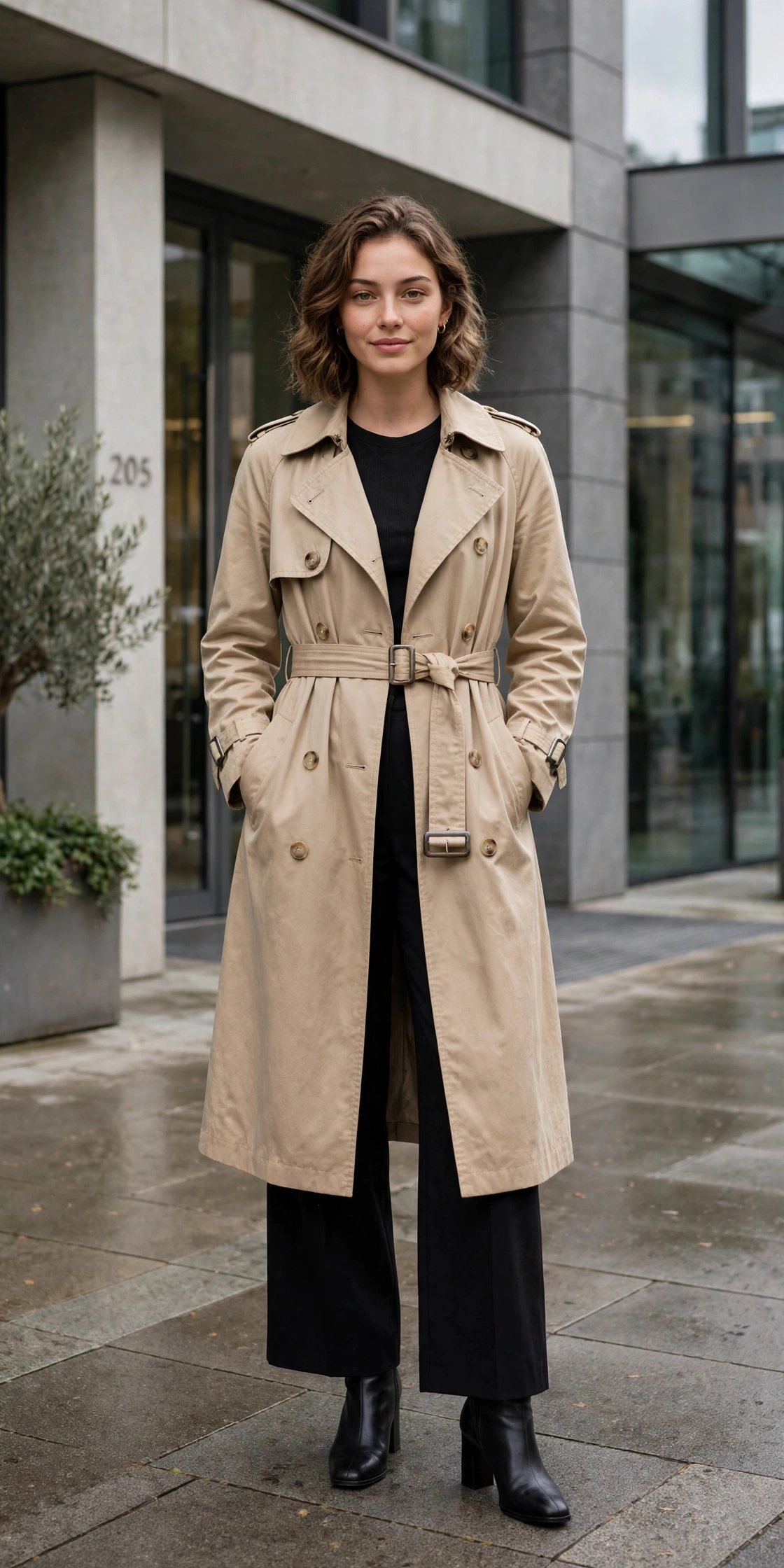
Maxi coat: Wear it over a long dress or with slim trousers and heeled boots. Keep accessories simple, because the coat itself is the statement. Maxi coats work best when the rest of the outfit is streamlined, so the coat can be the focus.
In all cases, match the coat’s formality to the outfit. A structured wool coat suits tailored clothes, while a casual puffer or parka suits jeans and trainers. Mixing a very formal long coat with very casual clothes can work as a deliberate contrast, but it needs confidence and simple accessories to avoid looking accidental.
Common mistakes to avoid
Choosing length by trend alone. A midi coat may be fashionable this season, but if you drive all day, walk up many stairs, or need to sit often, a shorter coat may serve you better. Trends change; your daily routine changes more slowly.
Ignoring the shoes you wear most. A midi coat with flat shoes can make legs look shorter, while the same coat with a small heel can restore balance. Test the coat with your real shoes, not just the shoes you happen to be wearing in the store.
Buying too tight for layering. Winter coats are worn over sweaters. If you buy the size that fits perfectly over a T-shirt, it will feel tight in January. Always test with a layer.
Forgetting the bag. A crossbody bag worn over a long coat can pull the coat sideways and create creases. A shoulder bag or tote carried in the hand often works better with longer coats. If you always carry a backpack, check that the coat’s shoulders and back handle it without bunching.
Choosing the longest coat for the coldest climate without checking movement. Warmth matters, but a coat you cannot walk comfortably in will stay in the closet. A knee-length coat with good insulation, a scarf, and warm boots is often warmer in practice than a maxi coat you avoid wearing.
Overlooking hem care. Longer hems pick up dirt, salt, and water in winter. If you walk in snow or rain often, a knee-length coat is easier to keep clean than a maxi coat. Check whether the fabric can be spot-cleaned easily before you commit to a very long style.
Measuring yourself at home
You do not need professional measurements to choose a coat length, but a few simple numbers help when shopping online.
- Stand in the shoes you will wear most often with the coat.
- Measure from the back of your neck, at the centre, down to your hip bone, mid-thigh, knee, mid-calf, and ankle. Write these numbers down.
- Compare them with the coat’s back length. The difference tells you where the hem will fall on you, even if the model in the photo is a different height.
- Measure your favourite coat the same way and note its length. That coat is your proven reference.
- Check the shoulder width and sleeve length of that coat as well, because length alone does not guarantee fit.
Keep these numbers in your phone for online shopping. They save time and reduce returns, especially when a retailer lists back length but does not show the coat on a model of your height.
Care and storage by length
Longer coats need a little more care in storage. Hang a knee-length or midi coat on a sturdy, wide hanger that supports the shoulders, not a thin wire hanger that can distort the shape. Give it space in the closet so the fabric is not compressed, which can cause creases that are hard to remove from wool. Shorter coats are easier to store, but they still benefit from a good hanger and breathing room.
For cleaning, follow the care label rather than guessing. Wool coats usually need dry cleaning or careful spot cleaning, while many technical and puffer coats can be machine washed on a gentle cycle. Always clean a coat before storing it for summer, because stains and body oils can set over months and attract moths. Store coats in a cool, dry place, and use cedar blocks or lavender sachets rather than strong chemical mothballs if you prefer a gentler option.
If a coat hem gets wet from rain or snow, hang it to dry naturally away from direct heat. Do not put a wet wool coat on a radiator, because heat can shrink and distort the fabric. Brush a wool coat lightly after it dries to remove surface dirt and keep the fabric looking fresh.
Frequently asked questions
What coat length is best for petite women?
Hip-length to knee-length coats are usually the easiest starting point, because they keep the leg line visible and are easy to walk in. A midi coat can also work if it is slim, has a defined waist, and the sleeves and shoulders fit well. The key is proportion and fit, not a ban on any length.
What coat length is best for tall women?
Midi and knee-length coats tend to look balanced on taller frames, but the best length still depends on lifestyle. If you walk a lot or drive often, a knee-length coat may be more practical than a maxi coat. Check sleeve length and back length in tall sizes if regular sizes feel short.
Should a coat cover a dress?
It depends on the occasion. For cold weather and formal events, a knee-length or midi coat that covers most of a dress gives more warmth and a polished look. For milder days, a shorter coat that shows the dress hem can be a deliberate style choice. There is no rule that a coat must cover a dress, but a coat that ends at an awkward point on the dress, such as right at a bold hemline or pattern change, can look unbalanced.
Is a longer coat always warmer?
Not always. Insulation, fabric, lining, and fit matter as much as length. A well-insulated knee-length coat with a scarf, hat, and gloves can be warmer than a thin midi coat. Length adds coverage, but it does not replace insulation.
Can I wear a midi coat if I drive every day?
Yes, but test it sitting down first. Some midi coats bunch behind the knees when seated or make it hard to reach the pedals comfortably. A coat with a vent or split at the back, or a slightly shorter midi that ends just below the knee, is often easier for drivers.
How do I choose between knee-length and midi?
Choose knee-length if you want an easy everyday coat that works for work, walking, and driving. Choose midi if you want maximum warmth, you wear dresses often, and you do not mind a longer hem when sitting and walking. If you can only buy one winter coat, knee-length is usually the safer all-round choice in the USA.
Final checklist before you decide
- Know your height range, but also note your torso and leg proportions.
- Decide your main use: walking, driving, work, or formal events.
- Match length to climate: shorter for mild winters, knee-length or midi for cold, windy winters.
- Test with your thickest sweater and your usual shoes.
- Walk, sit, and raise your arms in the coat before buying.
- Compare back length in inches, not just the length name.
- Check care: can you clean and store this length easily?
- Choose a coat you will actually wear on a cold, busy day, not just a coat that looks good standing still.
The best coat length is the one that keeps you warm, lets you move freely, and makes your everyday outfits look balanced without extra effort. Start with the height guide at the top of this article, test the fit with the checklist above, and you will have a coat length that works for your height, your climate, and your life in the USA.