Yes, they exist, and they are not a compromise. Evening gowns with pockets give you a place for a phone, a lipstick, a key, or a tissue, without forcing you to carry a bag all night or hand your essentials to someone else. The pockets are usually hidden in the side seams, so the gown looks exactly like a gown — smooth, elegant, and uninterrupted — until you slip your hands in. That hidden usefulness is the whole appeal: you get the formal look you wanted, plus the small freedom of having your hands free and your essentials close.
The reason pockets feel surprising in a gown is that formal dresses were long designed around a clutch bag. The assumption was that you would carry a small bag, and therefore the dress did not need pockets. That assumption is changing, because many people would rather not manage a bag on a dance floor, at a long dinner, or during a wedding reception that lasts for hours. A well-made pocket solves that problem without changing the silhouette, and once you have worn a gown with pockets, a gown without them can feel strangely inconvenient.
This guide covers what to look for, because not all gown pockets are equal. Some are deep and useful; some are shallow and decorative; some are placed so badly that they add bulk at the hip. You will learn how to test a pocket in a fitting room, which silhouettes hide pockets best, which fabrics drape cleanly over them, and how to style the gown so the pockets stay invisible until you need them.
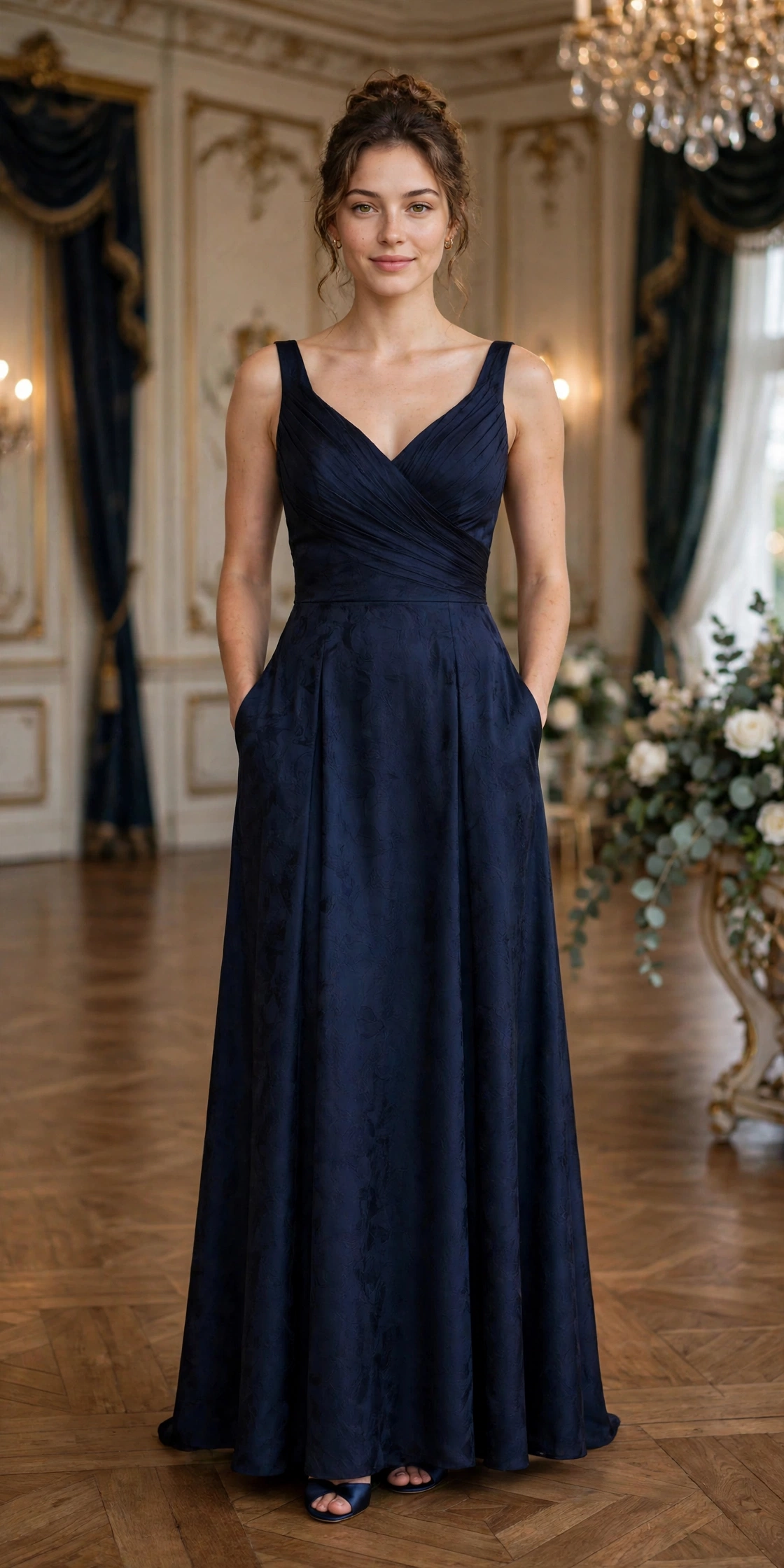
What Makes a Good Gown Pocket
A good pocket starts with placement. Side-seam pockets, set into the seam that runs down the side of the gown, are the most common and usually the most invisible, because the opening follows a line that already exists in the dress. The pocket bag itself hangs inside the gown, against the lining, so from the outside you see only a smooth skirt. In-seam pockets in an A-line or empire-waist gown are especially forgiving, because the skirt flares away from the body and the pocket has room to hang without pressing against the hip.
Depth is the second test. A useful pocket should hold a phone without the phone poking out of the top or weighing the skirt down on one side. In a fitting room, put your phone in the pocket, walk a few steps, and look in the mirror from the front and the side. Does the phone create a visible rectangular bulge? Does the skirt pull or swing unevenly? Does the pocket feel secure, or does the phone feel as if it might slip out when you sit? A pocket that passes all three checks — no bulge, even drape, secure hold — is a real pocket. A pocket that fails the bulge test with a phone may still be useful for a lipstick, a key, or a tissue, but it is not a phone pocket, and you should judge it honestly for what it can hold.
The pocket fabric matters too. A pocket made from the same heavy fabric as the gown can add bulk, while a pocket made from a light lining fabric hangs more cleanly. Look inside the gown if you can, and feel the pocket bag: it should be smooth, stitched securely at the top and bottom, and free of loose threads that could catch on a phone case or a ring. A pocket that is only tacked at one point will pull and gap over time, so check that the stitching feels firm along the seam.
Size and weight are the final considerations. A pocket is not a handbag, and overloading it will ruin the drape of even the best gown. A phone, a small lipstick, a key, and a tissue are a realistic load. A wallet, a large phone case with cards, a compact mirror, and a snack are not. If you load a pocket heavily on one side, the skirt will hang unevenly and the pocket will show, which defeats the purpose. Think of the pocket as a hands-free helper for two or three small essentials, not as a replacement for a bag if you need to carry a lot.
Silhouettes That Hide Pockets Best
A-line gowns are the easiest silhouette for pockets, because the skirt flares gradually from the waist and gives the pocket room to hang without pressing against the body. The flare also means that a small amount of pocket bulk is absorbed by the shape of the skirt, rather than showing as a lump at the hip. If you are shopping for your first gown with pockets, start with an A-line style, because it is the most forgiving and the most widely available with pockets.
Empire-waist gowns, where the waistline sits just below the bust and the skirt flows from there, also hide pockets well, for a similar reason: the skirt is already flowing and loose below the waist, so a pocket does not interrupt a tight fit. These gowns suit long events, because they are comfortable to sit and dance in, and the pocket adds to that comfort by freeing your hands. Ball gowns, with their full skirts, hide pockets almost completely, because the volume of the skirt dwarfs the pocket entirely. If you love a dramatic ball gown, pockets are almost a free bonus.
Fitted silhouettes, such as sheath or mermaid gowns, are trickier. A pocket in a tight skirt has nowhere to hide, because the fabric follows the body closely and any bulk will show. Some fitted gowns still include pockets, but they are usually shallow and best used for a lipstick or a tissue, not a phone. If you love a fitted silhouette and want pockets, try the gown on with your phone in the pocket and check the mirror carefully from every angle, including while seated. If the pocket shows, you have two honest choices: accept the pocket as a light-use feature, or choose a less fitted gown for pocket use and keep the fitted gown for occasions when you will carry a clutch.
Wrap gowns and gowns with a flowing overlay can also work well, because the wrap or overlay layer covers the pocket area and adds an extra layer of camouflage. A gown with a sheer overlay, a draped panel, or an asymmetrical skirt often hides pockets better than a plain, tight skirt, because the eye follows the drape rather than the hip line. When trying such gowns, check the pocket with the overlay in its natural position, not held aside, because the overlay is part of how the pocket stays hidden.
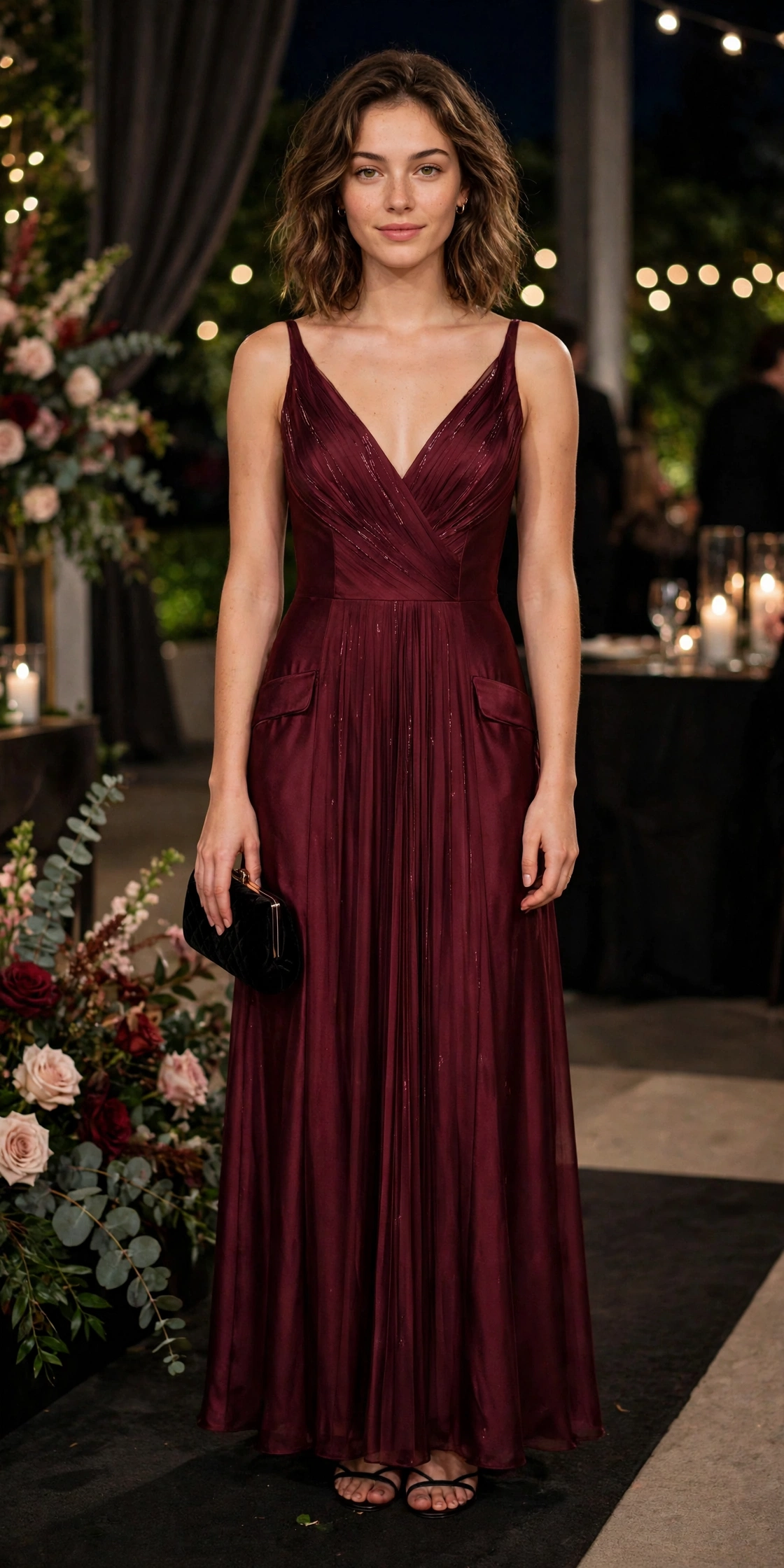
Fabrics, Drape, and the Pocket Test
Fabric weight and drape decide whether a pocket stays invisible. Medium-weight fabrics with good drape — crepe, satin with a soft hand, chiffon over a lining, and flowing jersey — tend to fall smoothly over a pocket. Very stiff fabrics can hold the pocket shape awkwardly, creating a visible box at the hip, while very thin, clingy fabrics can show every edge of the pocket bag. If you are choosing between two gowns, one in a draping fabric and one in a clingy fabric, the draping fabric is usually the safer pocket choice.
Pattern and color also affect visibility. A solid, darker color hides pocket edges better than a very light, solid color, because shadows and folds are less visible on dark fabric. A subtle pattern, such as a small floral or a textured weave, can also help camouflage a pocket, because the eye does not focus on one smooth area. A very light, plain fabric, such as white or blush satin, will show pocket bulk most clearly, so test those gowns extra carefully and keep the pocket load light.
The fitting-room pocket test is worth doing properly. Wear the undergarments and shoes you plan to wear to the event, because heel height changes how the skirt falls and therefore how the pocket hangs. Put your actual phone and lipstick in the pockets, not just your hands, because hands are thinner and lighter than a phone. Walk, sit, stand, and turn in front of the mirror. Sit for a minute, because a pocket that looks fine standing can press uncomfortably or bulge when seated. Dance or sway gently, if the shop allows, because a pocket that swings heavily will annoy you on a dance floor. If the gown passes all of these, it is a genuine pocket gown, not just a gown with pocket-shaped decoration.
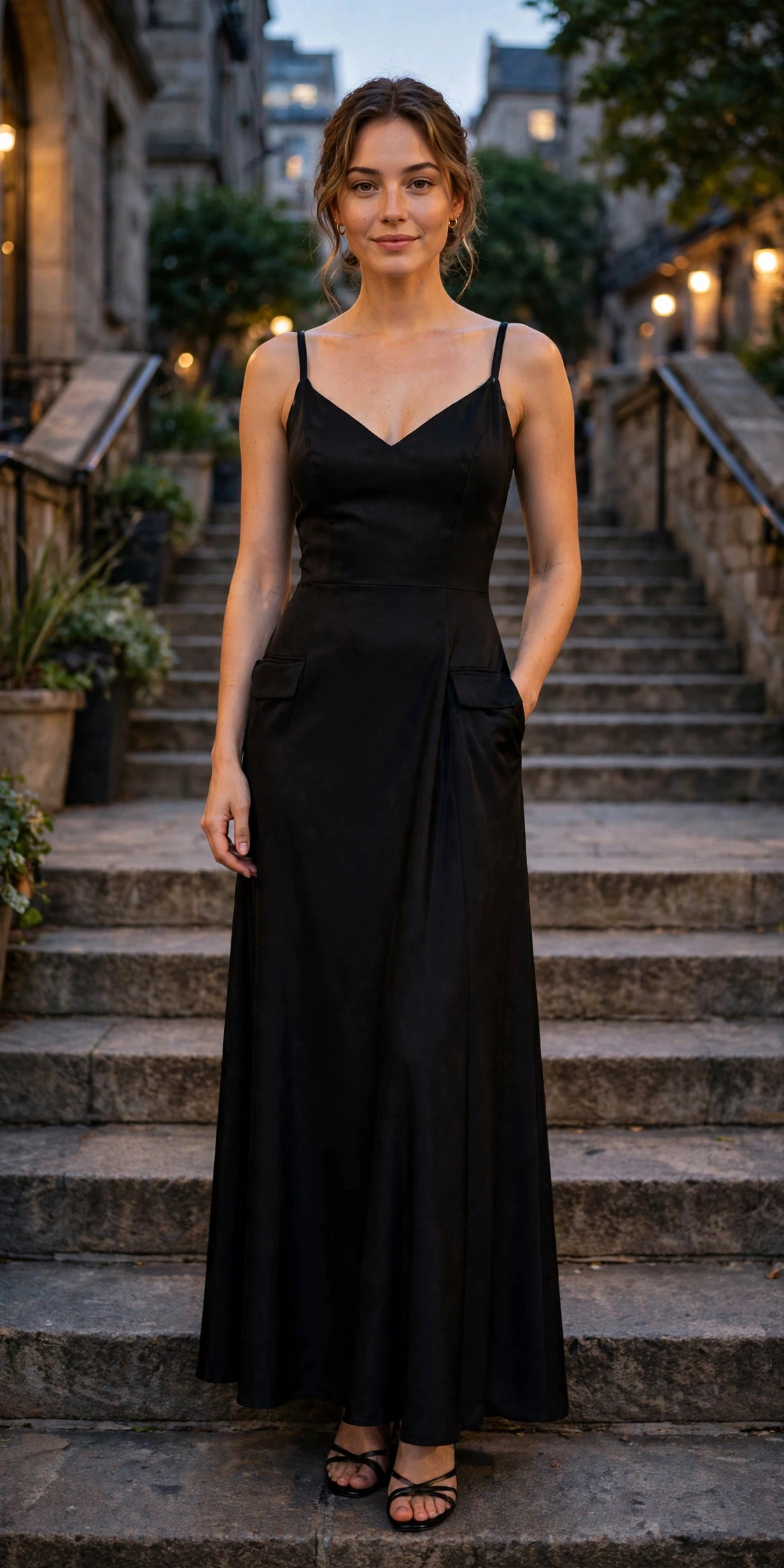
Styling a Pocket Gown Without Losing the Elegance
The styling rule for a pocket gown is simple: let the pockets be a secret. Do not choose a gown with visible, patched-on pockets that break the line of the skirt, unless that is a deliberate fashion statement you want. The classic evening look relies on a smooth silhouette, and a hidden side-seam pocket preserves that silhouette perfectly. Your hands in the pockets for a photo can look relaxed and confident, but for most of the evening your hands will be out of the pockets, holding a glass, greeting people, or dancing, and the gown should look like any other elegant gown in those moments.
Because you may not need a bag, you can simplify your accessories. A small clutch is still useful if you need to carry more than the pockets hold, but you are no longer forced to carry one. If you skip the bag, make sure your essentials are truly pocket-sized, and decide in advance where your phone, key, and lipstick will go, so you are not redistributing items in the middle of the event. If you keep a clutch, choose a small one that matches the gown, and use it for overflow items rather than duplicating everything in both the bag and the pockets.
Shoes and jewelry should follow the formality of the gown, not the practicality of the pockets. A pocket does not make a gown casual, so heeled sandals, elegant flats if you prefer them, and simple jewelry still suit the occasion. A statement earring or a delicate necklace can complete the look, while a bulky bracelet on the wrist can catch on the pocket opening when you slip your hand in, so keep bracelets slim or wear them on the wrist you use less for pocket access. A wrap, shawl, or light coat for the journey to the event should be easy to put on and take off without disturbing the pockets or the skirt.
Hair and makeup for a pocket gown follow the same logic as for any evening gown: choose a style that suits the neckline and the occasion, and that will last through the event. An updo keeps the neckline clear and stays neat through dancing, while loose waves suit a softer gown. The pockets do not change this, except in one small way: if you plan to keep a lipstick in your pocket for touch-ups, choose a lipstick that is easy to apply without a mirror, or accept a quick mirror check in the restroom. A pocket makes touch-ups easier, because the lipstick is already with you, but it does not replace a mirror.
Occasions Where Pockets Earn Their Keep
Weddings are the classic pocket occasion, especially if you are a guest who will be on your feet for hours, moving between ceremony, photos, dinner, and dancing. A pocket lets you keep your phone for photos, a tissue for emotional moments, and a lipstick for touch-ups, without juggling a clutch through all of those stages. If you are in the wedding party, check with the couple or the dress code first, because some wedding parties prefer a uniform look without visible pocket use in formal photos, but for guests, pockets are almost always a welcome help.
Galas, fundraisers, and formal dinners are another strong case, because these events involve standing, mingling, holding a glass, and shaking hands — all tasks that are harder with a clutch in one hand. A pocket frees both hands for greeting and holding a drink, which makes conversation easier. Proms and school formals are also popular pocket occasions, because students often want to dance freely and keep a phone close for photos, and a gown with pockets lets them do both without worrying about where to put a bag on the dance floor.
Holiday parties and New Year events benefit too, because these are long, social evenings with dancing and photos. A pocket gown lets you move freely, sit comfortably, and keep essentials close without returning to a table to fetch a bag. For any event where you will be away from a safe place to leave a bag, pockets add a layer of security as well, because your phone and key stay on your body rather than on a chair or a table.
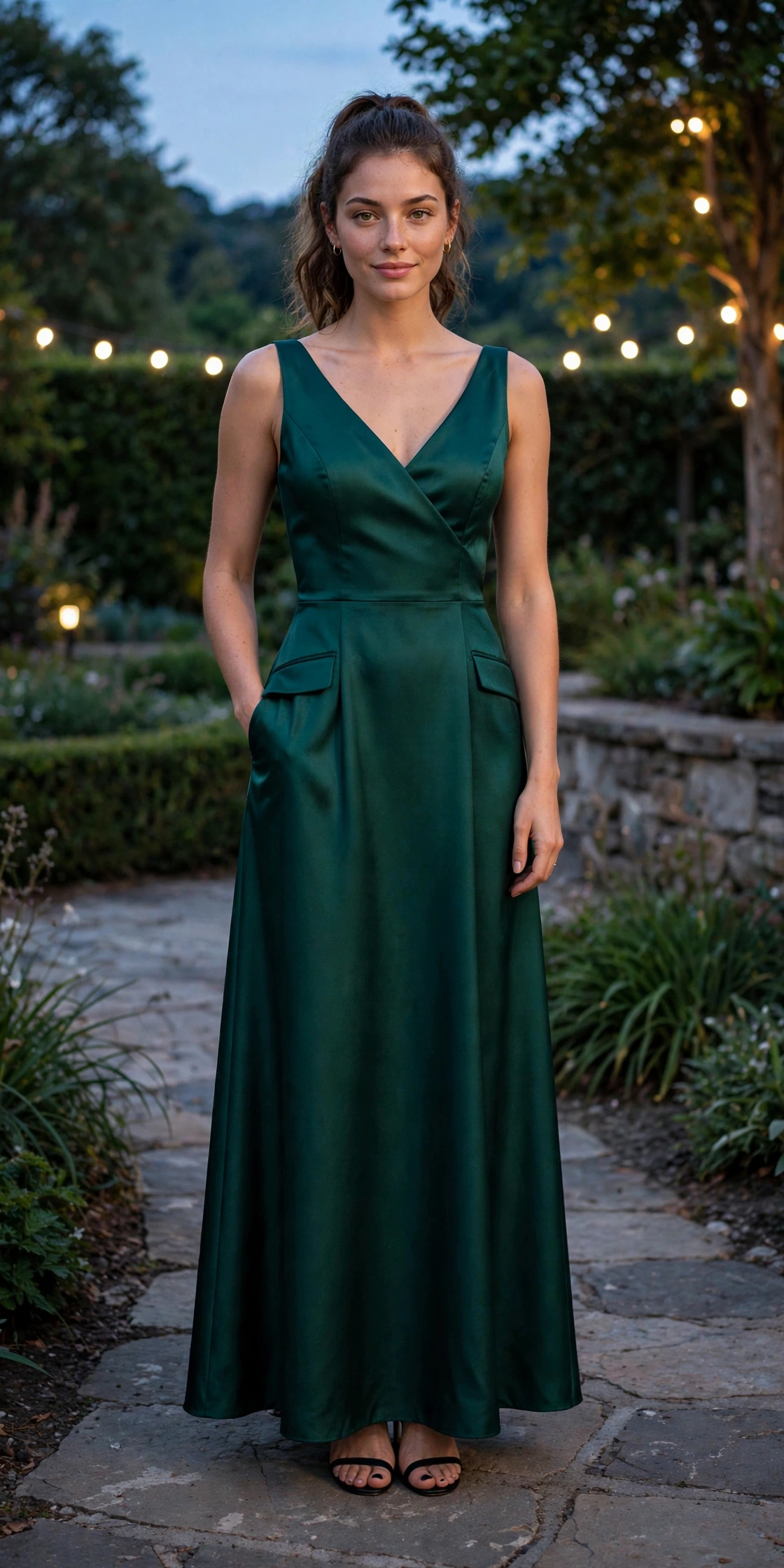
Shopping for Evening Gowns With Pockets: Alterations and Pitfalls
When shopping, ask directly whether a gown has pockets, because listings and sales staff do not always mention them. Search filters and product descriptions sometimes omit pocket information, so check the details section, look for side-seam openings in photos, or ask the seller. If you are buying online, read reviews for pocket mentions, and check the return policy, because a pocket that looks good in a photo may not pass your in-person test. Order early enough to try the gown with your actual essentials and to exchange it if the pockets fail.
Alterations need pocket awareness. If a gown needs hemming or taking in at the waist, tell the tailor about the pockets, because altering the side seam can affect the pocket opening and the pocket bag. A good tailor will preserve the pockets during alterations, but they need to know the pockets are there and how you use them. Bring your phone to the fitting, so the tailor can check the drape with a realistic pocket load after alterations. If a gown needs significant side-seam work, ask whether the pockets will survive the change intact, and whether the pocket depth will change.
Common pitfalls include pockets that are too shallow, pockets that are placed too high or too low, and pockets that are only on one side. A single pocket can be useful, but it creates uneven weight if you load it heavily, so check whether the gown has one or two pockets and plan accordingly. A pocket placed too high can sit at the waist and feel awkward, while a pocket placed too low can be hard to reach under a long skirt. The ideal placement is where your hand naturally falls at your side, with an opening large enough to slip your hand in comfortably without stretching the seam.
Another pitfall is assuming every gown in a style range has pockets just because one does. Pocket inclusion varies by specific dress, not just by brand or silhouette, so check each gown individually. Finally, do not let pockets override fit, color, and comfort. A gown with perfect pockets but a poor fit, an unflattering color, or an uncomfortable bodice is still a poor gown. Pockets are a wonderful bonus, and for many people they are a deciding factor between two otherwise equal gowns, but they should not rescue a gown that fails on the basics. Choose the gown that fits, flatters, and feels good first, and let the pockets be the feature that makes a great gown even better. That is the real promise of evening gowns with pockets: elegance that does not ask you to give up practicality, and practicality that does not ask you to give up elegance.
Related reading: Midi Dress, Women Basics, and Occasion Wear.
Do all evening gowns come with pockets?
No. Pocket inclusion varies by specific dress, not just by brand or style, so you need to check each gown. A-line and empire-waist gowns are more likely to include pockets, while very fitted gowns are less likely to have useful ones. Ask the seller, check the description, and test the pockets in person when possible.
Will pockets make my gown look bulky?
A well-made side-seam pocket in a draping fabric should not show when it is empty or lightly loaded. Bulk appears when the pocket is overloaded, the fabric is very clingy, or the silhouette is very tight. Keep the load to a phone and one or two small items, and test the gown seated and standing before buying.
What can I actually fit in a gown pocket?
A realistic load is a phone, a lipstick, a key, and a tissue. A wallet, a large case with cards, a mirror, and other bulky items will usually show and pull the skirt unevenly. Think of the pocket as a hands-free helper for small essentials, not as a full replacement for a bag if you need to carry a lot.
Are pockets suitable for a very formal event?
Yes, because hidden side-seam pockets do not change how the gown looks from the outside. The gown still reads as formal and elegant, and the pockets only become visible when you use them. For the most formal photos, you can simply keep your hands out of the pockets, and no one will know they are there.
Can a tailor add pockets to a gown that does not have them?
Sometimes, but it depends on the gown’s construction, seam allowances, and fabric. A tailor can often add side-seam pockets to an A-line or flowing gown, but it is harder in a very fitted gown with little extra fabric. Ask a tailor before buying a gown with the intention of adding pockets, and bring the gown for an in-person assessment.
How do I test pockets before buying a gown?
Wear your event shoes and undergarments, put your actual phone and lipstick in the pockets, and walk, sit, stand, and turn in front of a mirror. Check for bulges from the front and side, check that the skirt hangs evenly, and check that the phone feels secure when seated. A pocket that passes all of those checks is genuinely useful, not just decorative.