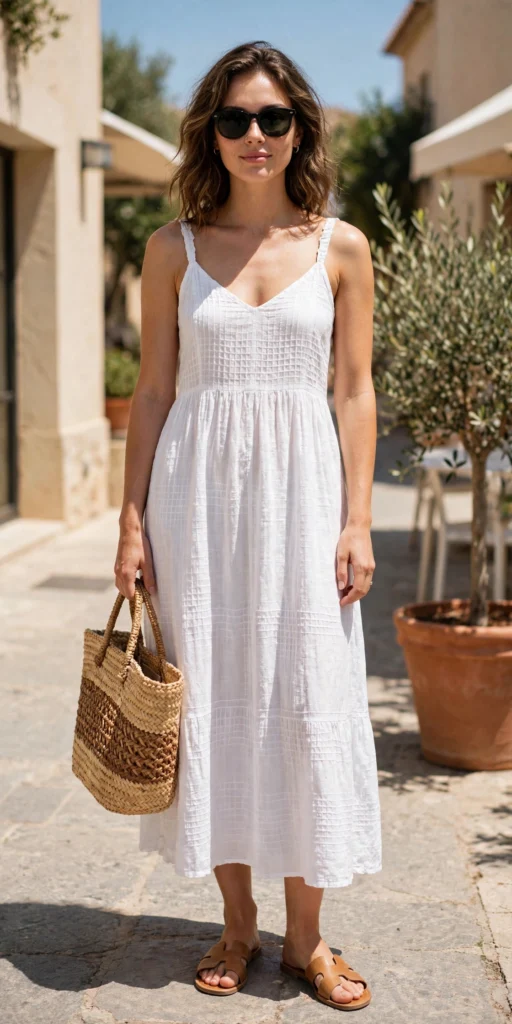
Fingerless gloves exist for one simple reason: they keep your hands warm while leaving your fingers free. That trade-off is the whole idea. A regular glove covers everything and keeps you warmest, but it also makes small tasks clumsy. A fingerless glove covers your palm and wrist, warms the part of the hand that loses heat fastest, and leaves your fingertips open so you can type, unlock a phone, turn a key, hold a pen, or button a coat without taking anything off.
If you have ever stood at a bus stop in November, pulled a glove off to answer a text, and then fumbled to get it back on with cold hands, you already understand the appeal. Fingerless gloves remove that on-and-off dance. That, in short, is what is the point of fingerless gloves: warmth where it counts, without giving up the use of your hands. They are not the warmest glove you can buy, and they do not pretend to be. They are the glove for days when you need your hands to work.
What Is the Point of Fingerless Gloves in Everyday Life?
The point comes down to grip and touch. Your fingertips do the fine work. They feel texture, find small buttons, and control a touchscreen. When fabric covers them, you lose that feedback. Fingerless gloves protect the palm, the back of the hand, and the wrist — the areas that get cold and stiff first — while your fingers stay in direct contact with whatever you are holding.
Think about a normal winter morning. You leave the house, lock the door, find your keys, check your phone for the bus time, pay for coffee, and open a car door. With full gloves, at least two of those jobs force you to bare a hand. With fingerless gloves, none of them do. That convenience adds up, especially if you walk to work, use public transport, or spend time outdoors between stops.
They also suit people who work with their hands in cool rooms or outdoors. Photographers adjust dials. Gardeners tie twine and prune. Cyclists brake and shift gears. Writers type. In each case, bare fingers matter more than covered fingertips, and a warm palm keeps the whole hand more comfortable than no glove at all.
When Fingerless Gloves Work Best — and When They Don’t
Fingerless gloves shine in mild to moderately cold weather, roughly the range where your hands feel chilly but not painfully cold. They are ideal for autumn, early winter, and cool spring mornings. They also work well indoors in a drafty office, a chilly studio, or a warehouse where the heating never quite catches up.
They are not the right choice for deep cold, snow, or wind on an exposed hilltop. Once the temperature drops well below freezing, exposed fingertips get cold fast, no matter how warm your palms are. On those days, wear full gloves or mittens, and keep fingerless gloves for the walk from the car to the door, not the whole outing.
A good rule: if your fingers start to sting or go numb within a few minutes, the weather has passed what fingerless gloves can handle. Switch to full coverage. There is no style point worth numb fingers.
Choosing the Right Pair: Material Matters
The material decides how warm, how stretchy, and how easy to care for a pair will be.
Wool and wool blends are the classic choice. They stay warm even when slightly damp, they breathe, and they look good with coats and sweaters. Pure wool can feel itchy against bare skin for some people, so a wool-acrylic blend is often the easier everyday pick. Look for a soft inner feel when you try them on — if the edge around the fingers scratches in the shop, it will scratch all day.
Acrylic knits are cheaper, washable, and widely available. They are warm enough for most autumn days, they hold their shape well, and they come in every color. They do not breathe quite as well as wool, so on a long walk your hands may feel clammy. For short trips and everyday errands, that rarely matters.
Leather fingerless gloves look sharper and last longer, but they are usually less warm than knit. They suit driving, cycling, and dressier outfits. Leather also molds to your hand over time, which improves the fit. They need more care — keep them dry, and condition them now and then so the leather does not dry out and crack.
Fleece-lined knits sit in the middle: soft inside, stretchy, and warmer than a thin knit alone. They are a good pick if your hands run cold but you still want finger freedom.
For workouts or cycling, look for a pair with a grippy palm. Silicone dots or a textured patch stop a phone or a handlebar from sliding. For typing, choose a thinner knit so the cuff does not bunch at your wrist and push your sleeves up.
Fit Checks That Actually Work
Fit matters more with fingerless gloves than with full gloves, because there is no fingertip to anchor them. A pair that is too loose slides down and bunches at the palm. A pair that is too tight cuts into the webbing between your fingers and makes your hands ache.
Try these checks before you buy:
- The palm test. Spread your fingers wide, then make a fist. The glove should move with your hand without pulling tight across the knuckles or gaping at the palm.
- The wrist test. The cuff should sit snugly on your wrist without leaving a deep red mark after a minute. If it slides down when you shake your hand, it is too loose.
- The finger edge test. The glove should end around the first knuckle or just past it. If it creeps up toward the second knuckle, typing gets awkward. If it ends before the knuckle, your palm may slip out.
- The phone test. Pick up your phone, unlock it, and type a short message. If you have to tug the glove back into place after every swipe, try another size.
- The sleeve test. Wear the coat or sweater you plan to pair them with. The cuff should sit flat under the sleeve, not bunch into a thick roll at your wrist.
Most brands sell small, medium, and large. If you fall between sizes, size up for knit and size down for leather, since leather stretches with wear and knit does not stretch as much over time.
How to Style Fingerless Gloves Without Looking Costume-y

The worry with fingerless gloves is that they can look like a costume piece — biker, goth, or stage performer — when you just want to look like yourself on a Tuesday. The fix is simple: keep the rest of the outfit ordinary, and let the gloves be the practical detail, not the theme.
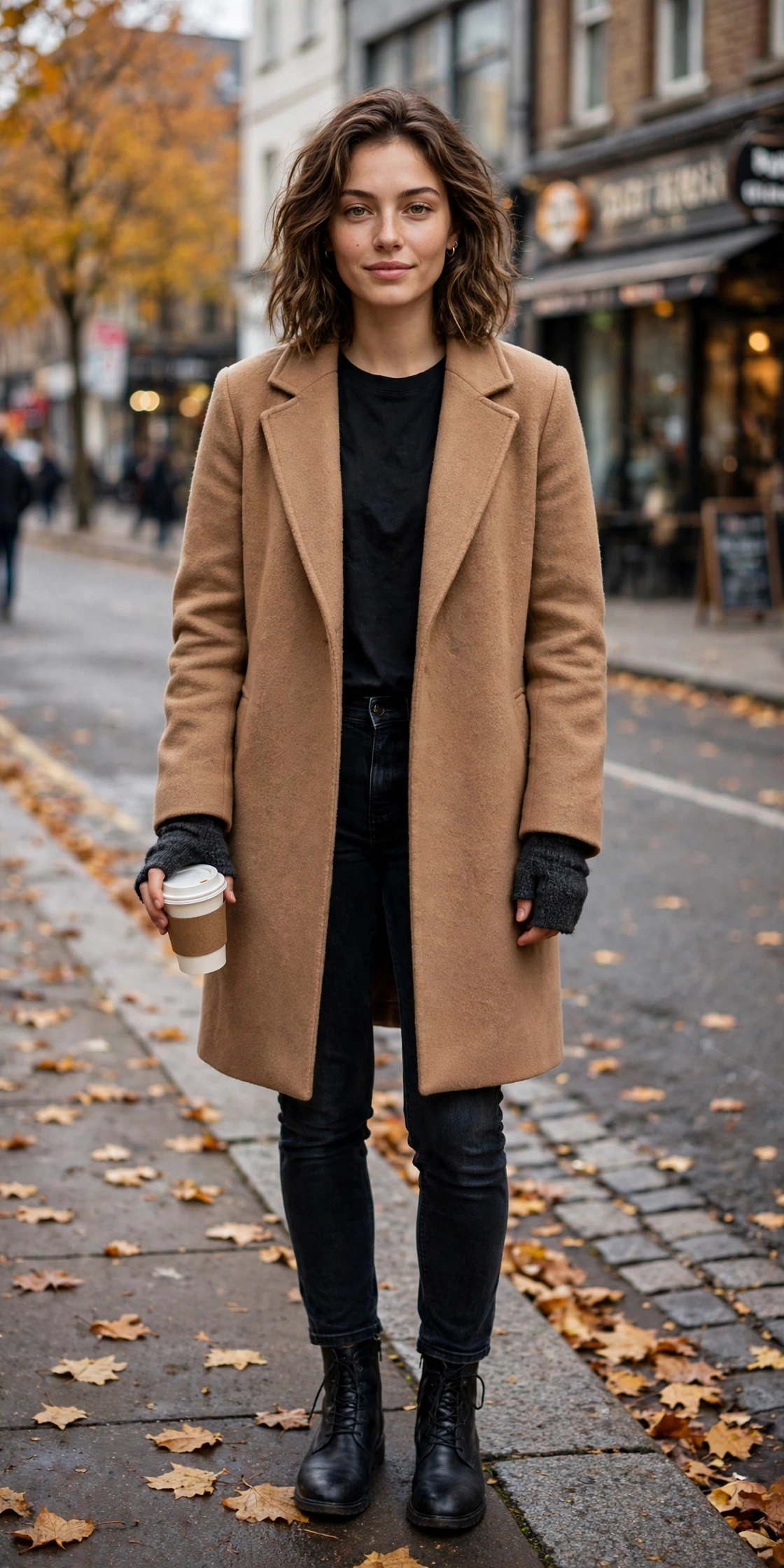
With a wool coat and jeans, choose a plain knit pair in black, charcoal, grey, or camel. No studs, no cut-outs, no bright neon unless that is genuinely your style. The gloves disappear into the outfit, and nobody thinks twice about them.
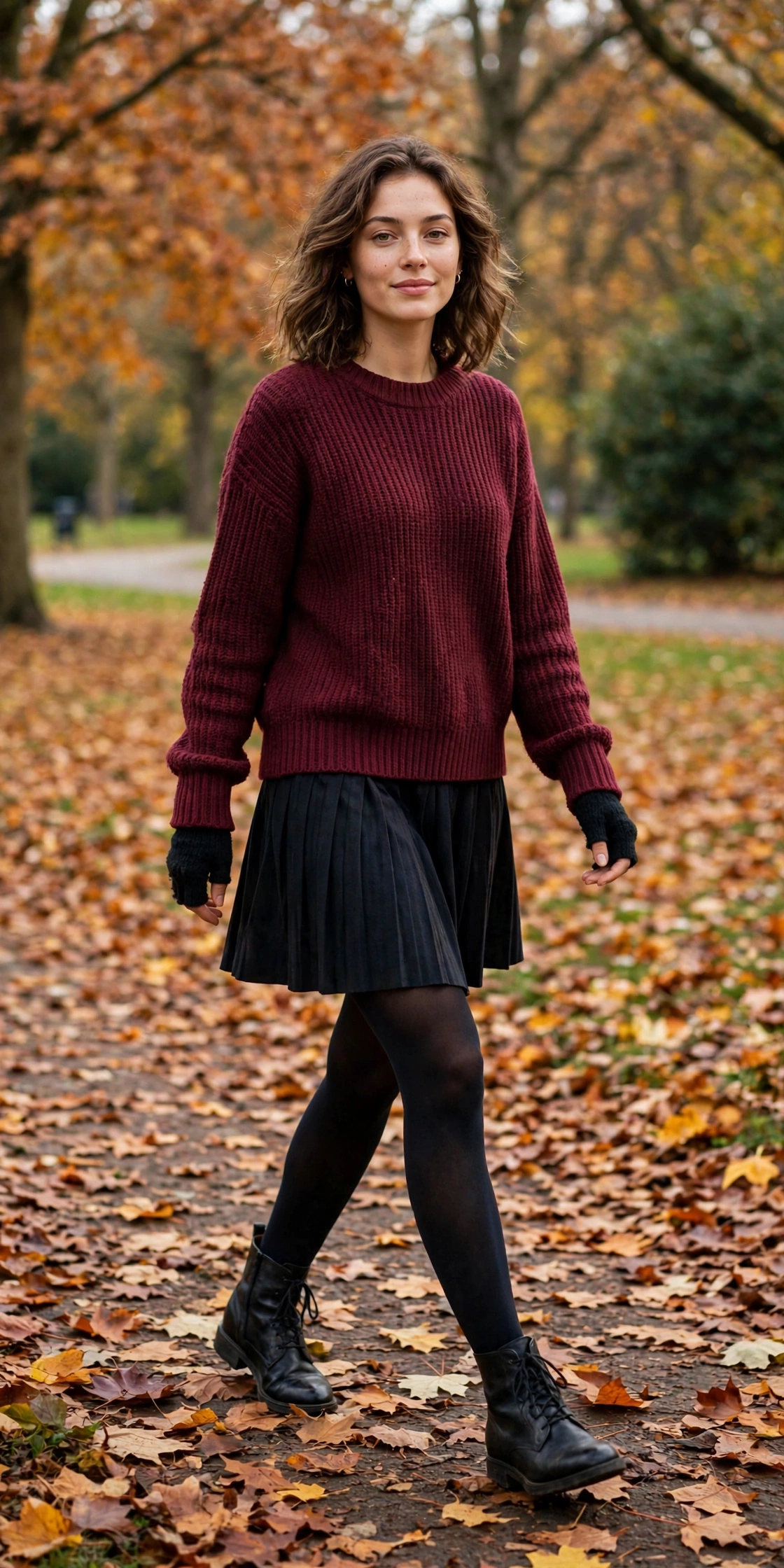
With a chunky sweater, match the glove color to something already in the outfit — your scarf, your bag, or your boots. You do not need an exact match. A dark grey glove with a burgundy sweater and dark boots looks intentional without looking matched set by set.
With a leather jacket, leather fingerless gloves make sense and look sharp, especially for driving. Keep the hardware minimal. One small buckle or a plain strap is plenty.
With office clothes, a thin dark knit pair works for the commute and comes off at your desk. Pair them with a structured coat, a scarf, and simple boots, and they read as practical, not casual. If your office is cold, keep a pair in your desk drawer for typing — thinner is better here, so the cuff does not fight with your sleeves.
Avoid wearing fingerless gloves with too many other statement pieces at once. A bold hat, a loud scarf, patterned gloves, and heavy boots together tip the outfit from practical into costume. Pick one interesting piece and let the rest stay calm.
Practical Uses, One by One
Commuting and errands. This is where most people use them most. Keys, cards, phones, tickets, coffee cups — all easier with bare fingertips. A pair that lives in your coat pocket gets used ten times more than a pair buried in a drawer.
Typing and desk work. In a cold office, fingerless gloves take the chill off without slowing your typing. Choose a thin pair, and make sure the finger edge does not catch on keys. If you type all day, wash them regularly, since they pick up desk dust and skin oils faster than full gloves.
Driving. Leather or grippy-knit fingerless gloves give you a better feel for the wheel than thick winter gloves, and they keep your palms from getting cold on a morning drive. They are not a substitute for warming up the car, but they make the first ten minutes far more comfortable.
Cycling. Cyclists have used fingerless gloves for decades, mainly for grip and for padding on the palms. Padded cycling gloves reduce pressure on long rides. If you cycle in cold weather, layer them under a windproof mitt for the coldest stretches, or choose a thicker knit with a wind-resistant back.
Photography and crafts. Adjusting a camera dial, threading a needle, tying a knot, or handling small tools all need fingertip feel. A thin pair keeps your hands steady and warm without forcing you to stop and bare your hands every few minutes.
Outdoor markets, dog walks, and kids’ activities. Any outing where you open bags, hold a leash, push a stroller, or hand over money benefits from free fingers. Fingerless gloves are also easier to keep track of than mittens when you are juggling bags and a coffee.
Caring for Them So They Last
Knit gloves last longer if you wash them gently. Hand wash in cool water with a mild detergent, press out the water in a towel instead of wringing, and lay flat to dry. Machine washing on a gentle cycle in a mesh bag works for most acrylic knits, but check the label first — wool felts and shrinks in hot water.
Leather gloves should not be soaked. Wipe them with a damp cloth, let them air dry away from radiators, and use a leather conditioner a few times a season. If they get wet in rain, stuff them lightly with paper so they hold their shape while they dry.
Rotate two pairs if you wear them daily. Knit stretches out faster when it never gets a rest day, and having a spare means you are not reaching for a damp pair on a rainy morning.
A Quick Buying Checklist
Before you check out, run through this list:
- Do the fingers end near the first knuckle, not halfway up the finger?
- Does the cuff stay put when you shake your hand?
- Can you type, unlock your phone, and hold a key without adjusting the glove?
- Does the material suit your main use — wool for warmth, leather for driving, grippy knit for cycling?
- Is the color one you will actually wear with your coat, not just one that looks good in the photo?
- Can you wash it the way you realistically will — not the way you wish you would?
If a pair fails two or more of these, keep looking. Fingerless gloves are inexpensive enough that settling for a poor fit is never worth it.
The Short Answer, Revisited
Fingerless gloves are not a fashion gimmick and they are not a failed glove. They are a deliberate compromise: warmth where it counts, freedom where it matters. On a cool day, for a commute, a walk, a drive, or a few hours of work with your hands, that compromise is exactly right. Choose a plain color, check the fit with the phone test, and keep a pair in your coat pocket. You will reach for them more than you expect — and on the coldest days, you will know exactly when to swap them for full gloves instead.
A Last Check Before You Buy
Before you spend anything, ask yourself how you will actually use the pair. If the answer is mostly commuting and phone use, a plain dark knit pair is the right buy, and you do not need to spend much. If the answer is driving or cycling, look for leather or a grippy palm, because a smooth knit will slide at the worst moment. If the answer is desk work in a cold office, go thin, so the cuff never fights your sleeves. This is the practical side of what is the point of fingerless gloves — they are not a general winter glove, they are a glove for specific jobs, and matching the pair to the job is what makes them worth owning. Buy one pair for that job, wear it for a week, and you will know quickly whether the fit and the warmth suit you. If they do, buy a second pair in another color. If they do not, you have learned something useful for little money, and you can choose differently next time without a drawer full of gloves you never reach for.
Can you use a phone with fingerless gloves on?
Yes. That is one of their main advantages. Your bare fingertips work on any touchscreen exactly as they do without gloves, including fingerprint unlock on most phones. If your phone uses a fingerprint sensor on the side or back, your finger is already free to use it.
Are fingerless gloves warm enough for winter?
They are warm enough for mild winter days and for short trips in colder weather, but not for long exposure to deep cold. Think of them as a cool-weather glove. If the temperature is well below freezing or the wind is strong, wear full gloves or mittens, and save fingerless gloves for indoors or brief outdoor stops.
Do fingerless gloves help with cold hands at a desk?
Many people find they do, because they warm the palm and wrist while leaving fingers free to type. A thin knit pair works best for desk use. If your hands stay cold even indoors, layer a thin pair under a looser one, and check that your sleeves are not cutting off circulation at the wrist.
How do you keep fingerless gloves from sliding down?
Start with the right size — the cuff should grip your wrist without squeezing. A ribbed cuff holds better than a flat one. If a knit pair still slides, it may be stretched out from washing or from being a size too large, and it is time to replace it.
Can you wear fingerless gloves with a dress coat?
Yes, if you keep them plain and dark. A simple black or charcoal knit pair under a wool coat looks practical and neat. Avoid studded or brightly patterned pairs with a dress coat, since they clash with the coat’s clean lines.
Are leather or knit fingerless gloves better?
It depends on the job. Knit is warmer, softer, and easier to wash, so it wins for everyday walking and desk work. Leather looks smarter, lasts longer, and grips a steering wheel well, so it wins for driving and dressier outfits. Many people own one of each and choose by the day.