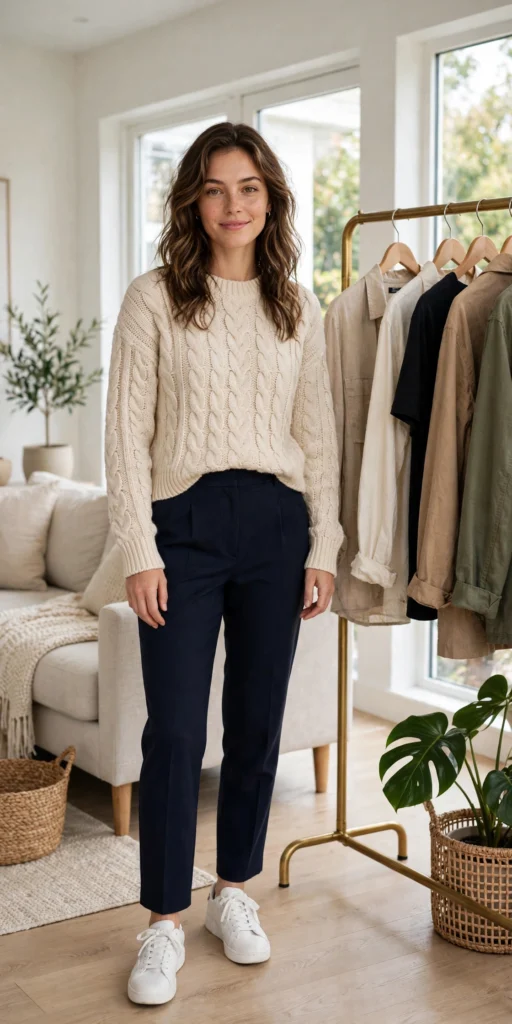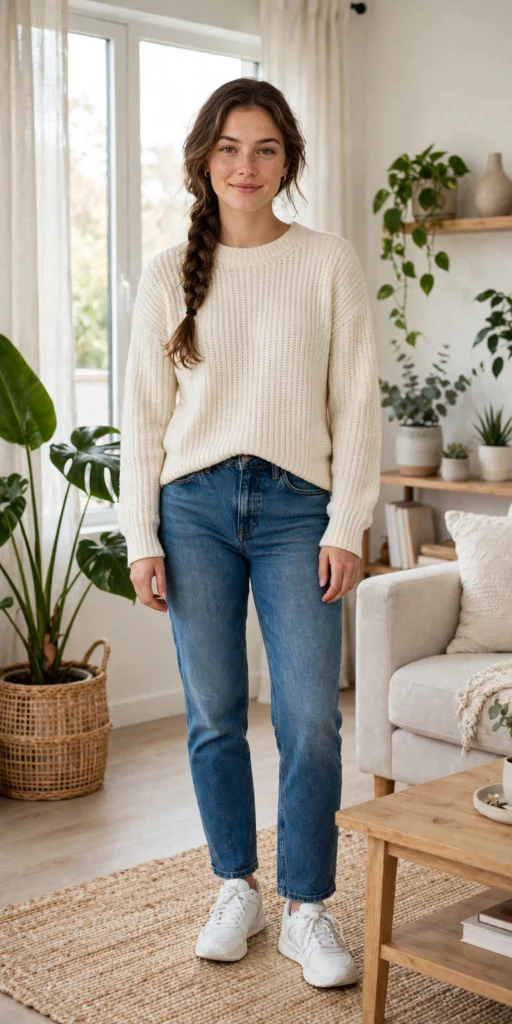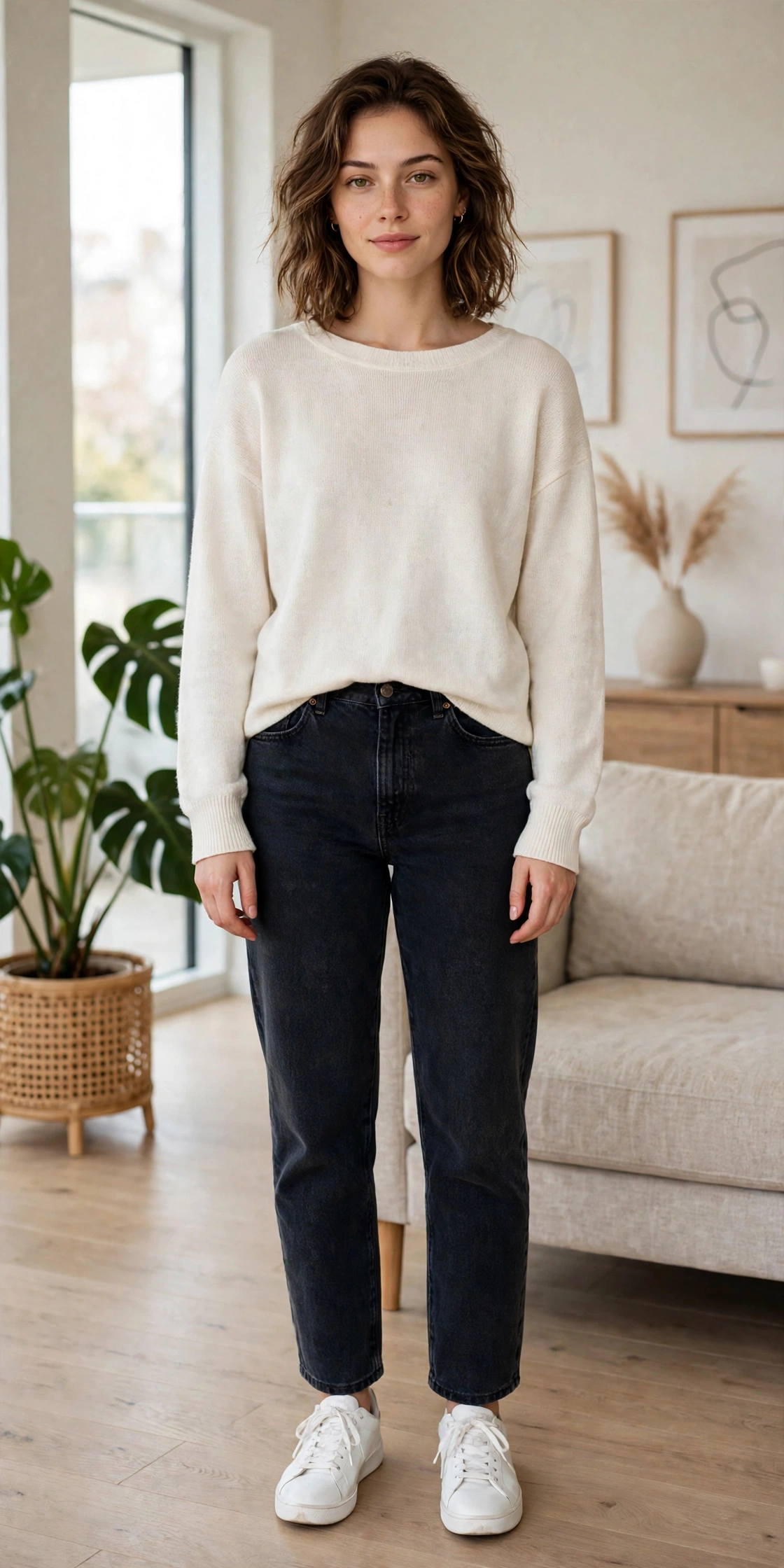
A boat neck sweater is one of the most flattering sweaters you can own, because its wide, shallow neckline draws the eye across the collarbones and balances the shoulders without showing too much skin. If you are looking for a boat neck cotton sweater, you are looking for a specific combination: that elegant neckline in a breathable, easy-care fabric that works for spring, autumn, and mild winter days. Cotton gives the sweater structure and freshness that wool sometimes lacks, while the boat neck gives it a polished, French-inspired feeling that a plain crew neck rarely achieves. Together, they make a sweater that looks dressed up with almost no effort.
A boat neck, also called a bateau neckline, runs wide across the upper chest, from one shoulder point toward the other, dipping only slightly in the middle. It is wider than a crew neck and shallower than a scoop neck. The effect is a horizontal line that widens the shoulder area visually and shows the collarbones. That line is why the style suits so many people: it creates balance. If your hips are wider than your shoulders, the boat neck adds visual width up top and brings the silhouette into proportion. If your shoulders are already broad, a boat neck still works, but choose a narrower boat neck, one that does not extend all the way to the shoulder points, so it does not add extra width you do not need.
Cotton is the right fabric for this neckline in many climates. A cotton knit holds the wide neckline in shape better than a very soft, drapey fabric, which can stretch and slide off the shoulder. Cotton also breathes, which matters for a sweater you might wear indoors all day, layered under a jacket, or through a changeable spring afternoon. It washes more easily than wool, which is practical for a sweater you reach for often. The trade-off is warmth: cotton is not as insulating as wool, so a cotton boat neck is a three-season sweater, not a deep-winter one, unless you layer it well. For cold days, layer it over a thin long-sleeve top or under a coat, and you will get the look without feeling cold.
Finding the Right Boat Neck Cotton Sweater Fit
Fit starts at the neckline itself. Put the sweater on and check that the neckline sits level across both shoulders, without one side slipping down while the other stays up. It should show the collarbones and sit comfortably, not dig into the neck or pull across the chest. Raise your arms above your head: the neckline may move a little, but it should settle back into place rather than staying twisted or stretched. If the neckline constantly slides off one shoulder, the sweater is either too large or the knit is too stretchy for the style, and it will annoy you all day. A good boat neck stays put through normal movement, including reaching, sitting, and putting on a coat.
Next, check the body fit. A classic boat neck sweater skims the body rather than clinging or ballooning. It should fall to the hip or just below, depending on the style, and it should not ride up when you sit. The sleeves should reach the wrist bone without bunching at the cuff, and the shoulder seam should sit near your natural shoulder point. If you prefer a relaxed fit, go up a size but check that the neckline still sits level; an oversized boat neck can look chic with slim trousers, but it can also look sloppy if the neckline collapses. The mirror test helps here: stand straight, look at the whole outfit, and ask whether the sweater looks intentional or accidental. Intentional means the lines are clean, the length works with your bottom half, and nothing pulls or gaps.
Body shape guidance is useful, but it should never override comfort. For a pear shape, a boat neck balances wider hips, especially in a lighter color or a stripe, paired with dark trousers or a dark skirt. For an apple shape, a boat neck in a slightly longer length, with a straight rather than tapered hem, skims the midsection without clinging. For a rectangle shape, a boat neck adds shape at the shoulders, and pairing it with a belted skirt or high-waisted trousers adds definition at the waist. For an hourglass shape, a boat neck that follows the body, rather than a boxy cut, keeps the proportions balanced. For a petite frame, a narrower boat neck and a shorter length keep the sweater from overwhelming your frame, while a taller frame can carry a wider neckline and a longer length easily.
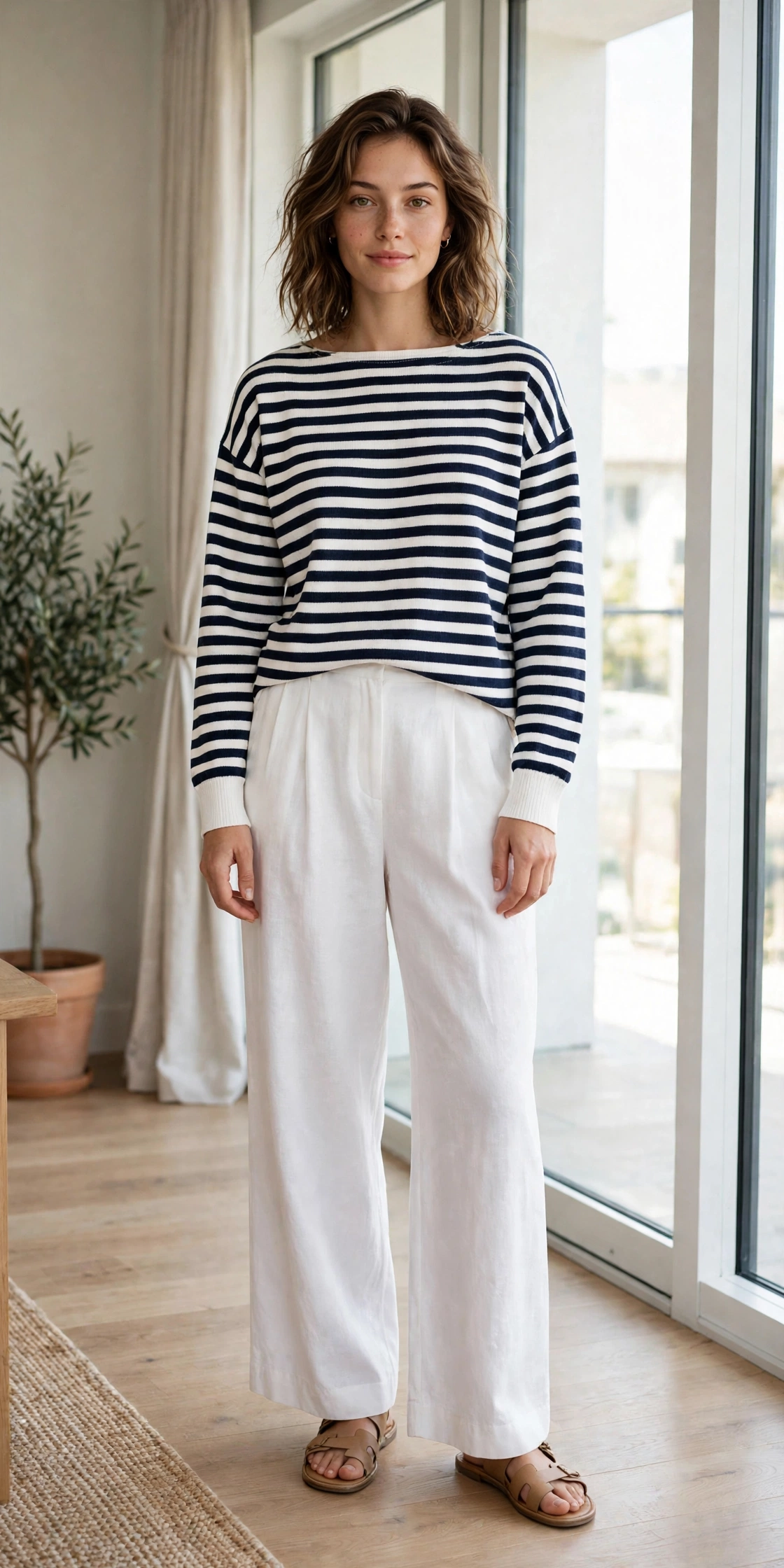
Color and pattern change the sweater’s job. A solid cream, navy, black, or grey boat neck is the most versatile, working for work, weekends, and evenings. A Breton stripe, with navy and white horizontal stripes, is the classic boat neck pattern, and it instantly reads as polished and timeless, especially with jeans or white trousers. A soft pastel, such as blush, sage, or pale blue, suits spring and pairs well with light denim and skirts. A bright color, such as red or cobalt, turns the sweater into the focal point, so keep the rest of the outfit simple. If you only buy one, choose a solid neutral first, then add a stripe as your second, because those two cover almost every outfit you already own.
Styling a Boat Neck Sweater for Work, Weekends, and Evenings
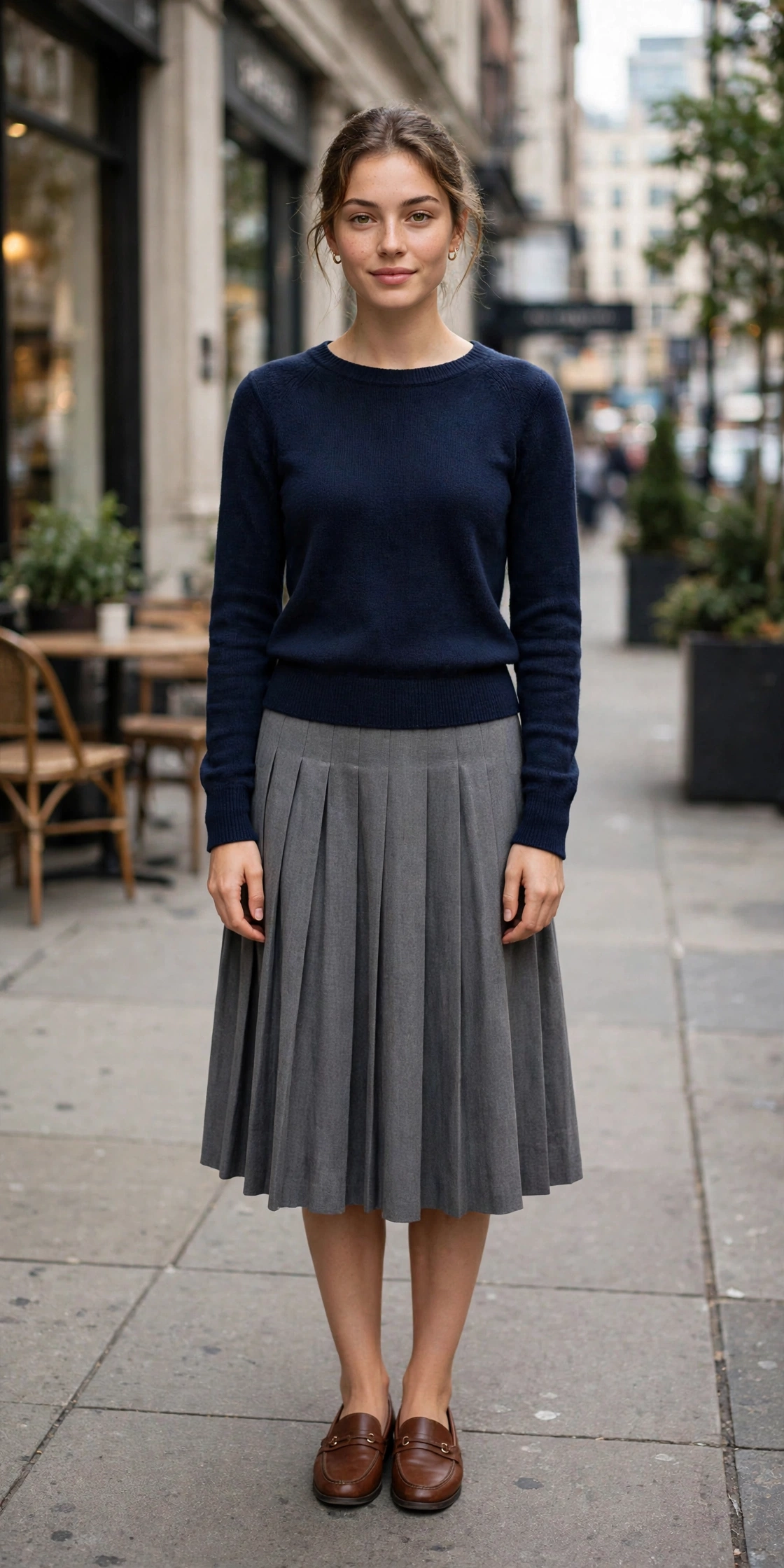
For work, a boat neck cotton sweater is a quiet winner. Pair a navy or black boat neck with tailored trousers, a pencil skirt, or a midi skirt, and add loafers or low heels. The neckline looks polished without needing a necklace, although a short pendant or small studs work well. Avoid a long necklace with a boat neck, because it competes with the horizontal line and often sits awkwardly against the wide opening. A structured bag and a simple watch complete the look. If your office is cool, layer a blazer over the sweater, but check that the blazer does not push the neckline out of shape; a blazer with a slightly open front usually works better than a fully buttoned one over a boat neck.
For weekends, the formula loosens up. A striped boat neck with straight-leg jeans and white sneakers is a classic that rarely looks wrong. A cream boat neck with light-wash jeans and sandals suits a spring lunch. A grey boat neck with leggings and ankle boots works for errands, as long as the sweater is long enough to cover the hip area comfortably. For a casual dinner, swap the jeans for black trousers, add a leather jacket, and the same sweater suddenly looks evening-ready. The boat neck does a lot of work here, because its elegant line lifts even simple bottom halves.
For evenings, choose a finer cotton knit, a darker color, and a slightly closer fit. A black boat neck with a satin midi skirt and heels is simple and striking, and the exposed collarbones add a dressy touch without needing a low neckline. A navy boat neck with wide-leg trousers and a clutch reads as polished for a dinner out. Keep jewelry minimal: studs, a slim bracelet, or a small ring, rather than a statement necklace that fights the neckline. If the evening is cool, a tailored coat over the sweater keeps the line clean, while a chunky scarf can hide the neckline entirely, so save the scarf for the walk and take it off indoors.
Layering is where cotton boat necks earn their keep. In spring, wear the sweater on its own or over a thin camisole. In autumn, layer it under a trench coat, a wool coat, or a denim jacket. In winter, layer a thin long-sleeve top underneath, with the boat neck on top, and add a coat for outdoors. The one layer to avoid is a high-necked top underneath that peeks out above the boat neck, because it breaks the clean line and looks messy. If you need warmth at the neck, choose a scarf you can remove indoors rather than a permanent underlayer that ruins the neckline.
Care keeps a cotton boat neck looking elegant rather than tired. Wash cotton knits in cool water, ideally in a mesh bag on a gentle cycle, and lay flat to dry rather than hanging, because hanging can stretch the wide neckline out of shape. Avoid high heat in the dryer, which can shrink cotton and tighten the neckline unevenly. If the sweater pills, use a fabric shaver gently on the body, avoiding the neckline edge. Store folded, not hung, for the same reason: a hanger pulls the neckline down over time. With that care, a good cotton boat neck can last many seasons, and its shape will stay true.
Shopping checklist: check the neckline width against your shoulders, check that it sits level and stays put when you raise your arms, check the body length with the trousers or skirt you plan to wear, check the sleeve length at the wrist, feel the cotton for a knit that holds shape rather than a floppy one, and check the care label for machine-washable cotton if easy care matters to you. Try the sweater with a jacket you own, because a boat neck that works alone but bunches under a coat is less useful than one that works both ways. If it passes those checks, it is a keeper.
A boat neck cotton sweater is not a trend piece. It is a wardrobe staple that has stayed in style because it flatters, it layers, and it looks polished without trying hard. Buy the fit first, the fabric second, and the color third, in that order, and you will have a sweater you reach for again and again, across seasons and occasions, rather than one that sits folded at the back of a drawer.
Knit Quality, Weight, and How to Spot a Good Cotton Knit
Not all cotton knits are equal, and the difference shows after a few washes. A good cotton knit feels dense enough to hold the neckline, but not stiff or scratchy. Hold the sweater up to the light: a very thin, see-through knit will lose its shape faster and may need a camisole underneath, while a medium-weight knit gives structure and coverage on its own. Stretch a small section gently and let go. A quality knit springs back to its original shape, while a poor knit stays stretched or baggy. Check the seams, too. Flat, even seams at the shoulders and sides signal careful making, while puckered or wavy seams often mean the sweater will twist after washing.
Weight is a practical guide. A lightweight cotton knit suits spring and early autumn, and it layers easily under a jacket without bulk. A medium-weight knit suits cooler autumn days and works on its own indoors. A heavy cotton knit can feel substantial and warm, but it can also be too warm for indoor wear and too bulky under a coat. If you are buying online and cannot feel the knit, read the fabric description carefully: look for a high cotton content, a mention of a tighter gauge, and care guidance that suggests gentle washing. Reviews that mention shape after washing are more useful than reviews that only praise the color, because color is easy to judge in a photo while shape retention is not.
Ribbing at the cuffs and hem also tells you about quality. Good ribbing is springy and even, and it keeps the cuffs and hem in place without squeezing. If the ribbing is loose or uneven in the shop, it will usually get worse with wear. Check the neckline binding as well: a neatly finished neckline edge, with no loose threads or waviness, is a sign the maker cared about the detail that defines this style. A boat neck lives or dies by its neckline, so a sloppy edge is a reason to choose a different sweater, even if the color is perfect.
Boat Neck Sweaters Through the Seasons
In spring, a cream or pastel boat neck with light jeans, a midi skirt, or white trousers feels fresh and easy. Add ballet flats or loafers, and a light trench for cooler mornings. The cotton breathes, so you will not overheat indoors, and the neckline looks polished for work or lunch. In summer, a lightweight boat neck in white or a soft stripe works for cooler evenings, beach towns, and air-conditioned offices, paired with linen trousers or a cotton skirt. It is not a hot-weather staple on its own, but it is a useful layer when the temperature drops in the evening.
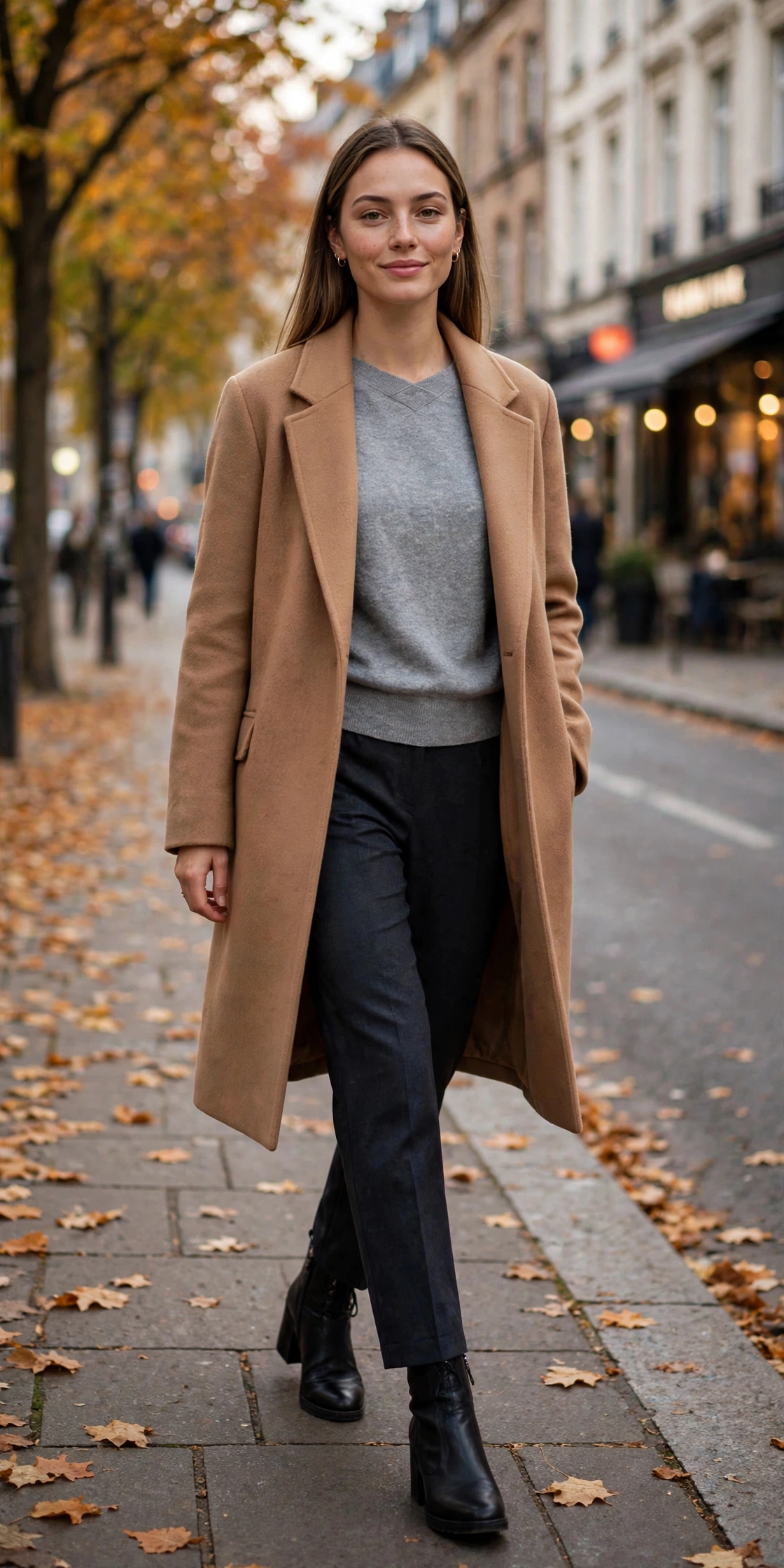
In autumn, the boat neck comes into its own. Pair a navy, grey, or burgundy version with dark jeans, ankle boots, and a wool coat, and you have a reliable everyday outfit. Layer a thin long-sleeve top underneath on colder days, and add a scarf you can remove indoors. In winter, a medium-weight boat neck under a tailored coat, with dark trousers and boots, works for work and weekends alike, as long as you layer sensibly underneath. The style is not limited to one season, which is part of its value: buy the right weight for your climate, and the same neckline serves you for most of the year.
Does a boat neck suit broad shoulders?
Yes, but choose a narrower boat neck that does not extend fully to the shoulder points, so it does not add extra visual width. A slightly narrower opening, a darker color, and a simple bottom half keep the proportions balanced. Avoid very wide, stiff necklines and heavy shoulder details, which can make broad shoulders look broader.
Can I wear a boat neck sweater to work?
Yes, in most offices a boat neck cotton sweater looks polished and professional, especially in a solid neutral color paired with tailored trousers or a skirt. Skip a long necklace, keep jewelry small, and check that the sweater is not too casual in fabric or too short for your workplace. If your office is formal, layer a blazer over it for meetings.
Is cotton warm enough for a sweater?
Cotton is breathable and comfortable for spring, autumn, and mild winter days, but it is less insulating than wool. For cold weather, layer a thin long-sleeve top underneath and a coat on top, or choose a cotton-wool blend if you want extra warmth. For indoor wear and changeable weather, cotton is often the more comfortable choice because it does not overheat.
How do I stop a boat neck from slipping off my shoulder?
Choose a size that fits your shoulders, not just your body, and check that the neckline sits level when you raise your arms. A knit with good recovery, meaning it springs back after stretching, holds the neckline better than a very soft, loose knit. If a sweater you love keeps slipping, a tailor can sometimes narrow the neckline slightly, but it is usually better to exchange it for a better-fitting size.
What should I wear under a boat neck sweater?
A thin camisole or a smooth, low-necked top works best, because it stays hidden under the wide neckline. Avoid high-necked tops that peek above the neckline and break the clean line. If you need warmth, wear a thin long-sleeve layer and accept that the boat neck line will be partly covered, or choose a scarf you can remove indoors instead.
How do I wash a cotton boat neck sweater without stretching it?
Wash in cool water on a gentle cycle, ideally in a mesh bag, and lay flat to dry. Do not hang a wet cotton knit, because the weight pulls the neckline out of shape. Avoid high dryer heat, fold the sweater for storage, and use a fabric shaver gently if pilling appears on the body.