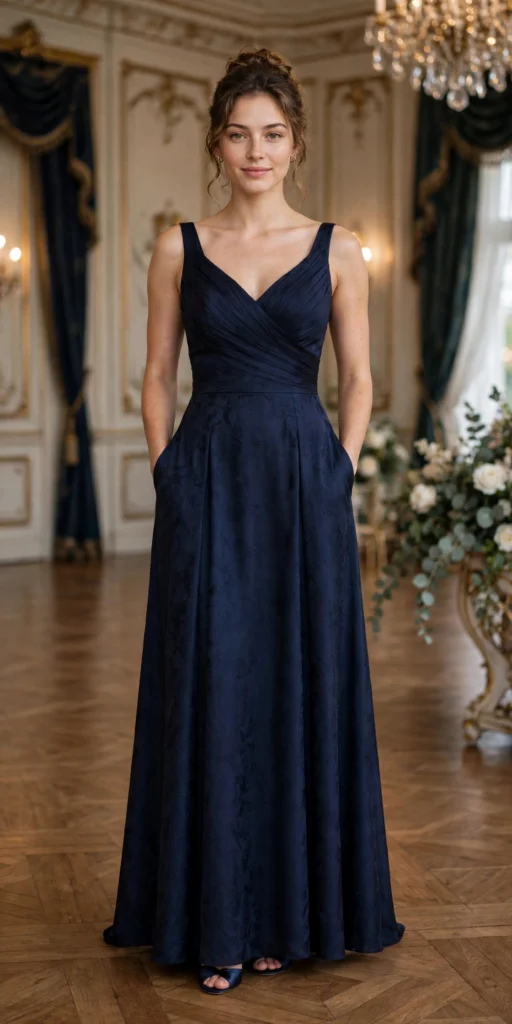
Choosing a dress for your child’s wedding is emotional, practical, and personal all at once. You want to look elegant in the photos, feel comfortable for a long day, and avoid upstaging the couple, while still feeling like yourself. A-line mother of the bride dresses with sleeves solve more of those problems at once than almost any other shape, because the A-line silhouette skims the body gracefully, the sleeves give coverage and confidence, and the overall effect is polished without being fussy. If you are shopping for a-line mother of the bride dresses, start with this shape and this sleeve question, and you will narrow a overwhelming choice down to a manageable, flattering shortlist.
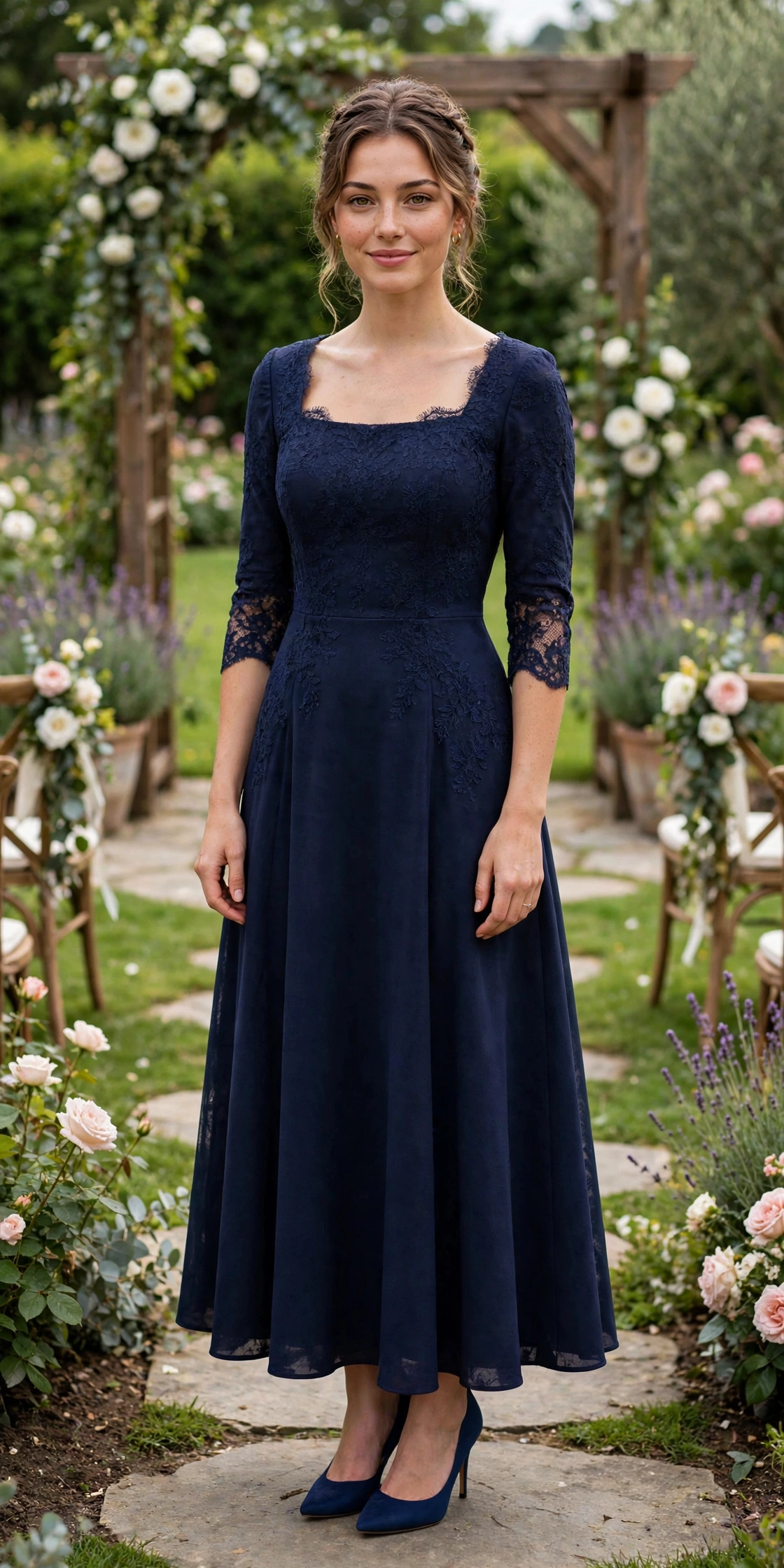
An A-line dress is fitted through the bodice and then flares gently from the waist toward the hem, forming the shape of a capital A. It does not cling at the hips or thighs, and it does not billow like a ball gown. That gentle flare is forgiving: it skims the midsection, gives room to sit, walk, and dance, and creates a long, balanced line from shoulder to hem. For a wedding day that runs from a morning ceremony through photos, a meal, speeches, and dancing, that comfort matters as much as the look. A dress that feels good at 10 in the morning and still feels good at 10 at night is not a luxury; it is the whole point.
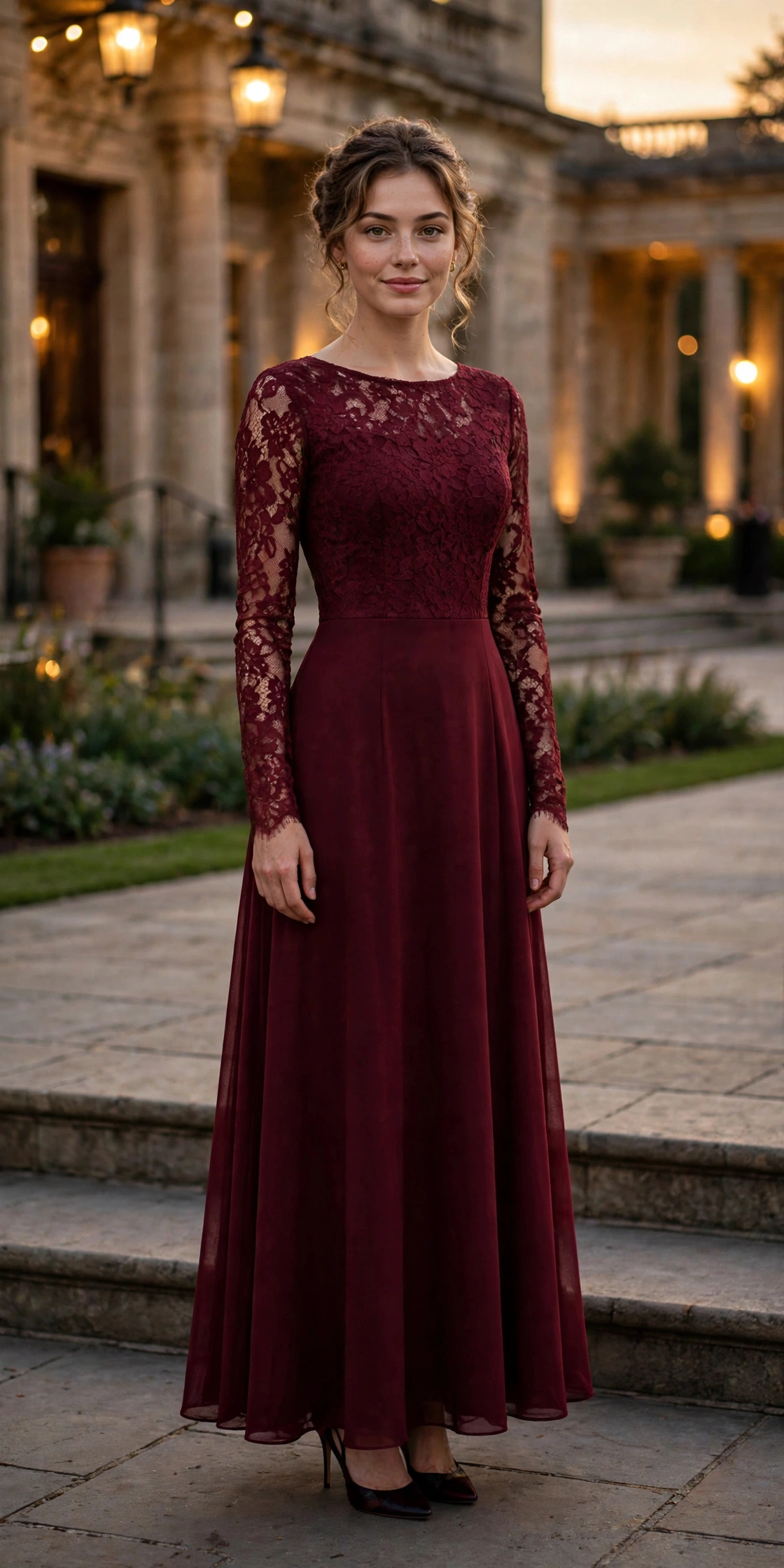
Sleeves change the dress in ways that go beyond coverage. Short sleeves suit warm weather and a relaxed venue, and they keep the arms cool while still giving a finished look. Elbow-length sleeves are a classic mother-of-the-bride choice, because they cover the upper arm, suit most venues, and pair well with a bracelet. Three-quarter sleeves, ending between the elbow and wrist, are elegant and practical, giving coverage while leaving the wrist free for jewelry and a watch. Long sleeves suit cooler weather, evening weddings, and formal venues, and they can be made from lace, chiffon, or a sheer overlay so they do not feel heavy. The right sleeve is the one you forget about during the day, not the one you keep adjusting.
How A-Line Mother of the Bride Dresses With Sleeves Flatter Different Figures
For a pear shape, with hips wider than shoulders, an A-line is a natural match. The fitted bodice defines the upper body, and the flare skims over the hips without adding bulk. Choose a bodice with a little detail, such as a V-neckline, a wrap front, or lace, to draw the eye upward, and keep the skirt fabric flowing rather than stiff. For an apple shape, an A-line with an empire or raised waistline can be very flattering, because it defines the area under the bust and then flows over the midsection. Look for a bodice that fits well without squeezing, and a skirt that moves when you walk rather than standing away from the body.
For an hourglass shape, an A-line that is fitted at the waist, not just at the bust, keeps the proportions balanced. A belt, a sash, or a defined waist seam helps, and a V-neckline or scoop neckline suits the bodice. Avoid an A-line that is too loose at the waist, because it can hide the shape and look shapeless in photos. For a rectangle shape, an A-line adds gentle curves, especially with a defined waist, a draped bodice, or a skirt with soft movement. For a petite frame, a knee-length or tea-length A-line keeps the proportions right, while a very long, heavy skirt can overwhelm a smaller frame. For a taller frame, a floor-length A-line looks especially elegant, and a longer sleeve balances the overall line.
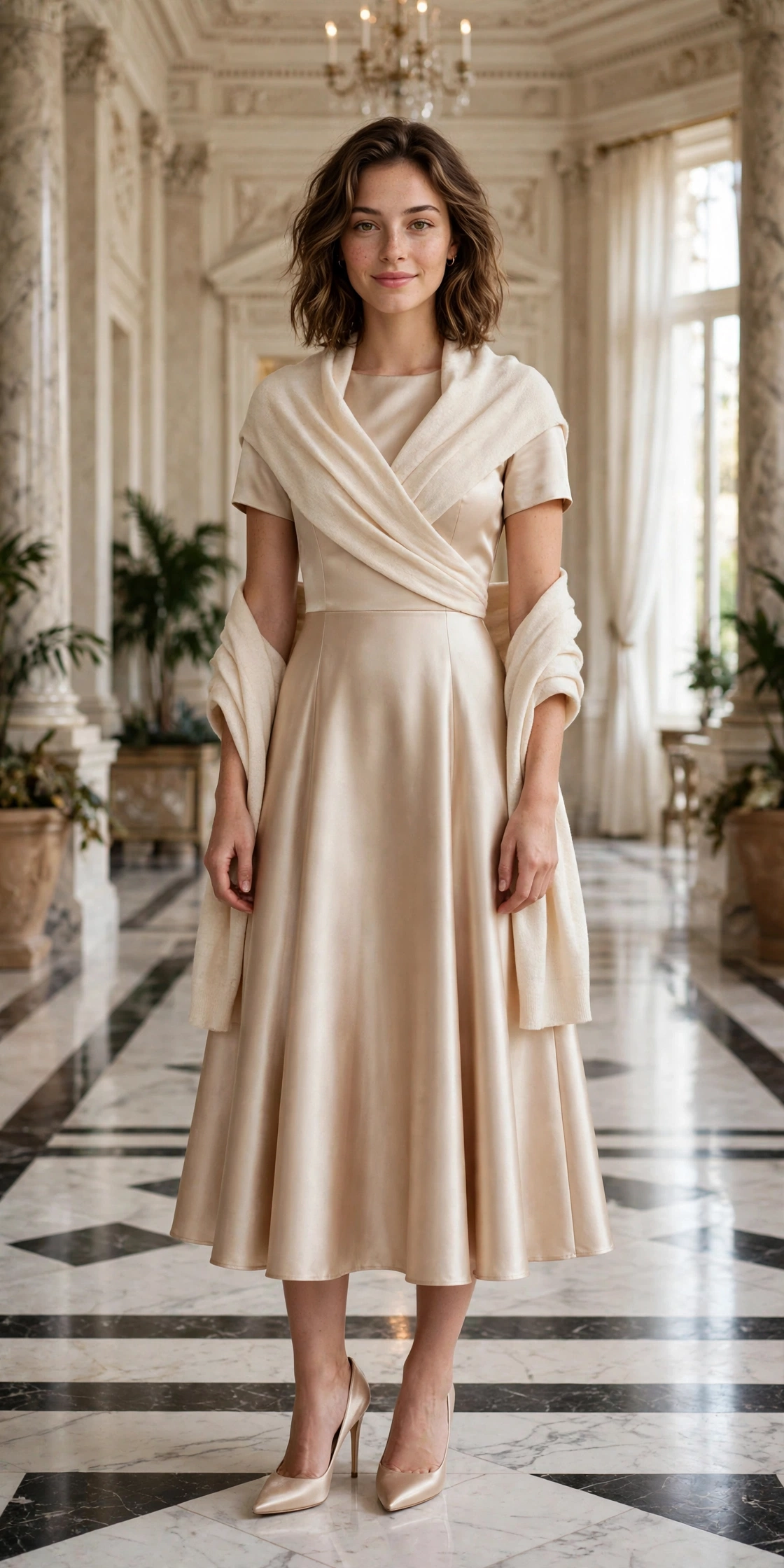
Length is a decision to make early, because it affects shoes, venue, and comfort. Knee-length A-line dresses suit daytime, garden, and less formal weddings, and they are easier to walk in, especially on grass or uneven ground. Tea-length, falling between the knee and ankle, is a classic mother-of-the-bride length that looks polished and works for many venues. Floor-length suits formal evening weddings and venues with a grand setting, but it needs the right shoes and a hem that does not trip you. If you are unsure, ask the couple about the formality and the venue surface, and consider what you will actually enjoy wearing for eight or more hours. A beautiful dress you cannot walk in comfortably is not a good choice, however lovely it looks on a hanger.
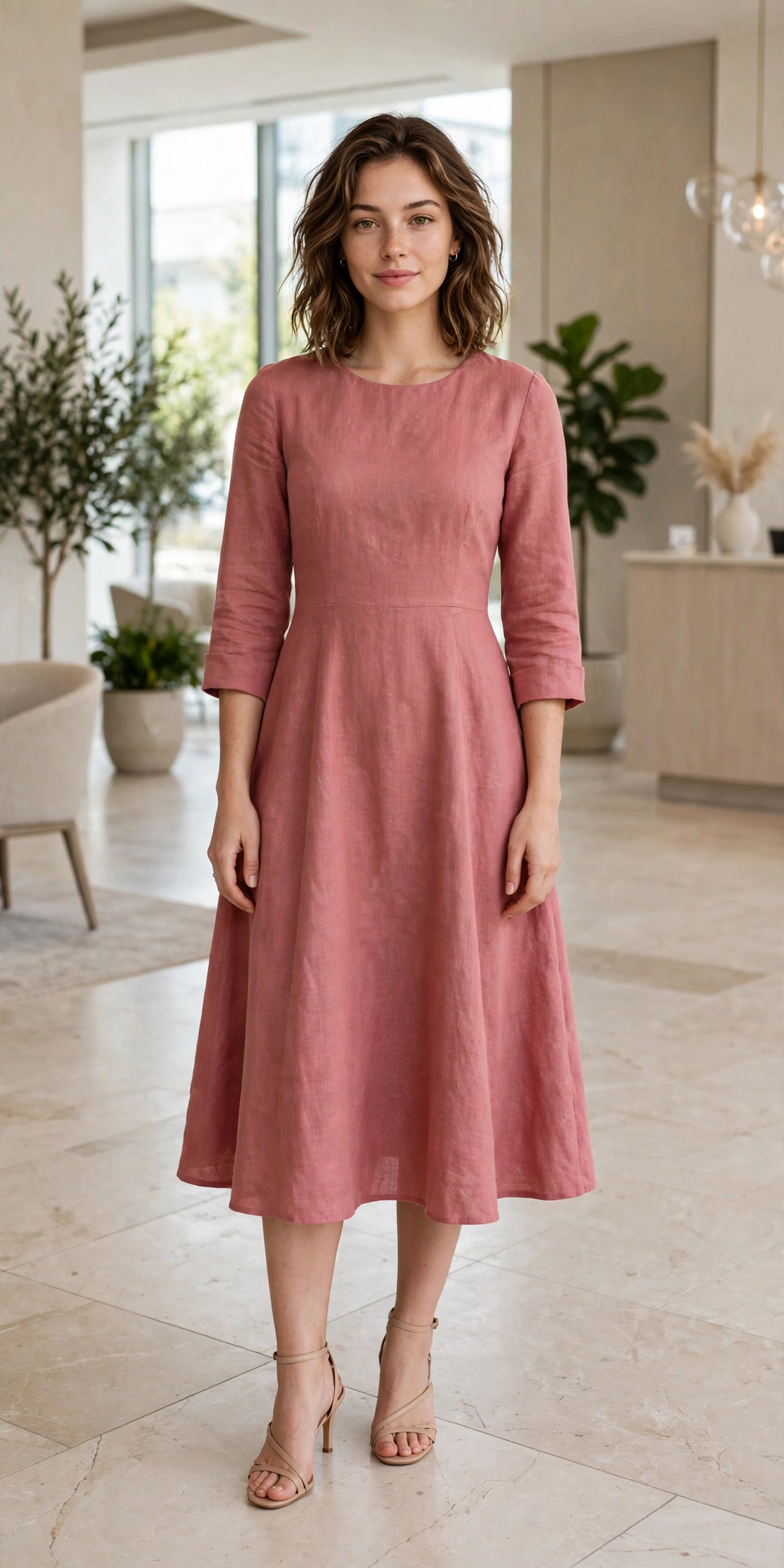
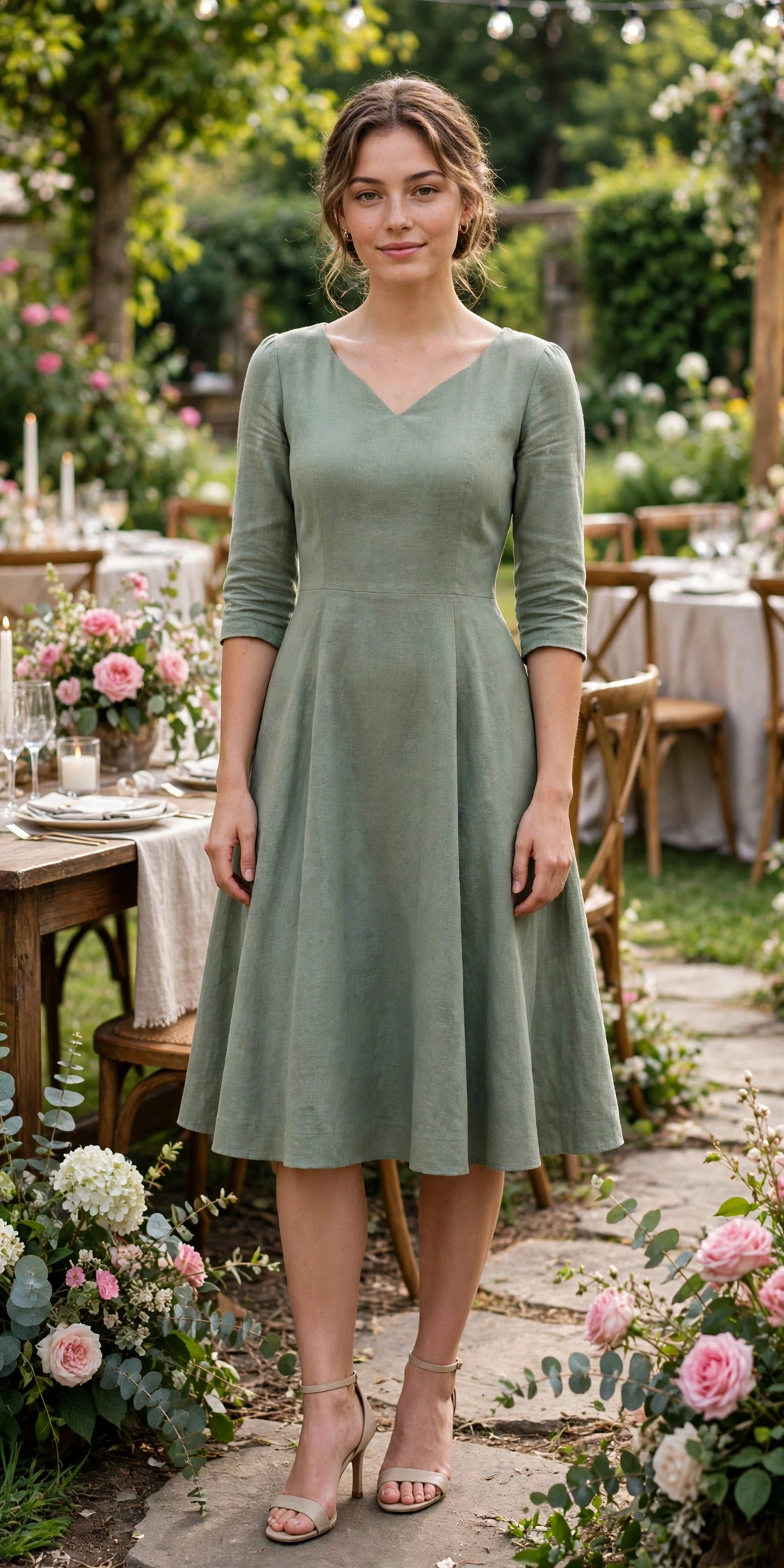
Color deserves a thoughtful conversation, not a rushed guess. Traditionally, the mother of the bride avoids white, ivory, and anything close to the bride’s dress, and checks with the couple about any colors they would prefer you avoid. Beyond that, navy, dusty rose, sage green, burgundy, champagne, silver, and muted blue are all popular because they photograph well and suit many skin tones. Navy is elegant and slimming, and it works for day and evening. Dusty rose is soft and romantic without being pale enough to read as white in photos. Sage green suits garden and spring weddings. Burgundy suits autumn and evening weddings. Champagne suits formal settings but needs care in photos, because a very pale champagne can look white in bright light, so check it in daylight and in photos before you commit. If the couple has a color palette, a dress that harmonizes with it, without matching the bridesmaids exactly, usually looks best in group photos.
Fabric makes the difference between a dress that looks expensive and one that looks tired by the afternoon. Chiffon flows, breathes, and moves beautifully, making it a strong choice for warm weather and dancing. Crepe has a smooth, structured drape that holds its shape and looks polished for formal weddings. Lace adds texture and elegance, especially on the bodice or sleeves, but check that the lace is comfortable against the skin and not scratchy. Satin looks luxurious but shows creases, so it needs care when sitting for a long meal. Velvet suits winter weddings and feels rich, but it is warm, so save it for cooler months. Whatever fabric you choose, sit in the dress, walk in it, and raise your arms, because a wedding day involves all three, and a fabric that creases badly or restricts movement will bother you by the afternoon.
Shopping, Fitting, and Wedding-Day Comfort
Start shopping early, ideally several months before the wedding, because ordering, alterations, and finding the right shoes and accessories take time. Bring the shoes you plan to wear, or shoes of a similar height, to every fitting, because hem length depends on shoe height. Bring the undergarments you plan to wear, too, because a dress fits differently over the right foundation garments. If you wear a particular bra style for support, wear it to the fitting, not a different one on the day. Take photos in the dress, in daylight if possible, because a mirror in a shop can be flattering in a way that photos are not, and you will live with the photos for years.
Alterations are normal, not a sign that you chose wrong. Most A-line dresses need a hem adjustment, a bodice tweak, or a sleeve shortening, and a good tailor can make a good dress fit beautifully. Book alterations early, allow at least two fittings, and do the final fitting close enough to the wedding that your weight and shape are stable, but not so close that there is no time to fix a problem. Tell the tailor how you will move on the day: sitting for a meal, standing for photos, walking down an aisle, dancing. A hem that is perfect when standing still can trip you when walking, so walk in the dress at the fitting, not just stand in it.
Shoes and accessories should support the dress, not compete with it. Choose shoes you can stand in for hours, and break them in before the wedding, not on the day. A block heel or a wedge is often more comfortable than a thin stiletto, especially on grass or uneven ground. A small clutch or evening bag holds the essentials without weighing you down. Jewelry should be simple and secure: studs or small drops, a bracelet that does not catch on lace, and a ring you will not worry about losing. A wrap, shawl, or light jacket is wise for an evening or an outdoor venue, and it should match the dress in color and formality, not clash with it. If the venue is a church or a formal setting, check whether shoulders need covering, and choose sleeves or a wrap accordingly.
Here is a practical if-this-then-that guide. If the wedding is outdoors in summer, then a knee-length or tea-length A-line in chiffon, with short or elbow sleeves, is usually the most comfortable choice. If the wedding is formal and in the evening, then a floor-length A-line in crepe or lace, with three-quarter or long sleeves, suits the setting. If you want arm coverage but do not want to feel hot, then a sheer lace or chiffon sleeve gives coverage without warmth. If you are petite, then a tea-length dress with a defined waist and a shorter sleeve keeps the proportions right. If you are tall, then a floor-length dress with a longer sleeve balances the line. If you are unsure about color, then navy is the safest elegant choice, with dusty rose and sage as softer alternatives.
Comfort checks for the day itself are worth a rehearsal. Sit in the dress for twenty minutes and check that the waistband does not dig in, the sleeves do not pull when you reach for a glass, and the skirt does not ride up. Walk up and down stairs, because many venues have them, and check the hem. Dance a little, or at least sway, and check that the bodice stays in place. Eat a meal in the dress if you can, or at least sit at a table, because a dress that feels fine standing can feel tight sitting. These checks sound fussy, but they prevent a long day of small discomforts that add up and distract you from enjoying the wedding.
Finally, remember that the best mother-of-the-bride dress is the one that lets you be present. You will be hugging people, posing for photos, giving a speech or a toast, and dancing with family. A dress that fits well, moves well, and makes you feel like yourself will show in every photo, more than any trend or label. Choose the A-line, choose sleeves you forget about, choose a color that suits you and respects the couple’s wishes, and then stop second-guessing. The day is about your child, and a dress that lets you enjoy it fully is the right dress, whatever anyone else is wearing.
Neckline Choices That Pair With Sleeves
The neckline and the sleeves work together, so choose them as a pair. A V-neckline lengthens the neck and draws the eye upward, and it pairs well with three-quarter sleeves for a balanced, elegant look. A scoop neckline is softer and suits a round or oval face, and it works with short or elbow sleeves for a daytime wedding. A boat neckline, wide and shallow, suits a formal setting and pairs beautifully with long lace sleeves, because both elements share a refined, covered feeling. A sweetheart neckline adds a romantic touch and suits a fitted bodice, but check that it feels secure when you move, hug, and dance.
High necklines, such as a jewel or illusion neckline, give full coverage and suit formal or religious venues, and they pair well with long sleeves for a cohesive, modest look. An illusion neckline, with sheer fabric and lace detail, gives coverage while still feeling light, which is useful if you want coverage without warmth. Whatever neckline you choose, try it with the sleeves and the jewelry you plan to wear, because a necklace that sits well with a V-neck may clash with a boat neck, and earrings that suit a high neck may disappear under long hair and a high collar. The goal is a neckline, sleeve, and jewelry combination that feels like one outfit, not three separate decisions.
Photos, Posture, and Looking Your Best on the Day
Photos are a big part of why this dress matters, so think about how the dress photographs. Solid colors and gentle patterns photograph more reliably than busy prints, which can moiré or distract in photos. A matte fabric photographs more evenly than a very shiny one, which can catch light in unexpected ways. Stand tall, relax your shoulders, and let the A-line skirt fall naturally, rather than pulling at it, because a relaxed posture makes any dress look better. If you are worried about photos, ask a friend to take a few test photos in the dress before the wedding, in daylight and indoors, so you can see the color and fit the way a camera sees them.
On the day, a few small preparations help. Eat and drink normally, because a long day on an empty stomach makes any dress feel uncomfortable. Keep a small kit in your bag: a safety pin, a needle and thread in the dress color, a stain remover pen, and comfortable flat shoes for dancing later. Tell someone you trust where the kit is, so you are not searching for it during the reception. Most importantly, practice smiling and relaxing in the dress, because the photos that last are the ones where you look happy and at ease, not the ones where the dress is technically perfect but you look tense. A dress that lets you laugh, hug, and dance is doing its job.
What length is best for a mother of the bride dress?
There is no single best length; it depends on formality, venue, and comfort. Knee-length suits daytime and garden weddings, tea-length suits many venues and is a classic choice, and floor-length suits formal evening weddings. Choose the length you can walk, sit, and dance in comfortably, and check the hem with the shoes you will actually wear.
Should the mother of the bride match the bridesmaids?
Usually, the mother of the bride harmonizes with the wedding palette without matching the bridesmaids exactly. A dress in a complementary color or a different shade of the same family looks cohesive in photos without making you look like part of the bridal party. Check with the couple if they have a preference, and avoid white or anything close to the bride’s dress.
Are sleeves better than sleeveless for a mother of the bride dress?
Sleeves are a popular choice because they give coverage, confidence, and elegance, and they suit many venues and weather conditions. Sleeveless dresses can also work, especially in summer, but many mothers prefer the finished look and comfort of short, elbow, three-quarter, or long sleeves. Choose the sleeve you will forget about during a long day, not one you keep adjusting.
How far in advance should I buy a mother of the bride dress?
Start shopping several months before the wedding, to allow time for ordering, delivery, and alterations. Book at least two alteration fittings, with the final fitting close enough to the wedding for a stable fit but with time to fix any problem. Buying early also gives you time to find shoes and accessories that match, rather than rushing at the last minute.
What colors should a mother of the bride avoid?
Avoid white, ivory, and anything that could be mistaken for the bride’s dress in photos, and check with the couple about any colors they would prefer you avoid. Very pale champagne can read as white in bright light, so test it in daylight and photos. Navy, dusty rose, sage, burgundy, and muted blue are safe, elegant choices for most weddings.
Can I wear a mother of the bride dress again after the wedding?
Yes, especially if you choose a versatile color and length. A knee-length or tea-length A-line in navy, burgundy, or a muted tone can work for other formal events, dinners, and celebrations with different accessories. A very formal floor-length dress is harder to rewear, but a simpler A-line shape rewears more easily than a heavily embellished gown.