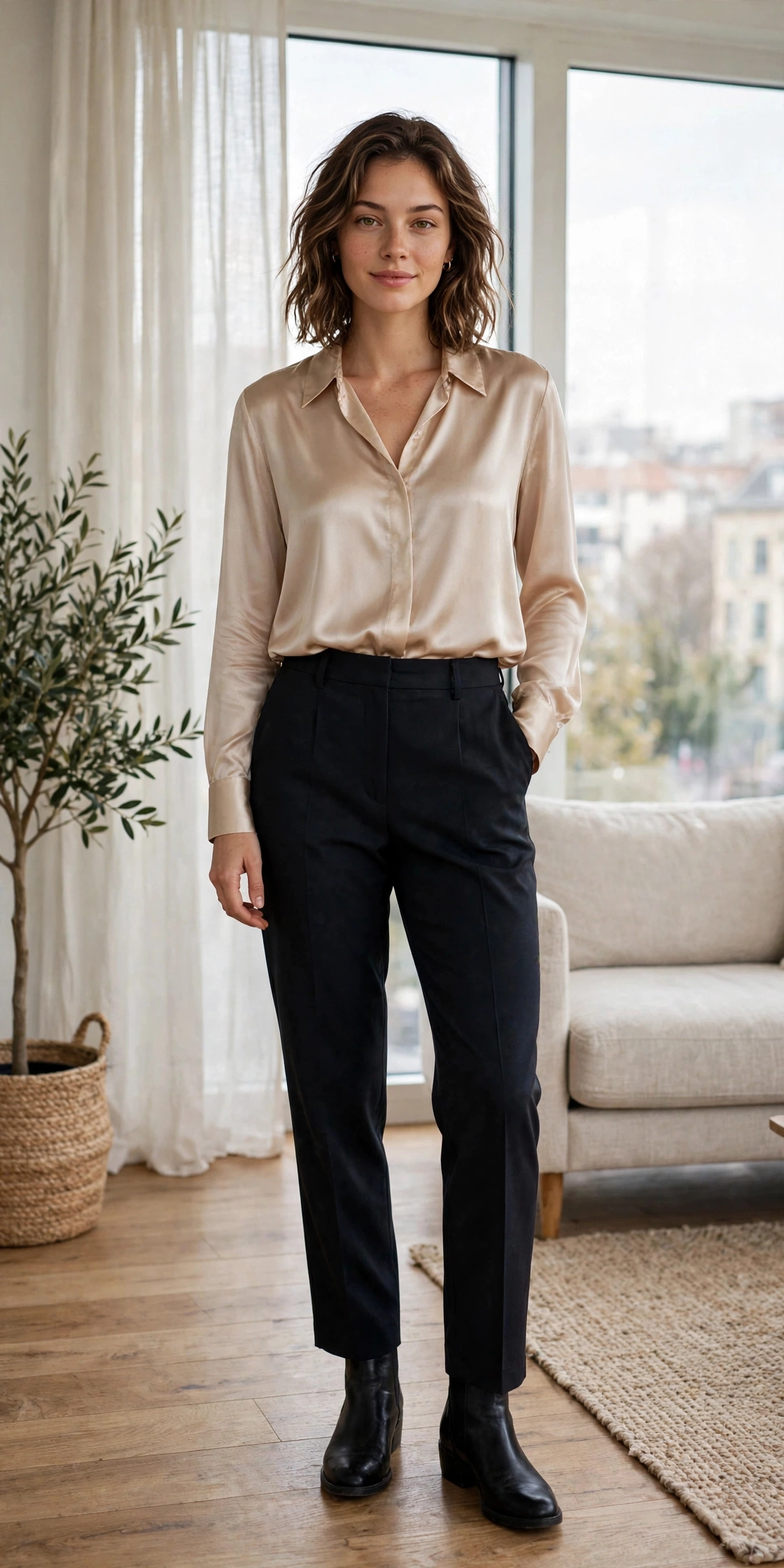
Real silk feels cool when you first touch it, then warms to your skin within seconds. It slides under your fingers without catching, drapes in soft folds instead of holding a stiff shape, and feels light for how much coverage it gives. If you have ever picked up a blouse and thought, “this feels expensive but I cannot explain why,” silk is often the reason. The surface is smooth, the fabric moves like liquid, and there is a quiet sheen — not a shine, exactly, more like light moving across water.
So what does silk feel like, in plain terms? Cool, smooth, fluid, and light, with a soft warmth that builds as you wear it. It does not feel slippery in a cheap, plasticky way, and it does not feel stiff or papery. Cheap imitations often get one part right — the shine, or the slip — and miss the rest. Real silk combines all of it at once: the cool first touch, the drape, the breathability, and the way it settles against the body without clinging or bunching.
The first touch: cool, smooth, and weightless
Hold a piece of silk charmeuse — the satiny weave used for many blouses — between your fingers. The first thing you notice is temperature. Silk starts cool, noticeably cooler than cotton or polyester at room temperature, because silk fibers conduct heat away from your hand. Within a few seconds it warms up, and that quick change from cool to warm is one of the most reliable signs you are holding the real thing. Polyester satin stays at room temperature and then feels warm and a little clammy; silk feels alive by comparison.
Next, notice the smoothness. Run your fingers across the surface. Real silk glides with almost no friction, but it is not frictionless — there is a faint, fine texture under the smoothness, like very fine sand worn down to softness. If the fabric squeaks, catches, or feels like plastic wrap, it is probably not silk. If it feels like liquid and your fingers leave no drag marks, you are in silk territory.
Weight matters too. Silk is surprisingly light. A silk blouse that covers your torso can weigh less than a cotton tee, yet it drapes better and looks more finished. That lightness is part of why silk works in summer and under layers in winter: it adds almost no bulk, so a silk camisole under a sweater warms you without making you look padded.
Not all silk feels the same
“Silk” covers a family of fabrics, and they feel quite different from each other. Knowing the main types helps you shop without surprises.
Silk charmeuse is the classic slippery silk: shiny on one side, dull on the other, fluid drape, cool touch. It is the fabric of bias-cut dresses and dressy blouses. It shows every line underneath, so it suits slip dresses, camisoles, and relaxed blouses rather than tight, structured tops.
Silk crepe de chine feels matte, slightly grainy, and less slippery than charmeuse. The surface has a fine pebbled texture you can feel if you look closely. It drapes well but holds a bit more shape, which makes it a good choice for work blouses and dresses you want to look polished without shine.
Silk chiffon is sheer, airy, and almost weightless — the fabric of floaty overlays and scarves. It feels like a whisper over the skin, with a soft, slightly dry texture rather than a slippery one. Chiffon needs a lining or a layer underneath for coverage, and it wrinkles easily, but nothing else floats quite the same way.
Silk dupioni is crisp, textured, and a little stiff, with visible slubs — small thickened threads that give it a nubby, uneven surface. It feels more structured than other silks and rustles faintly when you move. Dupioni suits jackets, structured skirts, and occasion dresses where you want shape, not drape.
Raw silk and silk noil feel matte, slightly rough, and more like linen than like charmeuse. They have a dry, nubby hand feel and a lot less shine. These are good everyday silks for people who love the idea of silk but do not want anything dressy or slippery.
Silk jersey is knitted rather than woven, so it stretches and feels like a very soft, fluid t-shirt fabric. It is the most forgiving silk to wear and the easiest to care for, and it works well for casual tops and travel clothes.
When you shop, the weave name on the label tells you more about feel than the word “silk” alone. A charmeuse blouse and a dupioni jacket are both silk, but they could hardly feel more different in your hands.
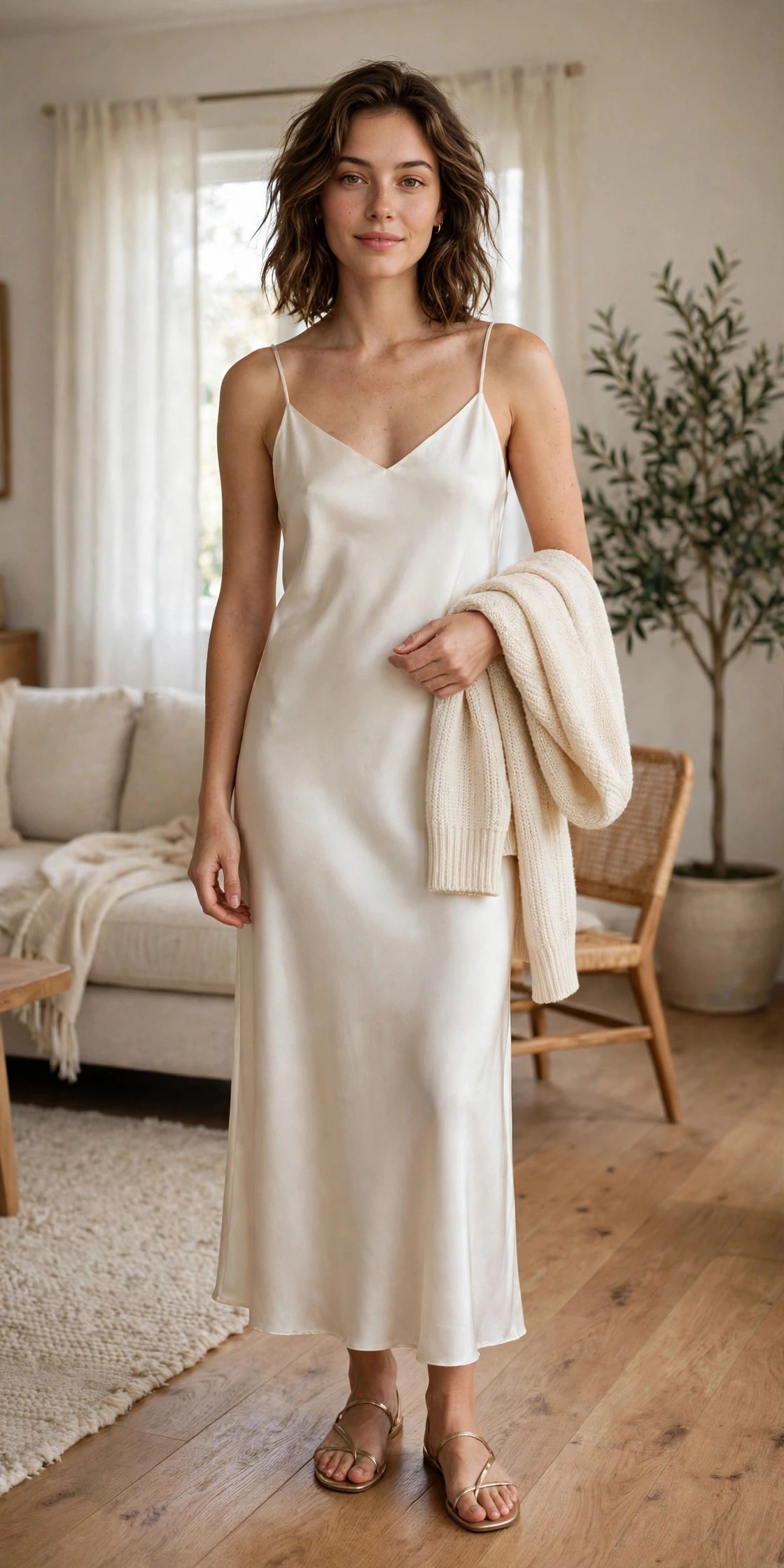
How silk feels when you wear it
On the body, silk does three things that set it apart. First, it regulates temperature. Silk fibers are hollow and breathable, so silk feels cool in summer and warm in winter — not dramatically, but enough that a silk layer under a coat feels comfortable rather than sweaty. Second, it drapes instead of bunching. Silk follows the body’s shape and falls in soft folds, which is flattering in relaxed cuts and unforgiving in very tight ones. Third, it moves quietly. Good silk does not rustle loudly or swish like stiff synthetics; it moves with a soft, quiet fluidity.
There are trade-offs, and honest shopping means naming them. Silk wrinkles — not as badly as linen, but a silk blouse will crease at the elbows and waist after sitting. Silk also shows water spots: a raindrop on charmeuse can leave a visible mark until the whole garment is cleaned. And silk needs gentler care than cotton. Most silk is dry-clean only or hand-wash cold, and hot water or rough handling can dull the surface and weaken fibers. None of this makes silk impractical, but it does make it a fabric to choose deliberately, not a grab-and-go everyday default.
Fit matters more with silk than with forgiving fabrics. Because charmeuse and crepe drape closely, a blouse that is too tight will pull and show lines, while one with a little ease will look effortless. Try this mirror test: put the garment on, sit down, stand up, and raise your arms. If the fabric settles back into smooth folds, the fit is right. If it stays creased in odd places or pulls across the bust, size up or choose a different cut. Daylight helps here too — silk’s sheen looks different under store lights than in natural light, so check the color and shine near a window before deciding.
Real silk vs imitation: touch tests you can do in a store
You do not need a lab to tell real silk from polyester imitation. Use these checks together, since no single test is foolproof.
- The warmth test. Hold the fabric against your cheek or the inside of your wrist. Real silk starts cool and warms quickly. Polyester starts at room temperature and feels slightly warm and plasticky from the start.
- The crumple test. Scrunch a small section in your hand for a few seconds, then release. Real silk wrinkles softly and the wrinkles relax partly on their own. Polyester satin either springs back almost unwrinkled or holds sharp, papery creases.
- The drape test. Hold the fabric up and let it fall. Silk falls in soft, fluid folds that move when you move your hand. Imitation satin falls more stiffly and holds its shape like a sheet of paper.
- The ring test. Genuine silk is fine enough that a small scarf can be pulled through a ring with ease. This is a classic test for silk scarves, and it works because silk fibers are very fine and the weave is light. Thick imitation fabrics bunch and resist.
- The label and price check. “100% silk” on a care label is a legal claim in most markets, and real silk costs more to produce than polyester. A suspiciously cheap “silk” blouse is worth a second look with the touch tests above.
One caution: the burn test, where a thread is burned to check the smell, is sometimes suggested online. Do not do this in a store, and do not damage a garment you do not own. The touch tests are enough for shopping, and the label is your backup.
Wearing silk day to day: practical advice
Silk works best when you match the type to the occasion. For work, silk crepe de chine blouses and silk jersey tops are the easiest wins: polished, comfortable, and less fussy than charmeuse. For evenings, charmeuse dresses and camisoles give that fluid, dressy drape. For everyday, silk-blend scarves and raw silk tops give you the feel without the fussiness. A silk scarf is also the lowest-risk way to learn what silk feels like — it touches your neck and face, where you notice texture most, and it is easier to care for than a full garment.
Layering solves most of silk’s practical problems. A camisole under a blazer gives you silk’s comfort without exposing it to rain or bag straps that can snag it. A cardigan over a silk dress keeps you warm without hiding the drape. And a slip or lining under a silk skirt prevents clinging and protects the fabric from friction.
Care is simpler than the reputation suggests. Many modern silks are washable — check the label, because “dry clean only” and “hand wash cold” are different instructions, and washable silk is common now. For hand-wash silk, use cool water and a gentle detergent made for delicates, do not wring it, roll it in a towel to press out water, and lay it flat or hang it to dry away from direct sun. For dry-clean silk, do not over-clean it; spot-clean small marks and air the garment between wears. Store silk folded or on padded hangers, away from rough jewelry that can snag the surface.
Does silk feel different on skin types or in different weather?
Silk is generally kind to sensitive skin because it is smooth, breathable, and naturally less irritating than rough or synthetic fabrics. People with eczema or easily irritated skin often find silk comfortable, though individual reactions vary, and a silk blend may feel different from pure silk. In humid weather, silk breathes better than polyester but absorbs moisture more slowly than cotton, so it can feel slightly damp in heavy humidity. In dry winter air, silk’s warmth-to-weight ratio shines — a thin silk layer adds real warmth without bulk. The main weather caution is rain: water spots on charmeuse and dupioni are the one weather problem silk handles poorly, so carry a cover or choose crepe or jersey silk on wet days.
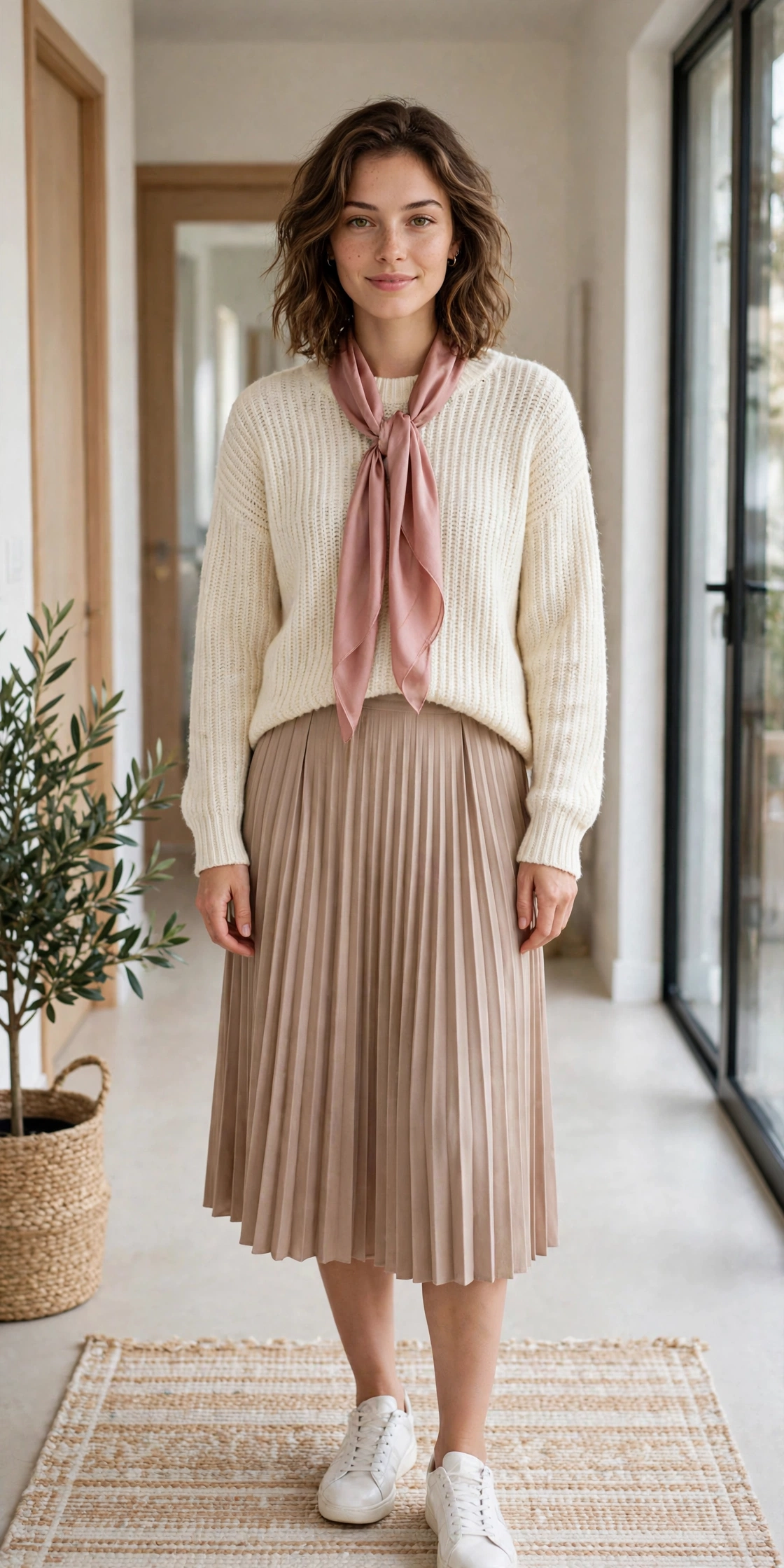
Choosing your first silk piece
If you are buying silk for the first time, start with a type that forgives mistakes. A silk crepe blouse in a neutral color is a strong first piece: it looks polished, feels soft without being slippery, and pairs with trousers, skirts, and jeans. A silk scarf is an even gentler start, and it teaches your hands what real silk feels like before you commit to a larger garment. Avoid starting with a tight charmeuse dress or a white silk blouse — both are beautiful, but both show every fit issue and every spot, and they can put a new silk wearer off the fabric for good.
Check the seams and finish before buying. Good silk garments have neat, finished seams — often French seams, where the raw edge is enclosed — because silk frays easily. Loose threads, puckered seams, or rough edges are signs of poor construction, and they matter more in silk than in sturdier fabrics. The fabric should feel consistent across the garment, not thin in one place and thick in another.
Bottom line on what silk feels like: cool at first touch, smooth and fluid in the hand, light on the body, warm once worn, with a quiet sheen rather than a loud shine. Learn the difference between charmeuse, crepe, chiffon, dupioni, and jersey, use the touch tests in the store, and choose the type that matches how you actually live — and silk stops being a mystery fabric and becomes a reliable favorite.
Silk blends: a middle ground worth knowing
Pure silk is not the only option, and blends can be a smart compromise. Silk mixed with cotton feels softer and drapes better than cotton alone, while being sturdier and easier to wash than pure silk. Silk mixed with wool feels warm, smooth, and substantial — a good choice for winter scarves and sweaters. Silk mixed with a small amount of elastane gains a little give, which helps fitted blouses and dresses keep their shape through the day. Blends usually cost less than pure silk and tolerate everyday wear better, but they feel different: a silk-cotton blend feels less slippery than charmeuse, and a silk-wool blend feels warmer and less fluid. Check the percentages on the label and feel the fabric before deciding — a blend with only 10% silk will feel mostly like its other fiber, while a blend with 70% silk will feel much closer to the real thing.
Buying silk secondhand and on sale
Silk appears often in secondhand shops, and it can be a good value if you inspect it well. Check for water spots, especially on charmeuse, yellowing under the arms, thinning at the elbows, and fraying at the seams — all signs of wear that are hard to reverse. Smell the garment too: silk that has been stored damp can carry a musty odor that survives cleaning. On sale, the same checks apply, plus one more: try the garment on in daylight, because sale lighting in stores can hide color changes and sheen differences. A well-kept secondhand silk blouse in a classic cut can be one of the best wardrobe buys you make, precisely because good silk ages gracefully when it has been cared for.
What does silk feel like compared to satin?
Real silk feels cool at first, then warm, with a fluid drape and a soft sheen. Polyester satin, often sold simply as “satin,” feels warmer from the start, slightly plasticky, and stiffer in drape. Silk glides without squeaking; imitation satin often catches or squeaks under the fingers.
Does silk feel slippery or sticky?
Neither, when it is good silk. Charmeuse feels smooth and fluid, crepe feels matte and slightly grainy, and chiffon feels airy and dry. Silk should not feel sticky — stickiness usually means a synthetic fabric, a heavy finish, or heat and humidity acting on an imitation.
Why does silk feel cool when you first touch it?
Silk fibers conduct heat away from your skin quickly, so the fabric starts cool to the touch. It then warms to your body temperature within seconds. That quick cool-to-warm change is one of the most reliable signs of real silk, and it is part of why silk feels comfortable in both warm and cool weather.
Does silk feel comfortable all day, or does it get uncomfortable?
For most people, silk stays comfortable all day because it is light, breathable, and drapes without bunching. The exceptions are very tight charmeuse cuts, which can feel restrictive, and humid days, when silk can feel slightly damp. A well-fitted crepe or jersey silk piece is usually comfortable from morning to evening.
What does silk feel like after washing?
Properly washed silk keeps its softness and drape, though it may feel slightly less crisp than when new. Hot water, harsh detergent, or rough handling can dull the surface and make silk feel rougher or stiffer. Cool water, gentle detergent, and flat or careful hang drying preserve the feel best.
Is silk worth it if it wrinkles and needs special care?
That depends on how you will wear it. If you want a polished work blouse or an evening piece and you are willing to hand-wash or dry-clean it, silk’s feel and drape are hard to match. If you need a zero-maintenance everyday top, cotton or a silk blend may suit your routine better — and a silk scarf still gives you the feel with much less upkeep.