Yes, viscose linen is breathable — in most warm-weather wear, noticeably more breathable than a heavy synthetic, and close to linen itself, with a softer drape. Shoppers often ask, is viscose linen breathable enough for a full hot day, not just a quick try-on in a cool shop, and that is the question this guide answers in full. The short answer comes with one honest caveat: “viscose linen” is a blend, not a single fabric, so how breathable your garment feels depends on the mix. A blend that is mostly linen with some viscose will feel airy and crisp. A blend that is mostly viscose with a little linen will feel softer and drapier, and slightly less airy. Both beat a thick polyester on a hot day, but they are not identical, and the label tells you which one you are holding.
If you are shopping for summer clothes and keep seeing this blend, this guide explains what each fiber brings, how to judge a garment before you buy it, and how to wear and care for it so it stays comfortable all season.
What Is Viscose Linen, Actually?
Viscose linen is a fabric made by blending two fibers: linen and viscose. Linen comes from the flax plant. It is strong, naturally textured, and famous for letting air pass through it. Viscose, also called rayon, is a manufactured fiber made from plant cellulose, usually wood pulp. It is soft, smooth, and drapes beautifully, but on its own it can feel limp and wrinkle-prone in a different way than linen.
Blending them is a compromise, and a sensible one. Linen brings structure, airflow, and that dry, cool feel against the skin. Viscose brings softness, a smoother drape, and less of linen’s stiff, scratchy edge. The result is a fabric that hangs more gracefully than pure linen and feels gentler on the skin, while keeping much of linen’s breathability.
You will see blends in many ratios: 70% linen and 30% viscose, 55% linen and 45% viscose, or the reverse. Neither ratio is “correct.” They simply lean toward different strengths. More linen means more crispness, more texture, and more airflow. More viscose means more softness, more drape, and a smoother finish. If the label does not list percentages, the fabric name order often hints at the larger share, but the label percentages are the reliable source when they are given.
Why Linen Breathes So Well
Linen’s breathability starts with the fiber itself. Flax fibers are hollow in structure and relatively thick, which leaves space in the weave for air to move. A linen weave is often looser than a tight cotton weave, so warm air escapes and cooler air circulates next to the skin. That is why a linen shirt feels cooler than a dense cotton shirt of the same weight, even in the same color.
Linen also absorbs moisture well — it can take in a good amount of water relative to its weight before feeling damp — and it releases that moisture into the air fairly quickly. On a humid day, that matters. A fabric that traps sweat against your skin feels clammy even if air can pass through it. Linen’s combination of airflow and moisture handling is why it has been a hot-climate fabric for centuries.
The trade-off is texture and wrinkling. Pure linen feels crisp, sometimes rough at first, and wrinkles the moment you sit down. Some people love that relaxed, lived-in look. Others find it looks untidy by lunchtime. That is exactly the gap viscose fills.
What Viscose Adds — and What It Takes Away
Viscose is soft from the start. It drapes instead of standing away from the body, which makes it flattering in dresses, wide-leg trousers, and flowing blouses. It takes dye well, so viscose blends come in rich, even colors. It also smooths out linen’s roughness, so a viscose linen blouse feels comfortable against bare arms in a way a stiff pure linen one sometimes does not.
On breathability, viscose is a mixed contributor. It absorbs moisture well, like linen, so it does not feel plasticky or sweaty the way a non-absorbent synthetic can. But viscose fibers are finer and the fabric often drapes closer to the body, which can reduce airflow compared with a crisp, open linen weave. A viscose-heavy blend in a tight cut will feel warmer than a linen-heavy blend in a loose cut, even if both are labeled ‘viscose linen.’
Viscose also weakens when wet and wrinkles in its own way. A viscose linen garment needs gentler washing than pure linen, and it should not be wrung out hard or tumble dried on high heat. Those care differences matter for how long the garment stays comfortable and good-looking, which is part of the comfort story too — a garment that has gone stiff or misshapen after washing will not feel breathable, whatever the label says.
Is Viscose Linen Breathable Enough for Hot Days?
For most warm days, yes. A loose-fitting viscose linen top, dress, or pair of trousers in a light color will feel comfortable into the high 20s Celsius and beyond, especially with a breeze. It will feel cooler than denim, than a thick cotton twill, and than most polyester blends. It will feel a touch warmer than a very loose pure linen shirt in the same cut, because the drape sits closer to the skin and the weave is often a little denser.
Three things decide whether your particular garment feels breathable or not, and they matter more than the fiber name alone:
The cut. Loose wins. A relaxed blouse, an A-line dress, or wide-leg trousers let air move underneath the fabric. A tight viscose linen dress will feel warmer no matter how breathable the fibers are, because trapped air has nowhere to go. If you are choosing between two sizes, and the style is meant to be relaxed, the roomier one will breathe better.
The weave and weight. Hold the fabric up to light. If you can see light through it in a fine, even pattern, air will pass easily. If it is dense and opaque, it will be warmer. Lightweight viscose linen, roughly the weight of a summer blouse, breathes best. A heavier blend made for structured trousers will be sturdier but warmer.
The color. Dark colors absorb more heat from the sun. A black viscose linen dress will feel warmer outdoors than the same dress in white or sand, even though the fabric is identical. On the hottest days, light colors are the easy win.
The Daylight and Hand Tests Before You Buy
You can judge a viscose linen garment in a shop in under a minute with three checks.
First, the light test. Hold a single layer up to a window or a bright light. An airy weave shows light through it. A dense weave blocks it. This is the fastest breathability check there is.
Second, the hand test. Lay the fabric over the back of your hand and breathe gently onto it through the fabric. If you feel your breath pass through easily, air will pass through when you wear it. If you feel almost nothing, the weave is tight or the finish is heavy, and the garment will run warmer.
Third, the drape test. Hold the garment by the shoulders and let it hang. Viscose linen should fall in soft folds, not stand stiffly and not cling limply like a wet cloth. If it hangs well, it will likely sit away from the body in places and let air move, which is what you want.
Also check the label for the blend ratio and the care instructions. A garment that says ‘dry clean only’ may be a blend with a high viscose share or a delicate finish, and that affects how practical it is for everyday summer wear. A machine-washable blend is far easier to live with through a hot season.
Styling Viscose Linen for Warm Weather
Viscose linen’s strength is relaxed, polished summer dressing. It looks smarter than a T-shirt and cooler than a structured fabric, which makes it useful for work, weekends, and travel alike.
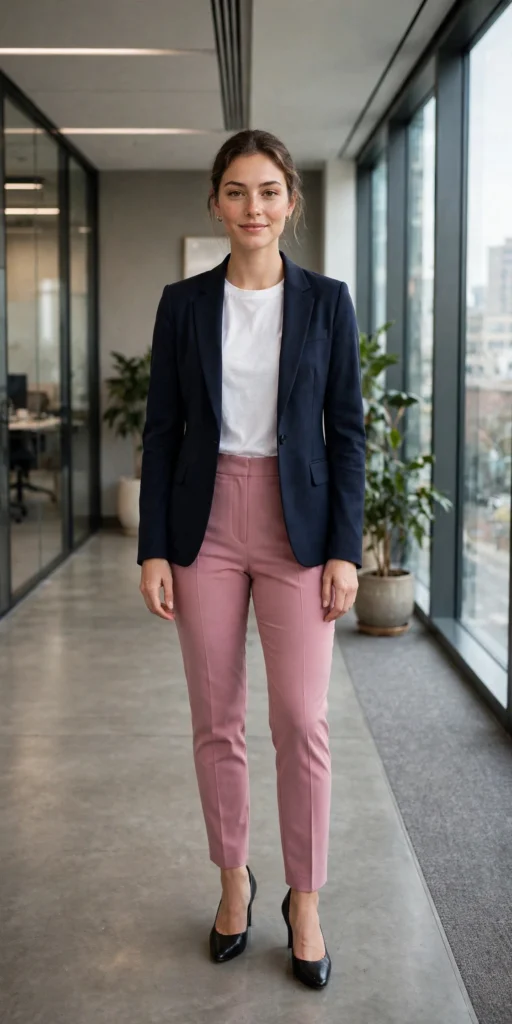
For a workday, a viscose linen blouse in white, pale blue, or sand, tucked loosely into straight trousers or a knee-length skirt, looks neat without feeling stiff. The drape keeps the blouse from ballooning, and the linen content keeps it from clinging when the office warms up in the afternoon. Keep the fit relaxed rather than tight, and the blouse will stay comfortable through a long day.
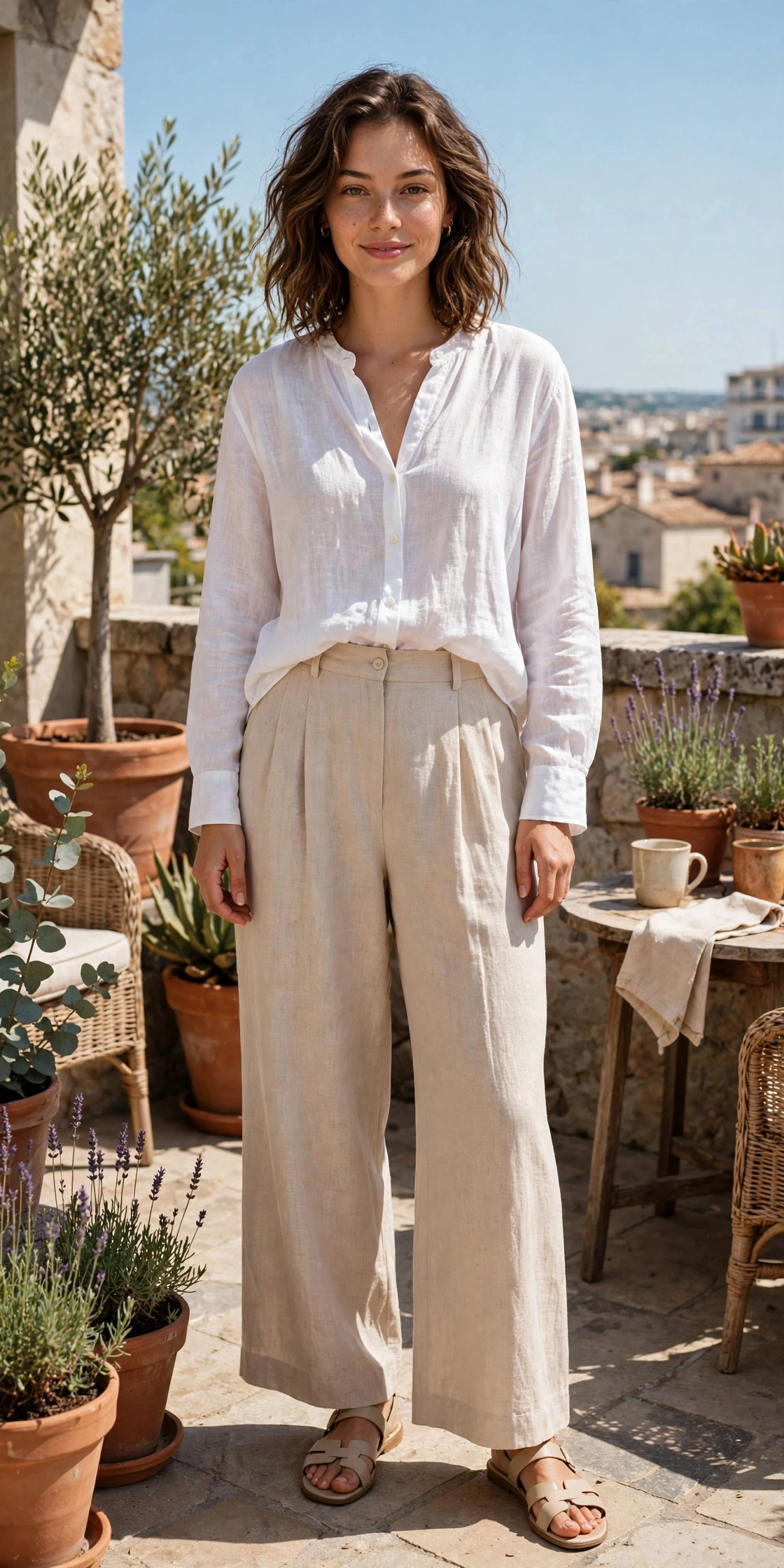
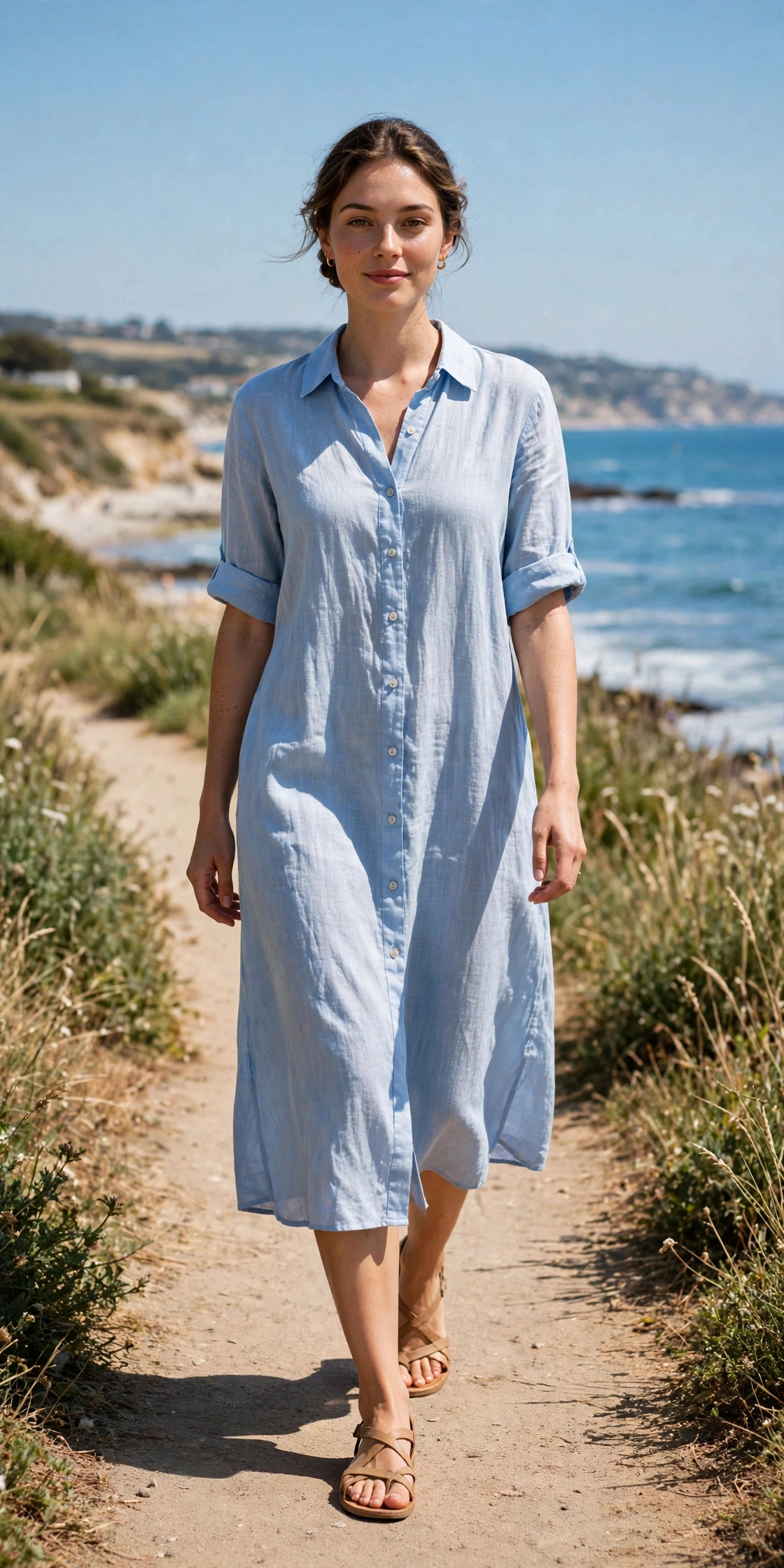
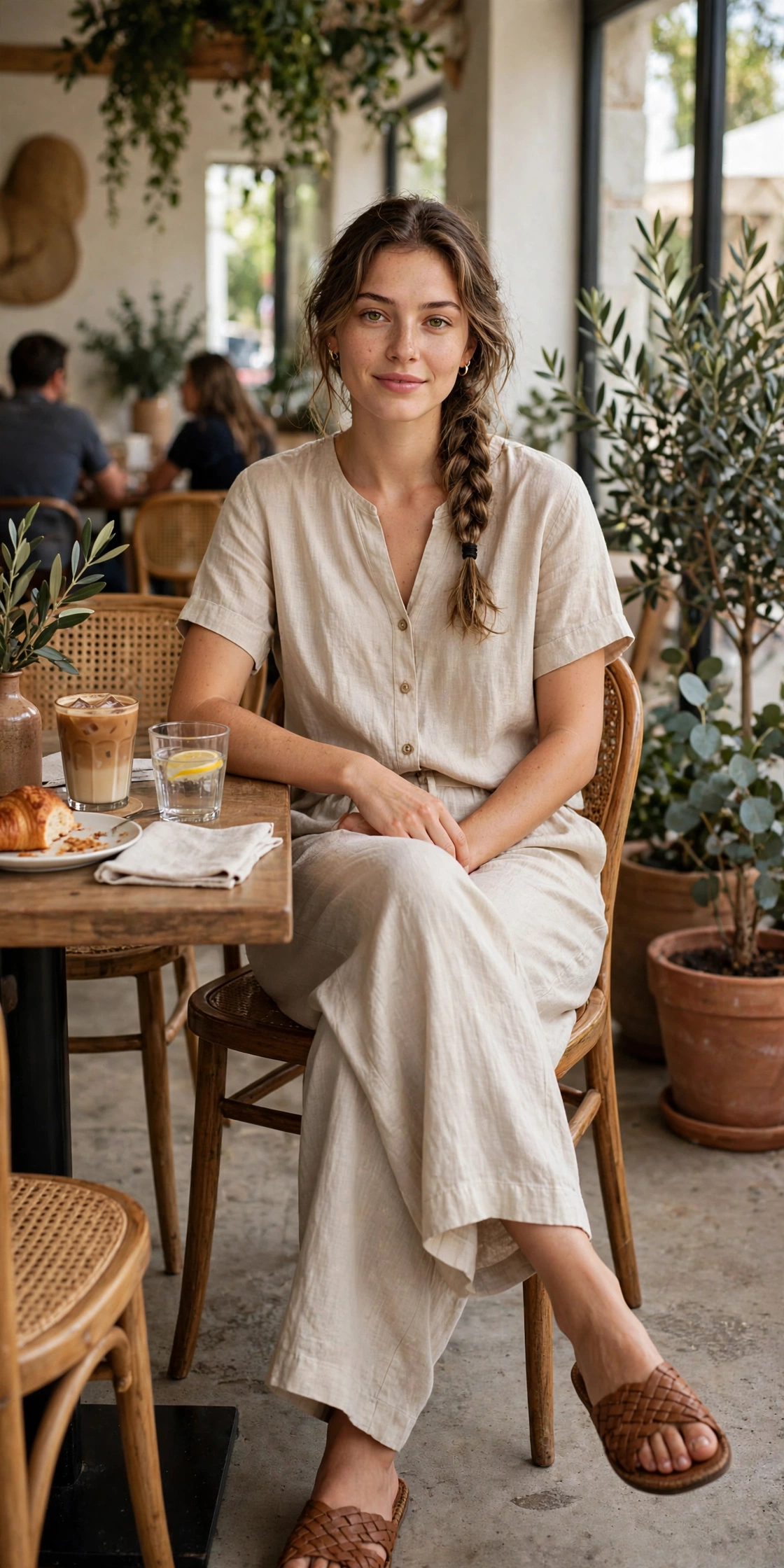
For weekends, a viscose linen shirt dress or a loose top with wide-leg trousers is the easiest warm-weather outfit there is. Add flat sandals, a woven bag, and simple jewelry, and the outfit is done. The fabric’s natural texture does the visual work, so you do not need bold patterns or heavy accessories.
For travel, viscose linen packs better than pure linen — it wrinkles less dramatically — but it still wrinkles. Roll rather than fold when packing, hang the garment as soon as you arrive, and hang it in a steamy bathroom for a few minutes if it needs a refresh. A handheld steamer is the kindest way to smooth it; a hot iron can scorch viscose, so use a low to medium setting and press from the inside if you iron at all.
Layering in summer needs a light hand. A viscose linen top under a light open cardigan or an unlined jacket works for air-conditioned rooms. A heavy layer over it defeats the purpose. If you need warmth in the evening, choose a layer you can carry easily and take off, rather than one you wear all day.
Caring for Viscose Linen So It Stays Comfortable
Care is where viscose linen differs most from pure linen, and getting it wrong is the fastest way to ruin a garment that started out breathable and soft.
Wash in cool or lukewarm water on a gentle cycle, or hand wash if the label asks for it. Use a mild detergent. Avoid hot water, which can shrink the linen share and weaken the viscose share. Never wring the garment hard — press water out gently in a towel instead.
Dry flat or on a hanger away from direct heat. Tumble drying on high heat is the most common cause of a viscose linen garment going stiff, shrunken, or misshapen. If you must tumble dry, use the lowest heat setting and take the garment out slightly damp, then let it finish drying on a hanger.
Iron on low to medium heat, preferably from the inside or with a pressing cloth. Viscose scorches more easily than linen, so a hot iron is a risk. Steaming is gentler and usually enough to smooth out wear wrinkles.
Store viscose linen hanging or folded loosely. Do not cram it into a tight drawer for months, since deep creases set into this blend and are harder to steam out than in pure linen. A little breathing room in storage keeps the fabric’s drape intact.
When to Choose Pure Linen Instead
Viscose linen is not always the better pick. Choose pure linen when maximum airflow is the priority — for example, a shirt for a very hot, humid holiday, or a cover-up for the beach. Pure linen’s open weave and crisp stand-away fit move more air than any drape-heavy blend.
Choose pure linen also when you love the textured, rustic look and do not mind wrinkles. Pure linen’s wrinkles are part of its character, and no blend reproduces that exact look.
Choose viscose linen when you want linen’s coolness with a softer hand, a smoother drape, and fewer hard wrinkles — for work, for dresses that need to fall gracefully, and for everyday summer clothes you will wash often. In those cases, the small breathability trade-off is worth the comfort and appearance gain.
The Bottom Line
Viscose linen is breathable, genuinely so, and it earns its place as a warm-weather fabric. It is not quite as airy as pure linen at its loosest, but it is far more breathable than heavy or synthetic fabrics, and its softness and drape make it more wearable day to day. Check the blend ratio, hold the fabric to the light, choose a loose cut in a light color, and wash it gently. Do that, and a viscose linen garment will be one of the most comfortable things you own through the warm months — cool enough for a hot afternoon, polished enough for work, and soft enough to reach for again the next day.
One More Check: The Wear Test at Home
If you buy online and cannot do the shop tests, do a wear test at home before removing tags. Wear the garment around the house for half an hour on a warm day, moving, sitting, and standing as you normally would. Notice whether air moves under a loose blouse or dress, whether the fabric clings when you sit, and whether dampness dries or stays put. A garment that passes that half hour will pass a full day out. One that clings, traps heat at the waistband, or feels heavy after sitting is telling you the cut or weave is wrong for summer, whatever the label promises. Keep the tags on until you know, and return a piece that fails the test rather than hoping it improves — breathability does not improve with washing, and a garment you do not enjoy wearing in July will not get more wear in August. So when you ask, is viscose linen breathable in real life rather than on paper, the honest answer is that the fabric gives you a strong start, and the cut, weave, and color finish the job.
Is viscose linen cooler than cotton?
It depends on the cotton. Viscose linen is usually cooler than a dense cotton twill or a heavy cotton poplin, because linen’s open structure moves air better. A very lightweight, loose cotton voile or lawn can feel just as cool. Cut and weave matter as much as fiber, so compare garments, not just labels.
Does viscose linen wrinkle as much as pure linen?
Less, but it still wrinkles. Viscose softens the hard creases pure linen gets, so wrinkles look softer and less sharp. Rolling for travel, hanging promptly, and steaming keep it looking neat. Expect a relaxed, slightly textured look rather than a pressed, crisp one.
Can you machine wash viscose linen?
Many viscose linen garments can be machine washed on a gentle, cool cycle, but always check the label first. Some blends or finishes require hand washing or dry cleaning. When in doubt, wash cool and gentle, skip the hot tumble dryer, and let the garment finish drying on a hanger.
Is viscose linen good for humid weather?
Yes, reasonably good. Both fibers absorb moisture, so the fabric does not feel clammy the way a non-absorbent fabric can. In very humid heat, a loose, linen-heavy blend in a light color will feel best, because the open weave lets humid air escape rather than trapping it against the skin.
Does the blend ratio change breathability a lot?
It changes it noticeably but not dramatically. A linen-heavy blend feels crisper and airier; a viscose-heavy blend feels softer and drapier and slightly warmer in a tight cut. For most summer wear, either ratio works well if the cut is loose and the weave is light. The ratio matters most when you are choosing between a structured garment and a flowing one.
What colors are best for viscose linen in summer?
Light colors — white, cream, sand, pale blue, soft sage — reflect heat and feel coolest outdoors. Dark colors absorb heat, so a dark viscose linen garment will feel warmer in direct sun even though the fabric itself breathes. Save darker shades for evenings or air-conditioned days.
For more warm-weather fit guidance, see our coat length guide and women’s sweater fit guide, or browse more Style Guides.