Pink pants can feel like a risk the first time you wear them, and that feeling is understandable. Pink is a color people associate with softness, sweetness, and casual summer days, so it is easy to worry that an outfit built around it will look too playful for work or too loud for an evening out. The good news is that the color itself is not the problem. The pairing is. When you are deciding what to wear with pink pants, the real question is not whether pink works, but which shade you own and which colors, fabrics, and shoe styles calm it down or lift it up in the right way.
Think of pink pants as a neutral with personality. Like beige or light grey, they pair with a wide range of tops, but unlike those quiet neutrals, they bring warmth and color to the outfit on their own. That means the rest of the outfit does not need to work as hard. A simple white shirt, a navy blazer, or a grey knit can be enough, because the pants already supply the interest. The outfits that go wrong usually go wrong by adding too much: a bright top, a busy print, bold shoes, and statement jewelry all at once, so nothing has room to breathe.
This guide starts with shade, because shade decides everything else. A pale blush behaves differently from a hot fuchsia, and a dusty rose behaves differently from both. Then it moves through work, weekend, and evening outfits, with practical rules for shoes, bags, and layering, and a short list of combinations to avoid. By the end, you will have a set of reliable formulas you can repeat without standing in front of the closet for twenty minutes.
Start with your shade: it changes the rules
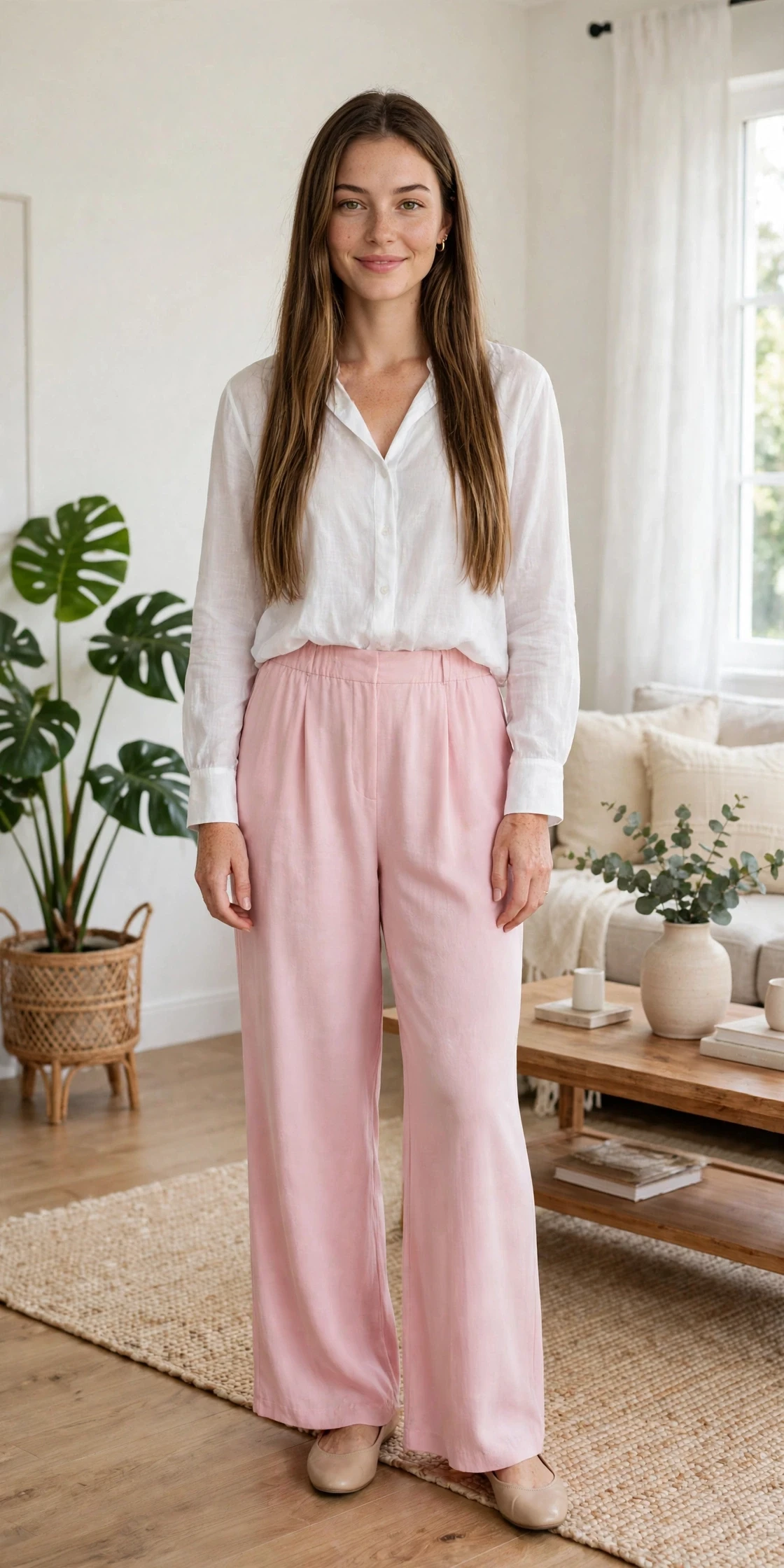
Pale blush pink is the easiest shade to style, because it reads almost like a neutral. It pairs beautifully with white, cream, beige, light grey, and soft navy. It also works with black, but the contrast is strong, so a black top with blush pants looks deliberate and graphic rather than soft. That can be a good thing for an evening or a polished work outfit, as long as the rest of the outfit stays simple. Pale pink also suits light fabrics: linen, cotton, and silk all keep the soft feeling consistent.
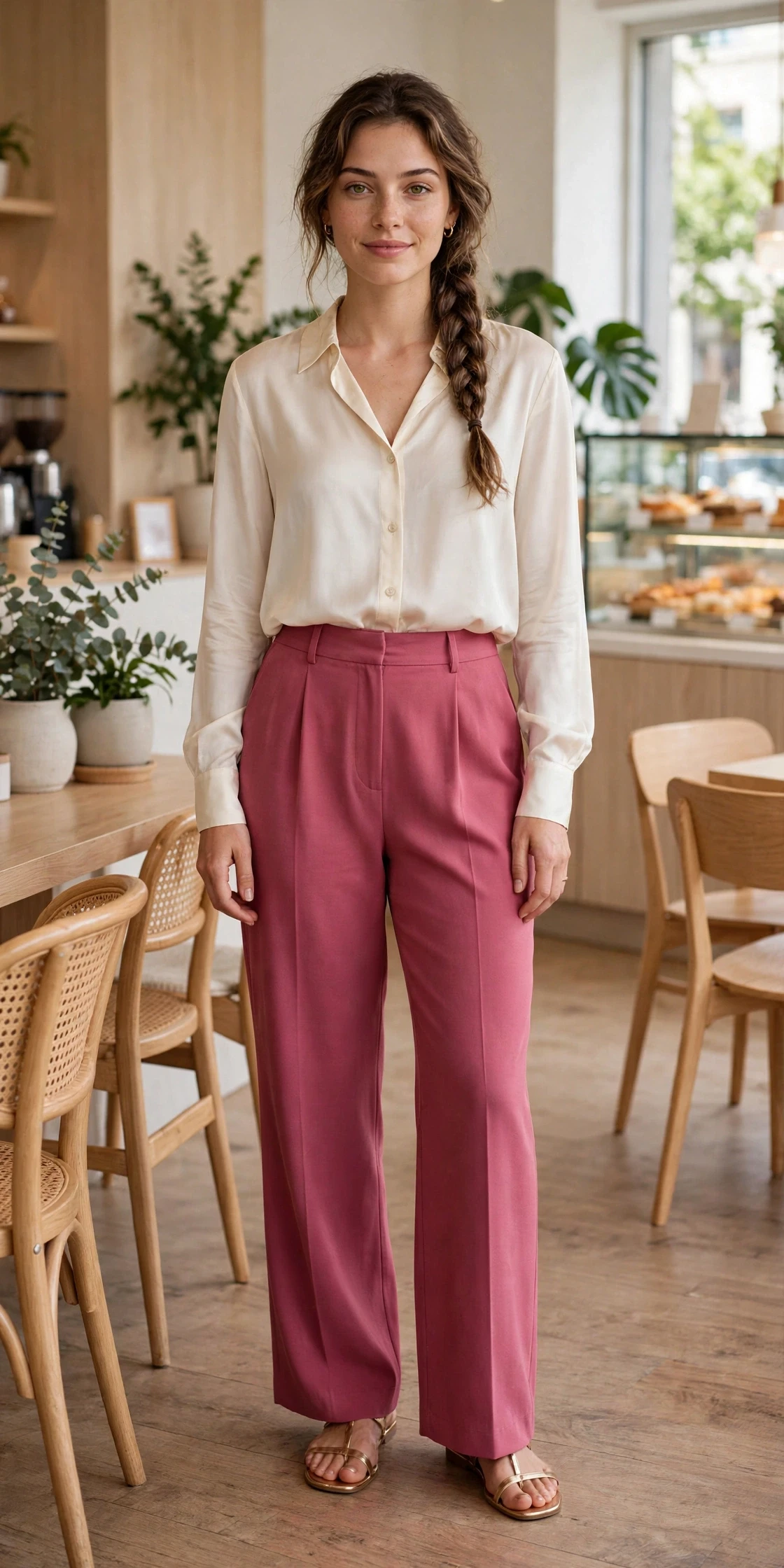
Dusty rose is a muted, slightly greyed pink. It looks more grown-up than blush, and it pairs well with deeper colors: navy, charcoal, olive, and dark denim. It is an excellent work shade, because it does not shout, and it flatters many skin tones without washing them out. Dusty rose also works with cream and camel, which warm it up without making it look summery. If you own only one pair of pink pants and you want them to work year-round, dusty rose is often the most versatile choice.
Bright pink and fuchsia are the boldest shades. They demand simpler partners. White, black, navy, and grey all work, because they let the pants be the star. A bright pink pair with a white shirt and neutral shoes is striking without being chaotic. A bright pair with another bright color, like orange or turquoise, can work for a party or a creative event, but it needs confidence and a simple silhouette to avoid looking like a costume. For everyday wear, keep bright pink grounded with at least one neutral: a grey sweater, a navy jacket, or nude shoes.
Deep rose and berry pink sit between dusty and bright. They have enough depth for autumn and winter, and they pair well with black, charcoal, cream, and camel. A deep rose pair with a cream blouse and a camel coat is a classic autumn outfit that looks expensive without trying hard. Deep shades also handle heavier fabrics well: wool blends, twill, and corduroy all suit the richer color.
Before you plan any outfit, hold your pants next to potential tops in daylight. Indoor light can make pink look warmer or cooler than it really is, and a top that matched in a store can clash at home. A quick daylight check by a window saves a morning of second-guessing. Also check the pants against your skin in the mirror. If a shade makes you look washed out, it may need a stronger top color near your face — navy, black, or a deep green — to restore contrast, rather than a pale top that blends into both the pants and your skin.
The color partners that almost always work
White is the safest partner for every shade of pink. A white shirt, blouse, or tee instantly freshens pink pants and keeps the outfit clean. The key is the white itself: a crisp, bright white suits bright and pale pinks, while a softer cream suits dusty and deep roses better. If your white top looks yellowed or grey next to the pants, it will drag the whole outfit down, so keep whites truly white or switch to cream.
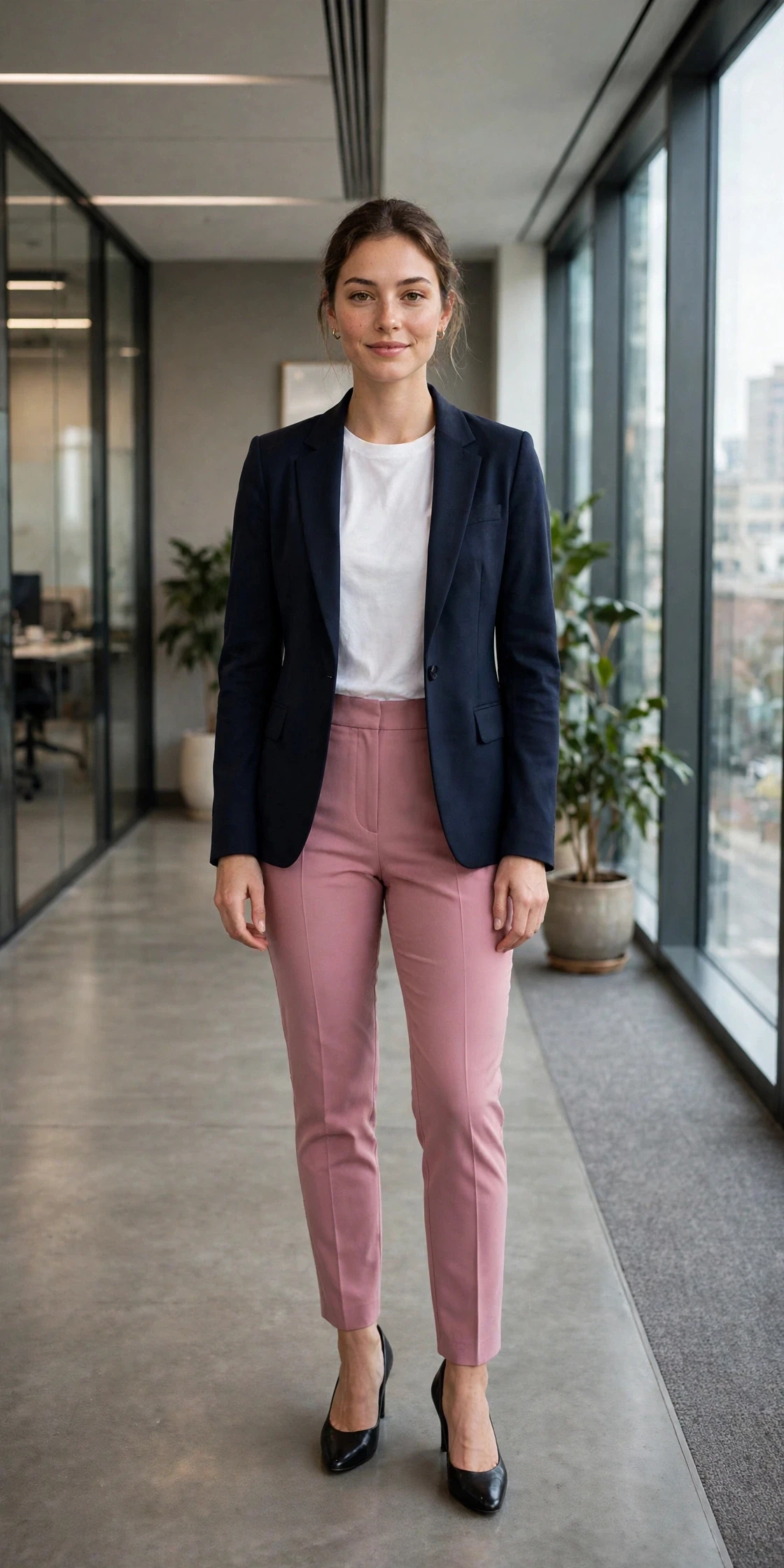
Navy is the sophisticated partner. It grounds pink without the harshness of black, and it works for work, travel, and evenings. A navy blazer over a white top with pink pants is a formula that works in almost any office that allows color. A navy knit with dusty pink pants is quieter and warmer for cooler days. Navy shoes, like loafers or low heels, also anchor pink pants without creating a heavy black block at the feet.
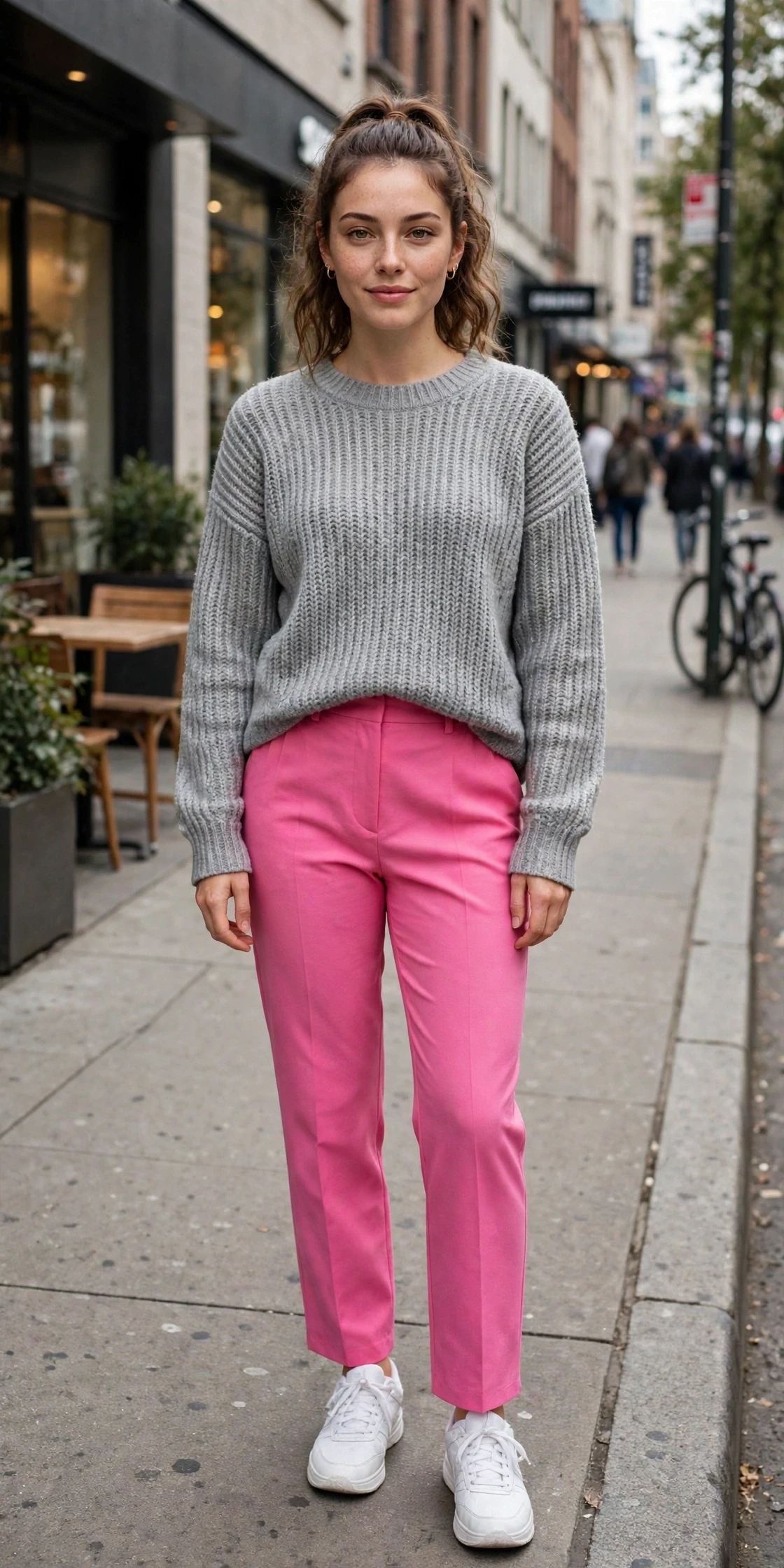
Grey is the quiet partner. Light grey softens bright pink, charcoal deepens dusty pink, and mid-grey balances pale pink. A grey sweater with pink pants is a weekend classic because it looks effortless. Grey also works as a shoe color: grey loafers or sneakers keep the outfit calm when the pants are the brightest piece.
Black is the dramatic partner. It works best when used sparingly: a black top, or black shoes, but not both plus a black bag and a black jacket all at once, which can chop the outfit into harsh blocks. A black fitted top with pale pink pants and nude shoes is elegant. A black blazer over pink pants for an evening event is polished. The trick is to let one black piece do the contrasting work and keep the rest neutral.
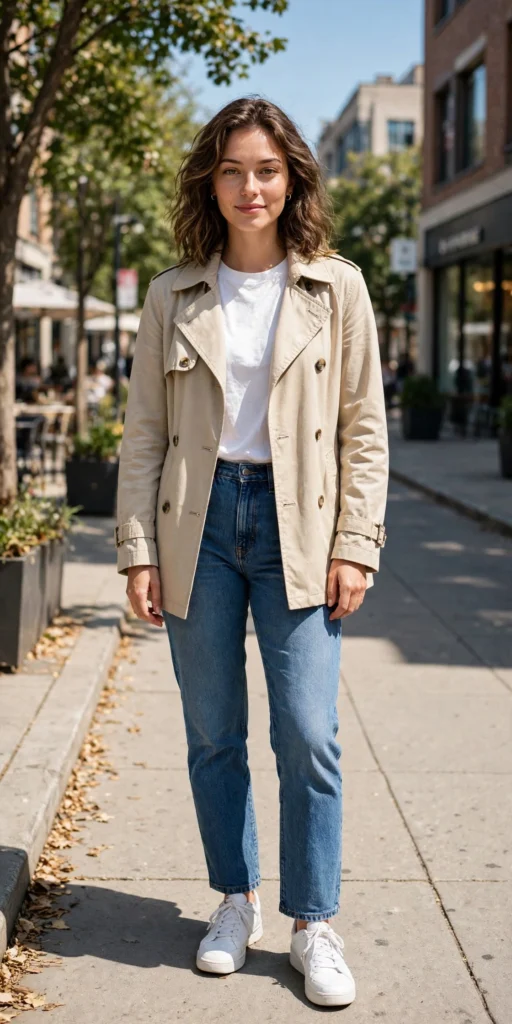
Camel, beige, and cream are the warm partners. They suit dusty and deep pinks especially well, and they make pink feel autumnal rather than summery. A camel coat over pink pants, a beige trench worn open, or cream knitwear all soften the color while keeping it grown-up. These warm neutrals also work as shoe colors: tan loafers and nude flats extend the leg line and keep the outfit from feeling bottom-heavy.
Green is a partner people forget. A deep olive or forest green top with dusty pink pants is surprisingly elegant, because green and pink sit opposite each other in a soft, natural way, like leaves and blossoms. Keep the green muted rather than neon, and keep the rest of the outfit neutral. This combination suits autumn particularly well and looks thoughtful rather than accidental.
Work outfits that stay professional
For a typical office, the most reliable work outfit is tailored pink pants, a white or cream blouse, and a navy or charcoal blazer, with loafers or low heels. The blazer adds structure and signals professionalism, while the pink keeps the outfit from looking like a uniform. If your office is more casual, drop the blazer and wear the blouse on its own with neat flats. The pants themselves, if tailored and in a muted shade, do most of the work.
A second work formula is pink pants with a fine-knit sweater in grey, navy, or cream, tucked loosely at the front or left untucked if the hem is neat. This works well in cooler months and in offices where a blouse feels too formal. Choose a sweater that is not too chunky, so the proportions stay balanced, and keep jewelry simple: studs, a watch, and a simple bag.
Shoes for work should be neat and closed-toe in most offices: loafers, low block heels, or pointed flats in nude, navy, black, or tan. Avoid very casual sneakers for work unless your office explicitly allows them, and avoid very high, flashy heels that fight with the color for attention. A bag in a neutral leather — black, tan, or navy — completes the outfit without adding another color to manage.
If your workplace has a strict dress code, choose dusty or deep pink rather than bright pink, and pair it with navy or charcoal. That combination reads as a considered color choice, not a casual one. You can also test the waters gradually: wear the pants with a navy blazer the first time, so the overall outfit still reads conservative, and see how it feels before wearing them with a lighter top alone.
What to wear with pink pants on weekends and evenings
Weekends are where pink pants feel most natural. The simplest weekend outfit is pink pants, a white tee or striped top, and white sneakers. The stripes add a little pattern without competing, and the sneakers keep the outfit comfortable for walking. A denim jacket worn open adds a casual layer for cooler days and gives the outfit a relaxed, weekend structure. Keep the denim light or mid-wash rather than very dark, so the outfit does not feel heavy.
A slightly dressier weekend version swaps the tee for a linen shirt in white or light blue, worn untucked or with a front tuck, and swaps sneakers for leather sandals or loafers. This works for lunch, shopping, and visiting friends, and it transitions easily to a casual dinner by changing shoes and adding simple jewelry. A crossbody bag in tan or neutral leather keeps your hands free without adding bulk.
For evenings, the formula changes: keep the pants, change the top and the shoes. A black fitted top, a silk blouse in cream or champagne, or a satin camisole with a light jacket all lift pink pants into evening territory. Heeled sandals or pointed heels in nude or metallic tones add polish. One piece of jewelry with a little shine — drop earrings, a bracelet, or a delicate necklace — is enough. Evening pink works best when the rest of the outfit is dark or metallic, so the pants glow rather than compete.
A note on prints for evenings and weekends: a small floral or a subtle stripe on the top can work with solid pink pants, but keep the print’s colors in the same family as your neutrals. A top with pink in its print can tie the outfit together, but a top with many competing bright colors will fight the pants. When in doubt, choose a solid top. Solid tops let the pants be the color story, which is cleaner and easier to repeat.
Layering: coats, jackets, and cardigans
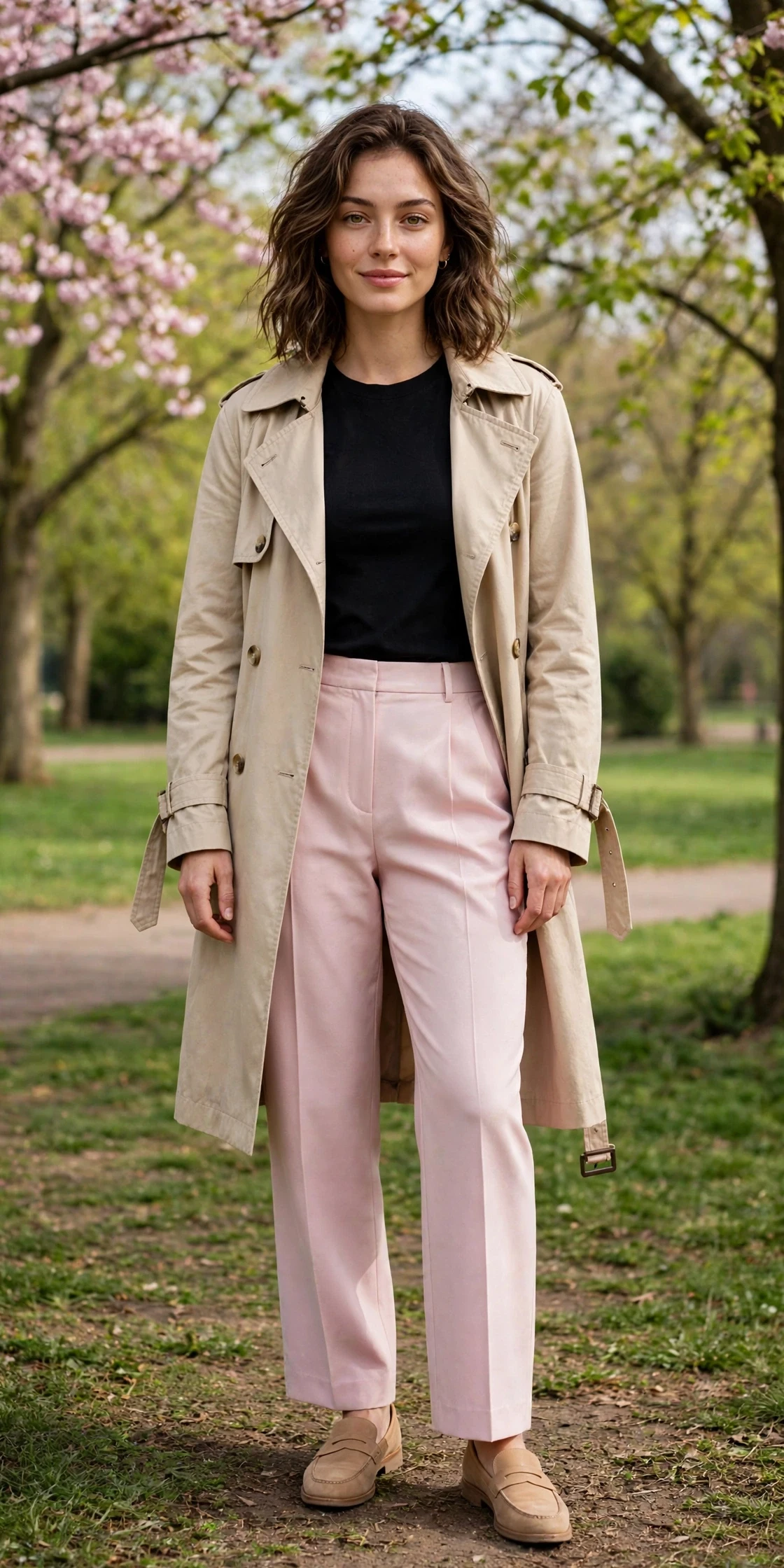
Layering pink pants well is about length and weight. A cropped jacket that ends at the waist or hip shows the waistband and keeps the proportions clear. A long coat worn open also works, because the open front creates a vertical line that lengthens the outfit, and the pink shows in the middle. A long coat worn closed hides the pants entirely, which wastes the color, so save closed long coats for very cold days when warmth matters more than the outfit.
A trench coat in beige or camel is one of the best layers for pink pants, especially in spring and autumn. The warm neutral softens the pink and adds a classic shape. A denim jacket suits casual days. A navy or black blazer suits work and evenings. A long cardigan in grey or cream suits relaxed days at home or in a casual office, but make sure it does not hang so long that it covers the pants to the knee and makes the outfit look shapeless. The cardigan should end above or at the hip for the clearest proportions.
Scarves can add warmth and color, but keep them simple with pink pants. A solid scarf in navy, grey, or cream works. A busy, multicolored scarf near the face can clash with the pants at the other end of the outfit, even if each piece looks fine alone. Step back and look in a full-length mirror before leaving the house: the outfit should read as one story, not as three separate color decisions.
Shoes and bags: the finishing details
Shoes change the mood more than any other single item. Nude flats and heels extend the leg and keep the focus on the pants. White sneakers make the outfit casual and fresh. Tan loafers warm up dusty and deep pinks. Black heels and loafers add drama and work well for evenings and formal work. Metallic sandals — gold or silver, depending on your jewelry — add evening shine without a new color. Avoid shoes in another bright color unless that color is deliberate and the rest of the outfit is neutral; red shoes with pink pants, for example, can look intentional with a simple black top, but they can also look chaotic with a patterned top.
Bags follow the same rule: neutral wins. A tan, black, navy, or cream bag works with every shade. A bag that matches the pants exactly can look too coordinated, like a set, unless the shades are slightly different. A bag in a contrasting bright color should be the only bright accent besides the pants, and it should be small enough not to compete. For everyday use, a medium structured bag in a neutral leather is the most versatile choice.
Belts are optional. A thin belt in tan or black can define the waist if you tuck in your top, and it adds a neat finish. A wide, statement belt can fight with the color and break the outfit into blocks, so keep belts slim and simple. If your top is untucked and covers the waistband, skip the belt entirely; it will not be seen and may bunch under the top.
Combinations to avoid, and easy fixes
The most common mistake is pairing pink pants with a neon top. Neon and pink together can look harsh and tiring to the eye, especially in daylight. Fix it by swapping the neon top for white, grey, or navy. The pants will still provide color, and the outfit will look calmer immediately.
Another mistake is wearing pink pants with a top in a clashing warm color, like a strong orange, without any neutral to separate them. Orange and pink can work in small doses, like a print, but as two large solid blocks they often fight. Fix it by adding a neutral jacket or by choosing a top in a muted version of the warm color, like a soft peach, with neutral shoes.
A third mistake is too many textures at once: a sequined top, shiny pants, metallic shoes, and a glitter bag. Each piece alone might be lovely, but together they overwhelm. Fix it by keeping only one shiny or textured piece and making the rest matte and simple. With pink pants, that one shiny piece is usually the shoes or the jewelry, not the top.
A fourth mistake is the wrong shade for the season’s light. A very pale pink can look washed out in harsh winter light, and a very bright pink can look loud under fluorescent office light. Fix it by checking outfits in the light where you will actually wear them, and by keeping a darker layer — a navy blazer or a charcoal cardigan — handy to tone down the color when needed.
Frequently asked questions
Can pink pants work for a formal office?
Yes, in a muted shade like dusty rose or deep rose, tailored well, with a navy or charcoal blazer and neat shoes. Bright pink is harder in a formal office, but a bright pair with a dark blazer and simple shoes can still work if your office allows color. When in doubt, start with the muted shade and the blazer.
What top color is safest with bright pink pants?
White is safest, followed by black and navy. White freshens bright pink, black makes it dramatic, and navy makes it sophisticated. Grey is also safe and softens the brightness. Avoid another bright color as the main top unless the occasion is festive and the rest of the outfit is simple.
Do pink pants suit all skin tones?
Most people can wear pink, but the best shade varies. Pale blush suits many people but can wash out very fair skin unless paired with a stronger top color near the face. Dusty rose suits a wide range and is a good starting point if you are unsure. Bright pink suits deeper skin tones beautifully and can also suit fair skin with a simple neutral top. Try shades in daylight and notice which one makes your face look rested rather than tired.
Can I wear pink pants in winter?
Yes, especially in dusty, deep, or berry shades, in heavier fabrics like twill or wool blends. Pair them with dark boots, a navy or charcoal coat, and a knit sweater. Pale pink in winter can still work, but it looks more intentional with dark shoes and a dark coat to ground it, rather than with light summer sandals.
What shoes should I avoid with pink pants?
Avoid shoes that add a third bright color, very chunky shoes that overwhelm a slim pink pant, and shoes that clash in undertone — for example, a warm orange-brown shoe with a cool, blue-based pink can look off. Neutral shoes in nude, tan, navy, black, grey, or white are the safest, and they let you repeat the outfit without rethinking shoes every time.
How do I keep pink pants from looking too casual?
Structure is the answer. Choose tailored pants rather than joggers, add a blazer or a structured jacket, wear neat shoes rather than flip-flops, and keep accessories simple and polished. A tucked-in blouse, a belt, and a structured bag all signal intention. The color stays playful, but the structure keeps it sophisticated.
Final checklist
Before you leave the house, check three things. First, shade: does your top partner calm or complement the pink, rather than fight it? Second, structure: is there at least one structured piece — a blazer, tailored pants, or neat shoes — keeping the outfit polished? Third, simplicity: is there only one star besides the pants, whether that is a shoe, a bag, or a piece of jewelry, rather than three competing accents? If those three checks pass, the outfit will read as sophisticated, not accidental. That is the simplest answer to what to wear with pink pants: let the color do its job, support it with neutrals, and save the drama for one finishing touch.