A good wool blazer is one of the hardest-working pieces a man can own. It is warm enough for cold months, smart enough for work and occasions, and relaxed enough to wear with jeans on a weekend. That range is exactly why wool blazers for men remain a wardrobe staple year after year, even as other jacket styles come and go. Unlike a full suit jacket, which belongs to a matching pair of trousers, a blazer is meant to be mixed — with different trousers, different shirts, and different shoes — which is why one well-chosen wool blazer can anchor a dozen outfits.
The catch is that wool blazers vary enormously. Some are beautifully cut and last for years. Others are stiff, shiny, or shapeless after a season. This guide covers how to tell the difference, how to get the fit right, and how to wear a wool blazer so it earns its place in your wardrobe.

Why Wool Works for a Blazer
Wool is the natural choice for a cold-weather blazer for several practical reasons. First, it insulates. Wool fibers trap air, which keeps warmth close to the body without needing a thick, heavy cloth. A medium-weight wool blazer can be warm on a cold day while still looking trim, where a cotton jacket of the same warmth would look bulky.
Second, wool breathes. Unlike a coated or heavily synthetic fabric, wool lets moisture vapor escape, so you are less likely to overheat indoors. That matters for a blazer, because you wear it in heated rooms, cars, and offices as well as outdoors. A blazer that is warm outside and clammy inside is not doing its job.
Third, wool drapes. A good wool cloth falls in clean lines from the shoulder, which is what gives a blazer its shape. Cheaper fabrics often look either stiff, like cardboard, or limp, like a cardigan. Wool, properly cut, holds a shoulder line and a clean front without looking rigid.
Fourth, wool resists wrinkles better than linen or cotton. It will crease if you sit on it for hours, but it recovers with hanging and a little steam. For a garment you wear to work, travel in, and sit in all day, that recovery matters.
The wool you meet most often in blazers is merino or a merino blend, which is fine and soft, or a slightly heavier tweed-style wool, which is textured and more casual. Both are wool, but they suit different occasions, which we will come to below.
The Fit: Where a Wool Blazer Is Won or Lost
Fit decides whether a wool blazer looks sharp or borrowed. Get these points right and almost any decent blazer looks good. Get them wrong and even an expensive one looks off.
Shoulders. The shoulder seam should sit at the edge of your own shoulder, not drooping past it and not pulling in short of it. A shoulder that extends past yours makes you look like you are wearing someone else’s jacket. A shoulder that is too narrow pulls and creases when you move your arms. This is the hardest part to alter, so if the shoulders do not fit, try another size or another cut rather than hoping a tailor can fix it.
Chest and waist. Button the blazer and stand naturally. It should close without strain — no pulling, no gaping, no button under tension. You should be able to slide a flat hand, not a fist, between your chest and the buttoned jacket. The waist should taper gently rather than hanging straight down like a box, but it should not pinch. If the jacket flares open below the button when you stand still, it is too tight or the cut does not suit your shape.
Length. A classic blazer covers your seat and ends around mid-crotch when your arms hang naturally — a useful old rule is that it should cover your backside and reach roughly to where your thumb joint falls when your arms are at your sides. Too short and it looks like a cropped jacket. Too long and it shortens your legs visually.
Sleeves. The sleeve should show about a centimeter of shirt cuff when your arms hang naturally — roughly a quarter to half an inch. If no cuff shows, the sleeve is too long. If a lot of cuff shows, it is too short. Sleeve length is easy for a tailor to adjust, so do not reject an otherwise perfect blazer for sleeve length alone.
The collar test. The jacket collar should sit flat against your shirt collar with no gap when you stand and turn your head. A gap, where the jacket collar stands away from your neck, means the fit is off in the upper back or shoulders. It is visible from behind and it is hard to fix, so treat it as a reason to try another jacket.
Movement test. Walk, sit, and raise your arms as if reaching for something on a shelf. A good blazer moves with you. If it feels tight across the back when you reach forward, or if it rides up badly when you sit, the cut is wrong for you, whatever the size label says.

Choosing the Right Wool: Weight, Texture, and Color
Weight. Blazer wool ranges from lightweight tropical wool, which suits mild weather, to heavy tweed, which suits deep winter. For a first wool blazer meant to cover autumn through spring, a medium weight — the kind that feels substantial in the hand but not coat-like — is the most useful. It layers over a shirt in autumn, over a sweater in winter, and it does not look out of place on a cool spring evening.
Texture. Smooth worsted wool looks dressier and more formal. It suits work, weddings, and dinners. Textured wool — tweed, flannel, or a hopsack weave — looks more casual and more rugged. It suits weekends, country walks, and relaxed offices. A first blazer in smooth wool is the more versatile buy, because it dresses down with jeans more easily than a tweed blazer dresses up for a formal event.
Color. Navy is the safest first choice. It pairs with grey trousers, dark jeans, khakis, and black trousers, and it works for almost every occasion a blazer is called for. Charcoal is the second most useful — slightly more formal, excellent with lighter trousers. Dark grey, brown, and tweed patterns come next, once you already own a navy or charcoal blazer. A very light color or a bold pattern as a first wool blazer limits your outfits more than it expands them.
Pattern. A solid blazer is the most versatile. A subtle check or herringbone adds interest without limiting pairings much, especially in brown or grey tweed. A loud windowpane check is a statement piece — buy it because you love it, not as your only blazer.
What to Wear With a Wool Blazer
The point of a blazer, as opposed to a suit jacket, is mixing. Here are combinations that work reliably.
For work. Navy wool blazer, white or light blue shirt, grey or charcoal trousers, dark leather shoes. Add a tie if your workplace expects one, or skip it and leave the top button undone for a modern office. This combination looks polished without looking like you are wearing a suit that lost its trousers.
For smart casual. Charcoal or navy blazer, a fine-knit sweater in crew or V-neck, dark jeans or chinos, and clean leather boots or loafers. The sweater under a blazer is one of the best cold-weather looks there is — warm, simple, and smart. Keep the sweater thin enough that the blazer still buttons comfortably.
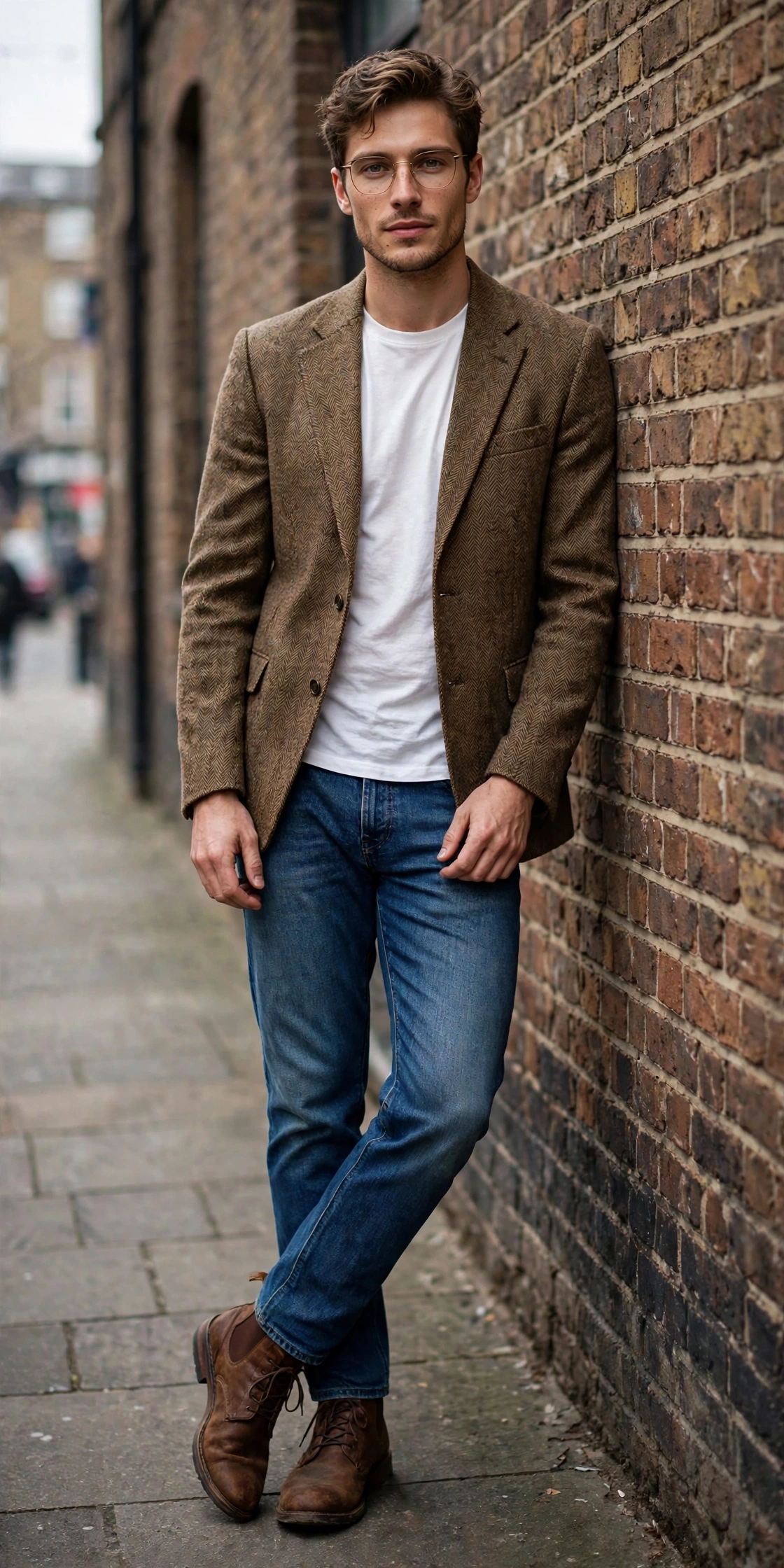
For weekends. A textured tweed-style blazer, a plain T-shirt or henley, dark jeans, and boots or clean trainers. The texture of the blazer does the work here, so keep the rest of the outfit plain. This is the combination that makes a wool blazer feel like everyday clothing rather than occasion clothing.
For occasions. Dark wool blazer, white shirt, dark trousers, polished shoes, and a pocket square if you like one. A pocket square is optional, but a simple white one, folded flat rather than puffed, adds a finished touch without looking fussy.
Two things to avoid: wearing a blazer with trousers that are too close in color but not matching, which looks like a suit that went wrong, and wearing a blazer with shorts, which rarely works outside a very specific summer style. Either go clearly different in the trousers — dark jeans with a navy blazer, grey trousers with a brown blazer — or wear a full suit.
Layering a Wool Blazer in Cold Weather
A wool blazer is warm, but it is not a coat. On truly cold days, layering is what makes it work.
Start with a base that is not bulky. A shirt plus a thin sweater is warmer and less bulky than a thick sweater alone, and it lets the blazer keep its shape. A thermal base layer under the shirt adds warmth without bulk on the coldest days.
Over the blazer, wear a proper coat for the walk — a wool overcoat, a parka, or a trench depending on the weather. The blazer is the indoor layer; the coat is the outdoor one. Trying to make a blazer do a coat’s job leaves you cold and stretches the blazer’s shoulders under a too-tight coat.
Add a scarf for the gap at the neck. A simple wool or cashmere-blend scarf in a dark, plain color fills the space between blazer and coat and adds real warmth. Gloves and a hat finish the cold-weather set, and none of them need to match the blazer exactly — dark, plain accessories go with everything.
Buying Smart: What Is Worth Paying For
A wool blazer is an investment piece, and it is worth understanding where the money goes.
Construction. A half-canvassed blazer — where the chest has a stitched canvas layer that molds to your body over time — holds its shape far better than a fully fused blazer, where the front is glued. Fused blazers are cheaper and fine for occasional wear, but they can bubble or go stiff after cleaning. If you plan to wear the blazer weekly, half-canvassed is worth the step up.
Cloth quality. Feel the fabric. Good wool feels smooth and dense, not scratchy or papery. Hold it up: it should drape, not flop or stand rigid. Check the label for the wool percentage — a high wool content, ideally 90 percent or more for a winter blazer, with a small amount of a stretch fiber or cashmere if listed, is a good sign. A blazer that is mostly polyester with a little wool will not breathe or drape like wool, whatever the marketing says.
Details. Working sleeve buttons, a clean lining, a sturdy inside pocket, and neat stitching are small signs of care. None of them alone proves quality, but together they suggest a maker who did not cut corners where you cannot see them.
Price sense. A blazer you wear fifty times a year for five years costs very little per wear, even at a higher price. A cheap blazer you wear five times because the fit or fabric disappoints you was expensive at any price. Buy the best fit and cloth you can afford, in navy or charcoal, and you will not need to replace it soon.

Caring for a Wool Blazer So It Lasts
Wool blazers do not need frequent cleaning. In fact, over-cleaning wears them out faster than wearing them does.
Brush the blazer after wearing with a clothes brush, and hang it on a wide, shaped hanger — never a wire one, which distorts the shoulders. Let it air for a day between wears if you can, so moisture escapes and wrinkles relax. That rest day is the single easiest way to extend a blazer’s life.
Spot clean small marks with a damp cloth rather than sending the whole blazer for cleaning. Dry clean only when it genuinely needs it — once or twice a season for regular wear is plenty, and less for occasional wear. Tell the cleaner it is wool and point out any marks, since heat and harsh treatment are what damage wool most.
If the blazer wrinkles, steam it rather than pressing it hard with an iron. A handheld steamer relaxes wool beautifully. If you iron, use low heat, a pressing cloth, and never press directly on the lapels, which can go shiny.
Store it hanging, buttoned, in a breathable garment bag if you use one, not in plastic, which traps moisture. Empty the pockets before storing, since a heavy wallet or keys in a pocket pull the blazer out of shape over a season.
A Final Checklist Before You Buy
Run through this before you pay:
- Do the shoulders sit exactly at your shoulder edge, with no droop and no pulling?
- Does it button without strain, and does the collar sit flat with no gap?
- Does the sleeve show a small amount of shirt cuff?
- Does it cover your seat and end at a length that looks balanced with your legs?
- Can you sit, walk, and reach forward without tightness across the back?
- Is the wool content high, the cloth dense and smooth, and the color one you will wear weekly?
- Does it work with trousers you already own, not just with the trousers in the shop?
If a blazer passes all seven, it is a keeper. If it fails the shoulders or the collar, keep looking — those are the two that tailoring struggles to fix. Everything else, from sleeve length to a little waist adjustment, a good tailor can handle.
A wool blazer bought this way does something few garments do: it makes getting dressed simpler. Shirt, trousers, blazer, shoes — done, and you look like you thought about it, because the blazer did the thinking. That is why men who own one good wool blazer tend to wear it constantly, and why it is worth taking the time to choose it well.
Why One Good Blazer Beats Three Average Ones
It is tempting to buy several cheaper blazers in different colors, but most men end up wearing one favorite and ignoring the rest. A single well-fitting blazer in navy or charcoal, in good wool, will be reached for week after week, while a rack of ill-fitting ones gathers dust. That is the real value calculation for wool blazers for men: cost per wear, not cost per garment. Spend the time on shoulders and collar fit, spend a little more on cloth and construction if you can, and buy the second color only after the first has proven itself through a full season of real wear. When shoppers compare wool blazers for men online, the listings that list wool percentage, construction, and measurements are the ones worth trusting — the rest are selling a photo, not a jacket.
How warm is a wool blazer?
A medium-weight wool blazer is warm enough for autumn and mild winter days, especially layered over a sweater. It is not a substitute for a winter coat in deep cold or wind. Think of it as the warm indoor layer and the smart outer layer for cool, not freezing, weather, with a coat over it when the temperature drops further.
Can you wear a wool blazer with jeans?
Yes, and it is one of the best smart-casual combinations. Choose dark, plain jeans without heavy fading or rips, and pair them with a navy or charcoal blazer and clean shoes. The contrast between the blazer’s structure and the jeans’ casualness is what makes the outfit work.
Should a wool blazer be dry cleaned?
Only when it needs it, not after every wear. Brush it, air it, and spot clean small marks. Dry clean once or twice a season for regular wear, and tell the cleaner it is wool. Over-cleaning wears out the cloth and the construction faster than normal wear does.
What color wool blazer should you buy first?
Navy, for most men. It pairs with the widest range of trousers and works for work, occasions, and weekends. Charcoal is the next best choice. Once you own one of those, a brown or tweed blazer adds variety for casual days.
Can you wear a blazer that is not part of a suit?
Yes — that is what a blazer is for. A blazer is designed to be worn with different trousers. Just avoid trousers that are almost, but not quite, the same color as the blazer, since that looks like a mismatched suit. Go clearly different in color or texture.
How should a wool blazer fit over a sweater?
It should still button comfortably, with no pulling across the chest or waist. If you plan to wear a sweater under it often, try the blazer on over that sweater in the shop. A blazer that fits perfectly over a shirt alone may be too tight over knitwear, and sizing up for sweater wear is a common, sensible choice.