An a line dress is one of the most forgiving shapes in a closet, and the reason is simple geometry. It fits through the shoulders and bust, then widens gently toward the hem, tracing the shape of a capital letter A. Nothing pulls, nothing clings at the hips, and the skirt moves when you walk. If you have ever tried on a dress that looked fine standing still but felt tight the moment you sat down or climbed stairs, the A-line is the shape that usually fixes that problem.
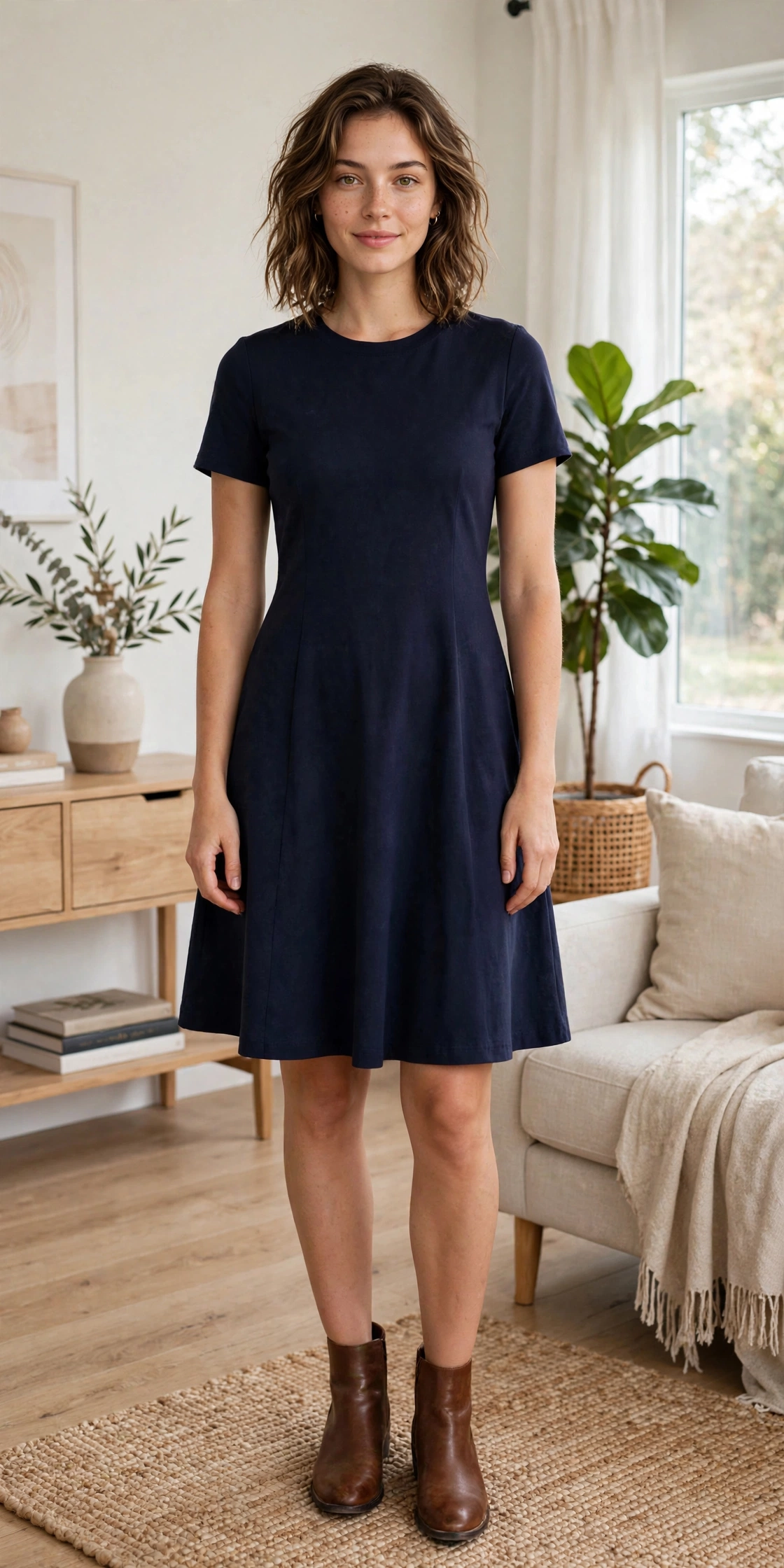
The short answer to “which one should I buy” is: pick a dress that fits your shoulders and bust first, let the skirt fall free, and choose a hem that ends where your leg looks longest — usually just above or just below the knee. Everything else — fabric, sleeves, neckline, pattern — is a matter of where you plan to wear it. This guide walks through each choice so you can buy once and wear the dress for years.
Why an a line dress works on so many bodies
An A-line is a fitted bodice with a skirt that releases from the waist and flares in a straight, gentle slope. It does not rely on stretch to forgive fit, and it does not add bulk where you do not want it. That is why the same basic shape shows up in office dresses, wedding-guest dresses, casual day dresses, and evening dresses — the cut does the work, and the fabric and length set the occasion.
For a pear shape, the flare skims the hips and thighs instead of hugging them. For an apple shape, a defined waist seam creates a waistline where the body is straighter. For a rectangle shape, the flare creates the curve the torso does not have on its own. For an hourglass shape, a fitted bodice and a waist seam show the waist without squeezing it.
The one shape to watch is a very full, stiff A-line on a petite frame, which can shorten the leg. If that is you, choose a narrower flare and a knee-length hem, and the dress will lengthen rather than overwhelm.
The long, unbroken line from shoulder to hem is part of the effect. Because the skirt widens gradually rather than flaring suddenly, the eye travels down the full length of the dress, which makes the wearer look taller and more balanced. Where the hem ends matters just as much: a hem that stops at the narrowest part of the leg, just above or below the knee, keeps that line clean, while a hem that cuts across the widest part of the calf breaks it.
One more practical point in its favour is that the A-line is easy to alter. Taking in a waist, shortening a hem, or moving a button are all small jobs for a tailor, and because the skirt is cut to fall free, those changes rarely disturb the shape of the dress. That makes it a safer purchase than a fitted sheath or a bias-cut dress, where a single alteration can change the whole fit.
Finding your fit: shoulders first, waist second, hips never
Try the dress on in this order, and do not skip a step. First, shoulders: the seam should sit at the shoulder bone, not falling off or pulling inward. Second, bust: the bodice should lie smooth, with no pulling across the bust and no gaping at the neckline or armhole. Third, waist: the waist seam should meet your natural waist — the narrowest point of your torso, usually just above the navel.
Hips are the last thing to check, because in a true A-line they should need no fitting at all. Sit down in the dress: the skirt should swing forward and settle without pulling at the hips or riding up. Walk in it: the hem should move freely and not catch between your knees. If the skirt pulls, clings, or rides up, the flare is too narrow for your hips — size up or choose a fuller cut.
A note on sizing: many A-line dresses run true to your usual dress size in the bodice and generous in the skirt. If you are between sizes, choose the size that fits your bust and shoulders, then have the waist taken in if needed. Taking in a waist is a simple, cheap alteration; letting out a bodice almost never works.
The waist itself gives you a choice, and it is worth deciding what you want before you shop. A defined waist seam, a self-belt, or a fitted bodice will show your waist and give the dress a clear shape. An unmarked waist, where the bodice flows into the skirt without a seam, will skim rather than define, which suits anyone who prefers a softer line or who carries weight around the middle. Neither is better on its own; the right one is the one that matches the silhouette you want that day.
Fabric changes everything
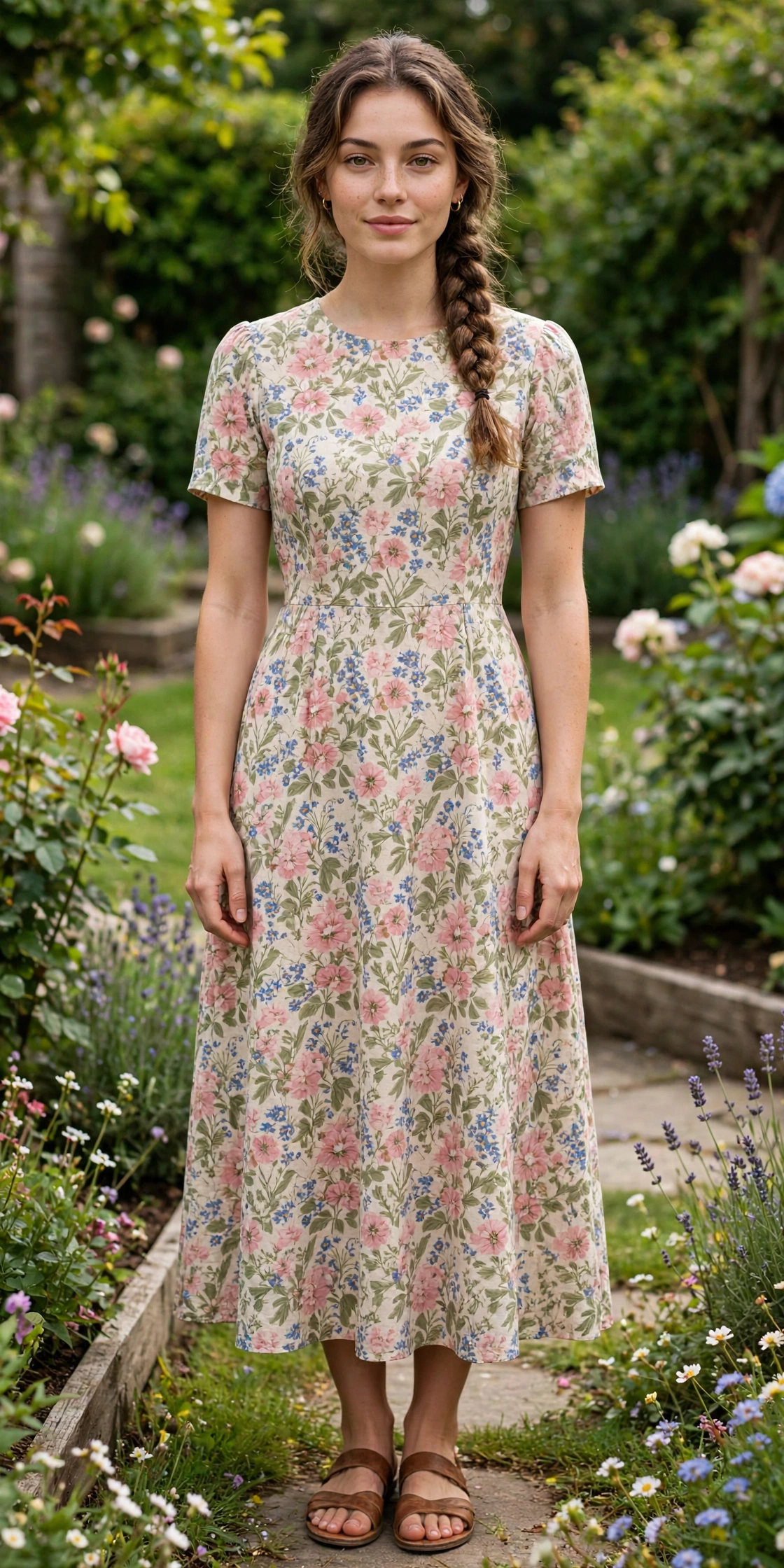
The same A-line cut behaves very differently in cotton, crepe, linen, and ponte. Cotton poplin is crisp and holds the A shape well, which makes it a good everyday choice — but it wrinkles, so it is less ideal for a long day at a desk. Crepe drapes softly, resists wrinkles, and is the safest pick for work and travel. Linen breathes in summer but relaxes and softens the flare, so a linen A-line looks more casual and less structured.
Ponte knit is the middle ground: it has enough body to hold the shape, enough stretch to be comfortable, and it rarely needs ironing. For cooler months, look for ponte, a wool blend, or a heavier crepe. For summer, choose cotton lawn, seersucker, or a cotton-linen blend — all of which keep the skirt light enough to swing.
Check the lining, too. A lined A-line hangs better and does not cling to tights in winter. An unlined cotton dress is fine for summer, but a lined one will last longer and look more polished. If a dress is unlined and made from a thin fabric, hold it up to the light before you buy — if you can see your hand clearly through the skirt, it will need a slip.
A small amount of stretch is helpful, but it is not the point of the shape. Look for a fabric with just enough give to sit and move comfortably — a little elastane in a ponte or crepe, for example — and check that it springs back after you sit. A fabric that bags at the knees or stays creased where you sat will make even a well-cut A-line look tired by the end of the day, so sit in the dress for a minute in the fitting room before you decide.
Necklines, sleeves, and the details that set the tone
Neckline changes the whole message of the dress. A V-neck lengthens the torso and suits a larger bust, because it breaks up the chest area without revealing too much. A scoop neck is softer and more casual. A boat neck widens the shoulders visually, which balances wider hips. A high neck or mock neck looks polished for work but can shorten a shorter neck — if that is you, choose a V or scoop instead.
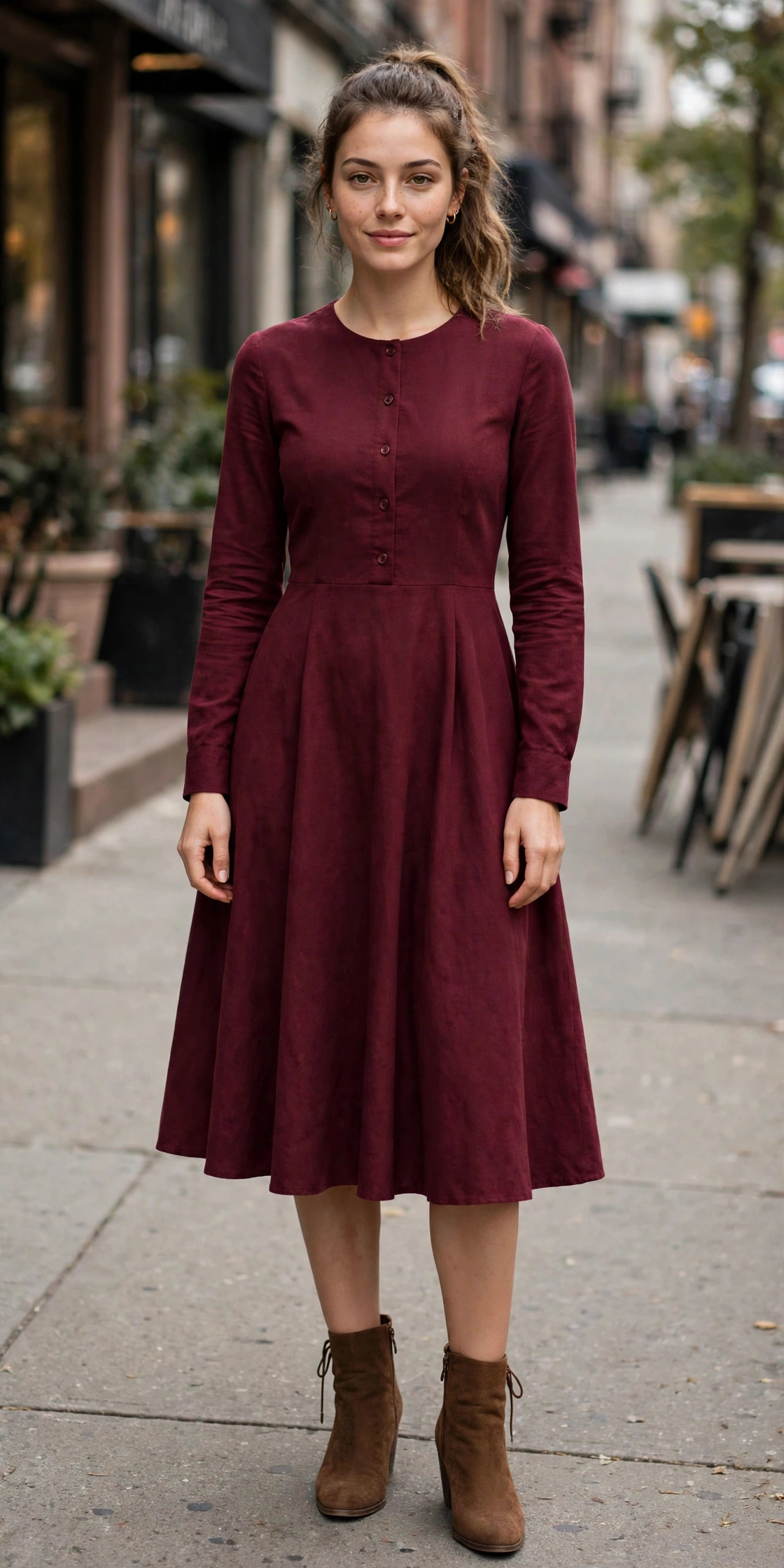
Sleeves work the same way. Short sleeves are the most versatile for everyday wear. Three-quarter sleeves are flattering on almost everyone, because they end at the narrowest part of the forearm. Long sleeves in a matching fabric make an A-line instantly more formal. Sleeveless A-lines are the easiest to layer: add a cardigan, a blazer, or a denim jacket, and the same dress covers three seasons.
Pockets are worth seeking out. An A-line with side-seam pockets does not change the silhouette, but it changes how often you will reach for the dress. A waist seam, a self-belt, or a contrast trim will all draw the eye to the waist — use them when you want definition, and skip them when you want the dress to skim.
Prints and colours follow a simple rule: let one thing do the talking. A bold print works best on a simple A-line with a plain neckline and no extra trim, because the pattern itself is the detail. A solid colour in a neutral or dark shade, on the other hand, leaves room for a statement shoe, a scarf, or a piece of jewellery to set the tone. If you mix a loud print with a busy neckline, a belt, and bright accessories, the clean line of the A-line gets lost under the details.

Length: knee, midi, or mini, and how to choose
Knee length is the safest starting point. It ends at or just above the knee, shows the lower leg, and works for work, weddings, and everyday wear. If you are petite, a knee-length dress with a slightly higher waist and a pointed shoe will lengthen the leg more than a longer dress will.
Midi length, ending mid-calf, is the most elegant option — and the one most likely to go wrong if the hem ends at the widest part of your calf. Try it on with the shoes you plan to wear, and check the hem in a full-length mirror: it should end either just below the knee or just above the ankle bone, not in the middle of the calf. A midi A-line in a fluid fabric is especially flattering, because the skirt moves instead of standing away from the body.
Mini length, ending mid-thigh, works best in a structured fabric that holds the A shape, so the skirt does not ride up when you sit. Pair it with tights in cooler weather or a lower heel to keep the proportions balanced. For most occasions, knee or midi is the more versatile choice — a mini A-line is a fun second dress, not the one dress to buy first.
If you are shorter, a knee-length or slightly above-the-knee hem will usually flatter you most, because it shows more leg and keeps the proportions in your favour. If you are taller, a midi length is often easier to wear well, since it has room to fall without cutting you in half. Whichever length you try, do the daylight test: check the hem in a full-length mirror in natural light, with the shoes you will actually wear, rather than under fitting-room lighting, which can hide a hem that sits at an awkward point.
Styling it for work, weekends, weddings, and evenings
For work, choose a knee-length A-line in crepe or ponte in a solid, dark, or muted color. Add a blazer that ends at the waist — not below it, or it will hide the waist seam — and a closed-toe shoe with a modest heel. Keep jewelry simple: studs, a watch, and one bracelet are enough. The dress should look intentional, not decorated.
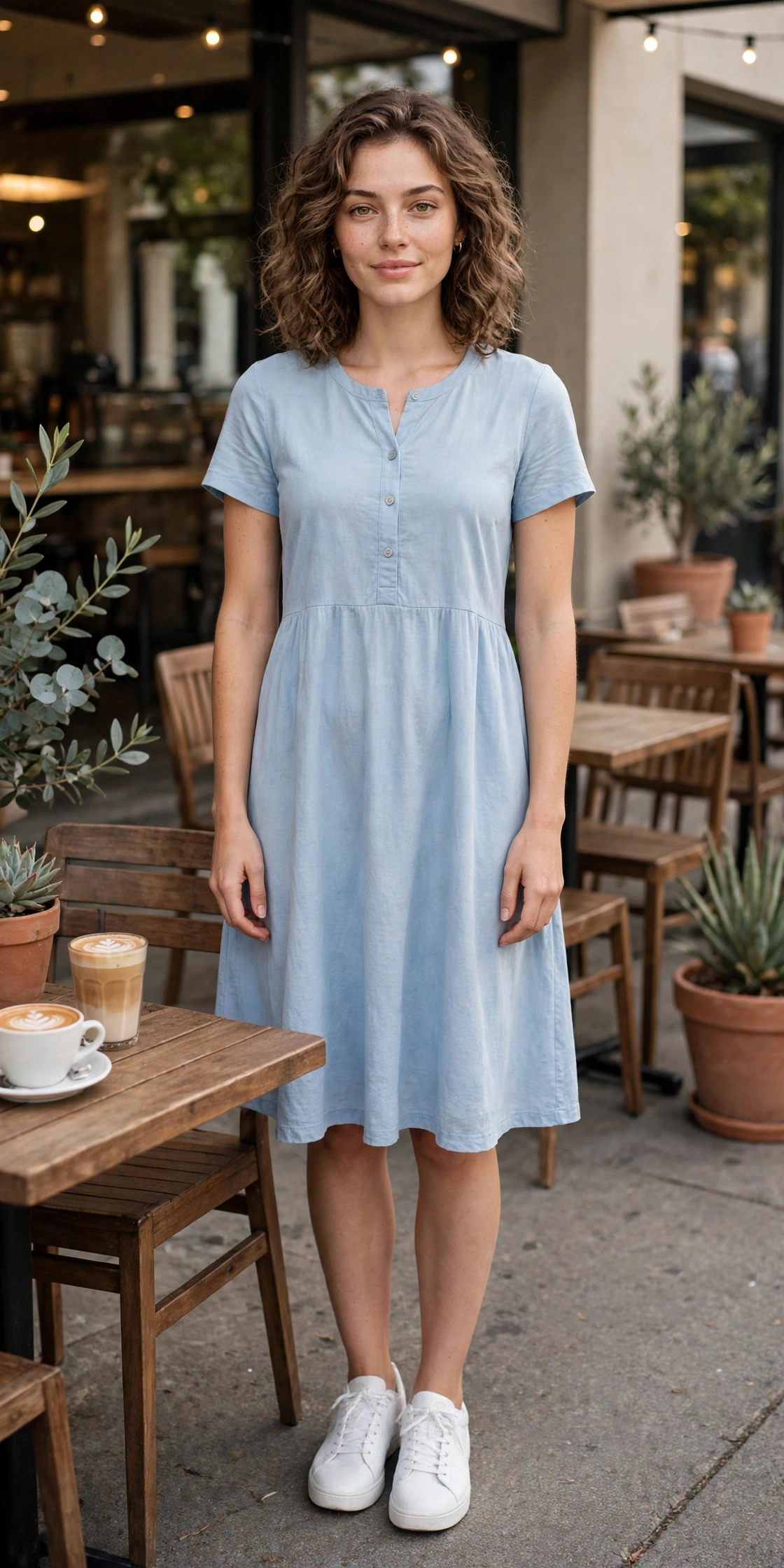
For weekends, the same shape in cotton or denim with white sneakers or flat sandals is an easy, put-together outfit that still feels like a day off. Add a crossbody bag and a denim jacket, and you have a uniform you can repeat in different colors all summer.
For weddings, look for a midi A-line in a soft, fluid fabric with a little movement — chiffon over a lining, or a light crepe. Avoid white, ivory, or anything close to the bridal party’s color, and choose a shoe you can stand in for hours. A small clutch and one statement earring are usually all the styling a wedding-guest A-line needs.
For evenings, a black A-line in crepe or velvet, with a defined waist and a longer sleeve, is a reliable choice. Add a heel, a clutch, and a bold lip, and the dress does the rest. If the dress is sleeveless, a fitted jacket or a wrap adds warmth without breaking the line of the skirt.
The easiest styling rule for an A-line is to let the dress do the work. Because the shape itself is already flattering and balanced, you only need one focal point — a bold shoe, a statement earring, a bright bag, or a coloured jacket — and the rest can stay quiet. Two or three focal points at once will compete with the line of the dress instead of supporting it, so choose one, and let the A-line carry the rest of the outfit.
Care, alterations, and making it last
Most A-line dresses last longer if you wash them cold, hang them to dry, and steam rather than iron them. Heat is what breaks down elastic and fades color, so a cold wash and a low dryer setting — or no dryer at all — will keep the skirt’s shape for years. Store the dress on a shaped hanger, not a wire one, so the shoulders keep their shape.
When you do need to press a dress, match the method to the fabric. Cotton and linen can take a warm iron, while crepe, chiffon, and velvet are safer with a steamer, which relaxes wrinkles without flattening the drape. Whatever you use, test the heat first on a hidden area, such as an inside seam, and let it cool before you check the result — a scorch mark or a shine on the fabric cannot be undone.
The alterations worth paying for are small: shortening a hem, taking in a waist, or moving a button. All three are quick for a tailor and transform a good-enough dress into one that looks made for you. The alterations not worth paying for are changing a neckline or resizing a bodice by more than a size — at that point, a different dress is the better buy.
If you love a dress but the color has faded or the fabric has pilled, a fabric shaver and a color-safe wash can extend its life by a season or two. Knit and crepe dresses pill most at the sides where your arms rub; a quick pass with a shaver after every few wears keeps them looking new.
For storage, hang the dress on a shaped hanger that supports the shoulders, and fold heavier knits rather than hanging them, so they do not stretch out of shape under their own weight. Keep dresses out of direct sunlight, even in the closet, because sunlight fades colour over time, and give each dress room to hang freely so the skirt keeps its flare instead of being pressed flat against its neighbours.
A simple buying checklist
Before you buy, run through this list in the fitting room. Shoulders sit at the shoulder bone. Bust lies smooth with no pulling or gaping. Waist seam meets your natural waist. Skirt swings freely when you sit and walk. Hem ends at a flattering point — just above or below the knee, or just below the knee for midi. Fabric suits the occasion and the season. You can sit, walk, and reach in it without adjusting it. If a dress passes all seven, it is a keeper.
The best A-line dress is not the most expensive one, and it is not the trendiest one. It is the one that fits your shoulders, skims your hips, and makes you forget you are wearing it. Buy that dress in a color you will actually wear, take care of it, and it will repay you for years — at work, at weddings, on weekends, and everywhere in between.
For more fit help, see our Women’s Sweater Fit Guide for knitwear layering ideas, and browse more styles in our Dresses collection.
Frequently asked questions
What body shape suits an A-line dress?
Almost every body shape suits an A-line, because the fitted bodice and flared skirt balance the figure without clinging. It is especially flattering for pear shapes, since the skirt skims the hips, and for apple shapes, since a waist seam creates definition. Petite wearers should choose a knee-length version with a narrower flare so the dress does not overwhelm the frame.
Is an A-line dress good for a wedding guest?
Yes. A midi A-line in a soft, fluid fabric is one of the safest wedding-guest choices: it looks polished, it moves well on a dance floor, and it photographs beautifully. Avoid white or ivory, and choose a shoe you can stand in for several hours.
Can I wear an a line dress to work?
Yes, if you choose the right fabric and length. A knee-length A-line in crepe or ponte in a solid or muted color, paired with a blazer and a closed-toe shoe, is a classic office outfit. Avoid very short hems, sheer fabrics, and loud prints for a conservative workplace.
What shoes go with an A-line dress?
Almost any shoe works, which is part of the appeal. Pointed flats or a low heel lengthen the leg with a knee-length dress. Block heels are comfortable for weddings and long days. White sneakers dress an A-line down for weekends, and ankle boots pair well with a midi or knee-length A-line in cooler weather.
How long should an A-line dress be?
For most people, just above or just below the knee is the most flattering and versatile length. Midi length, ending mid-calf, is more elegant but should end just below the knee or just above the ankle bone — not at the widest part of the calf. Mini length works best in a structured fabric and with tights in cooler weather.
Does an a line dress need a belt?
No, and many A-lines look best without one, because the waist seam already provides definition. A belt can help if the waist seam sits slightly high or if you want extra definition, but choose a slim belt in a matching or neutral color — a wide, contrasting belt can break the clean line of the skirt.