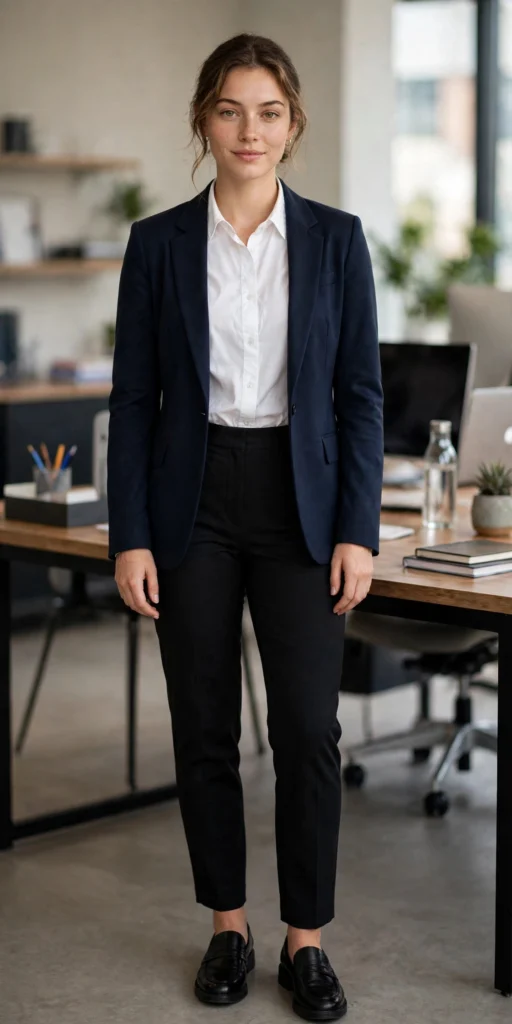
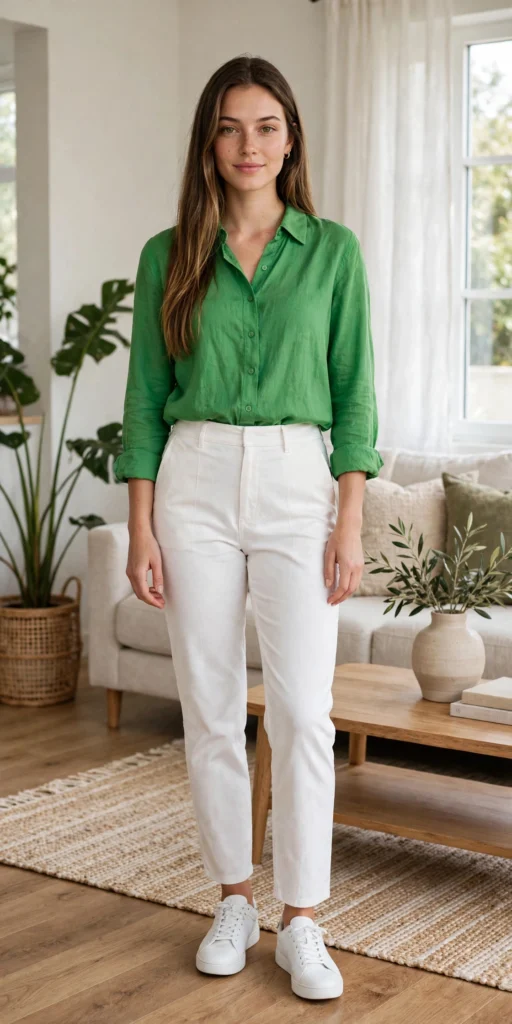
The short answer is that modest and modern are not opposites. Long sleeve modest tops look current when the fit is clean, the fabric has some structure, and the outfit has one clear shape — not when the top is simply longer, looser, and more covered. A boxy, shapeless top reads as dated even if it covers everything, while a well-cut top with full sleeves, a neat neckline, and a defined waist or hem reads as intentional and fresh. Modern modest dressing is about proportion and polish, not about hiding the outfit.
That distinction explains why two tops with the same coverage can look so different. One might be made from thin, clingy fabric that wrinkles by noon, with sleeves that bunch at the wrist and a hem that flips up. The other might be made from a smooth knit or a crisp cotton, with sleeves that end cleanly at the wrist, a neckline that sits flat, and a hem that stays put when you move. Both cover the same skin. Only the second looks modern, because modern style is mostly about how a garment behaves on the body through a normal day.
The goal, then, is not to find the most covered top in the store. It is to find tops that give you the coverage you want while also giving you a silhouette you like, in fabrics that hold up, with details that feel current. The rest of this guide breaks that down into fit, fabric, necklines, layering, and outfit formulas, so you can shop with a checklist instead of guessing.
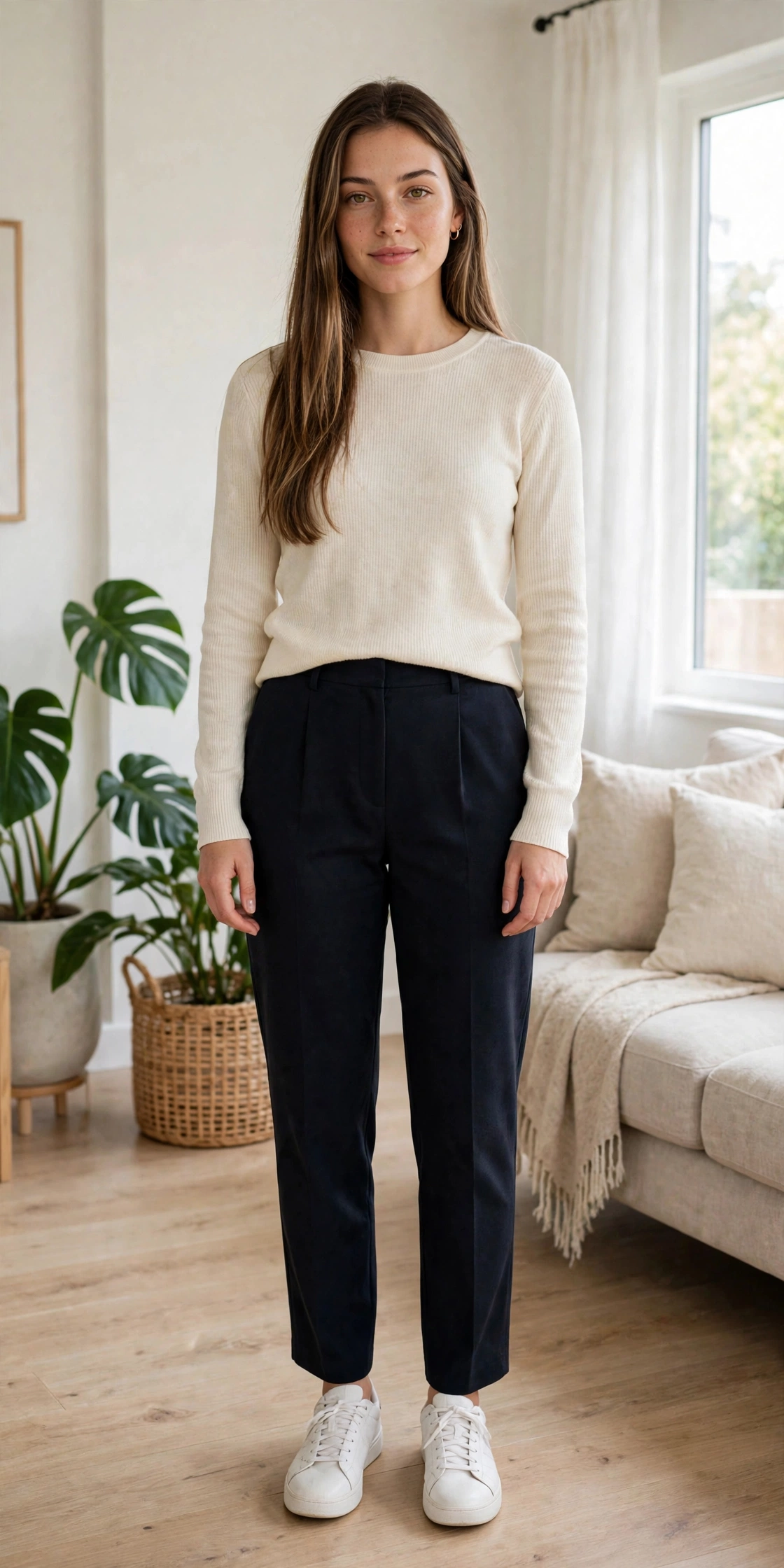
Fit First: The Three Checks That Decide Everything
Start with the shoulder. The shoulder seam should sit at the natural edge of your shoulder. If it droops halfway down your arm, the top will look oversized in a sloppy way, not a fashionable way. If it pulls inward toward your neck, the top is too small and the sleeves will feel tight. A correct shoulder makes the whole top hang properly, which is especially important with long sleeves, because a sleeve that starts in the wrong place will never end in the right place.
Next, check the sleeve itself. A good long sleeve ends at the wrist bone, or just past it, without covering the hand. It should allow you to bend your elbow and reach forward without pulling the hem up sharply or feeling tight across the forearm. If the sleeve has a cuff, the cuff should close comfortably without digging in. If the sleeve is meant to be loose, it should still narrow slightly toward the wrist or have a clean finish, so it does not look like an unfinished tube of fabric. Roll the sleeve once and see whether it stays; a sleeve that unrolls constantly is a daily annoyance, not a style feature.
Third, check the body of the top through movement, not just standing still. Raise your arms, sit down, and walk a few steps. The hem should stay near your waistband or hip, depending on the style, without riding up to show skin you wanted covered or bunching into folds at the waist. The fabric across the bust and stomach should skim rather than cling or billow. If you plan to tuck the top, make sure there is enough length to stay tucked when seated. If you plan to wear it untucked, make sure the hem ends at a flattering point — usually at the hip bone or just below — rather than cutting across the widest part of your hips in an awkward line.
Length and coverage are personal, so define them before you shop. Some people want a top that covers the hip fully; others prefer a top that ends at the waistband and pair it with a high-waisted bottom. Both are valid, but they require different lengths, so measure a top you already love and use that length as your reference. Bring that number, or that top, when you shop, and compare hems instead of relying on size labels, which vary widely between brands.
Fabric: Why Modern Modest Tops Feel Different
Fabric is where many modest tops succeed or fail, because a long sleeve in the wrong fabric can feel hot, look heavy, or lose its shape by afternoon. For everyday wear, look for cotton blends with a small amount of stretch, smooth jersey knits, or ponte knits. Ponte is a double-knit fabric that feels substantial, holds its shape, and resists wrinkling, which makes it a strong choice for work tops. A good jersey should feel smooth, recover after stretching, and not go shiny at the elbows after a few wears.
For warmer weather, choose breathable fabrics such as cotton, linen blends, or lightweight viscose. A long sleeve in a breathable fabric can be comfortable even on a warm day, especially in a lighter color or a loose-but-structured cut. Avoid heavy, non-breathable synthetics for all-day wear, because they trap heat and can look clammy by afternoon. If a fabric feels plasticky or stiff in the store, it will usually feel worse after a full day.
For cooler weather, ribbed knits, fine-gauge sweater knits, and brushed fabrics add warmth without bulk. A ribbed long-sleeve top is a useful base layer because the texture adds visual interest even when the color is plain. A fine sweater top can be worn alone or under a blazer, a cardigan, or a coat. Check the knit density by holding the top up to light: if you can see clearly through it in a way that defeats your coverage preference, plan to layer it or choose a denser knit.
Wrinkle resistance matters more with long sleeves, because sleeves crease at the elbow and the cuff. A fabric that wrinkles heavily will look tired by midday, no matter how good the fit was in the morning. When trying a top, scrunch a small part of the sleeve in your hand for a few seconds and release it. If the creases stay deep, expect to steam or iron the top often. If the fabric springs back smoothly, it will be far easier to live with.
Necklines, Details, and What Makes a Top Look Current
A modest neckline does not have to be a high, tight crew neck. Boat necks, shallow scoop necks, mock necks, and collared styles can all give good coverage while looking different from one another, which is useful when you want variety without changing your coverage level. A mock neck looks polished under a blazer and adds a little structure to a casual outfit. A boat neck shows the collarbone line while keeping the chest covered, and it pairs well with a long necklace or a scarf. A classic crew neck is the most versatile, because it works under layers and on its own.
Details should be quiet and well finished. A small button at the cuff, a neat seam, a subtle texture, or a clean hem are modern details. Large bows, heavy ruffles, shiny embellishments, or fussy trims can make a top look dated, especially in combination with full sleeves, because the eye has too much to process. That does not mean every top must be plain; a single interesting detail, such as a wrap front, a subtle peplum, or an interesting cuff, can be the feature of the top. The rule is one feature, not five.
Color and pattern also affect how modern a top reads. Solid colors in black, white, cream, navy, grey, olive, and muted earth tones are the easiest to style and the least likely to look dated. A classic stripe, a small check, or a subtle texture can add interest without overwhelming the outfit. Very busy prints, especially in harsh color combinations, are harder to pair and can make a modest top look louder than intended. If you love prints, choose one print piece per outfit and keep the rest plain.
Sleeve shape is another modernizing tool. A straight sleeve is the most versatile and the easiest to layer. A slightly tapered sleeve looks neat and works well under jackets. A balloon or bishop sleeve can look fashionable, but it adds volume, so pair it with a simpler bottom and avoid a bulky coat over it. A bell sleeve is similar: it can be a lovely feature, but it will catch on things and make layering harder, so save it for occasions when you will not need a tight jacket over it.
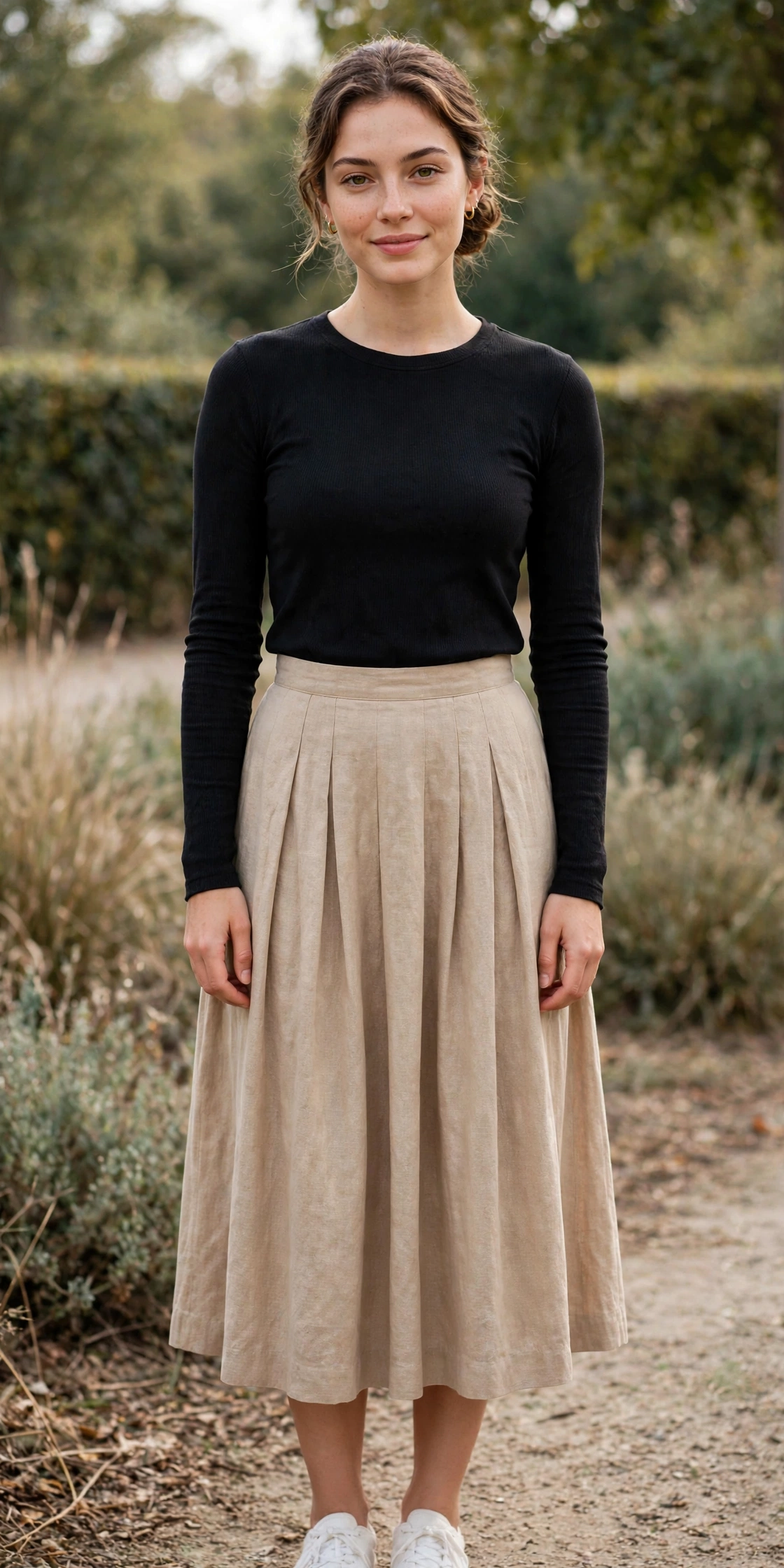
Outfit Formulas That Work Without Guesswork
The simplest modern formula is a fitted or semi-fitted long-sleeve top with straight-leg or wide-leg trousers and loafers or ankle boots. The top gives coverage, the trousers give a clean line, and the shoes keep the outfit grounded. Add a structured tote and simple jewelry, and the outfit works for work, errands, and lunch without any further decisions. If the top is dark, try a lighter trouser; if the top is light, try a darker trouser. That contrast keeps the outfit from blending into one block of color.
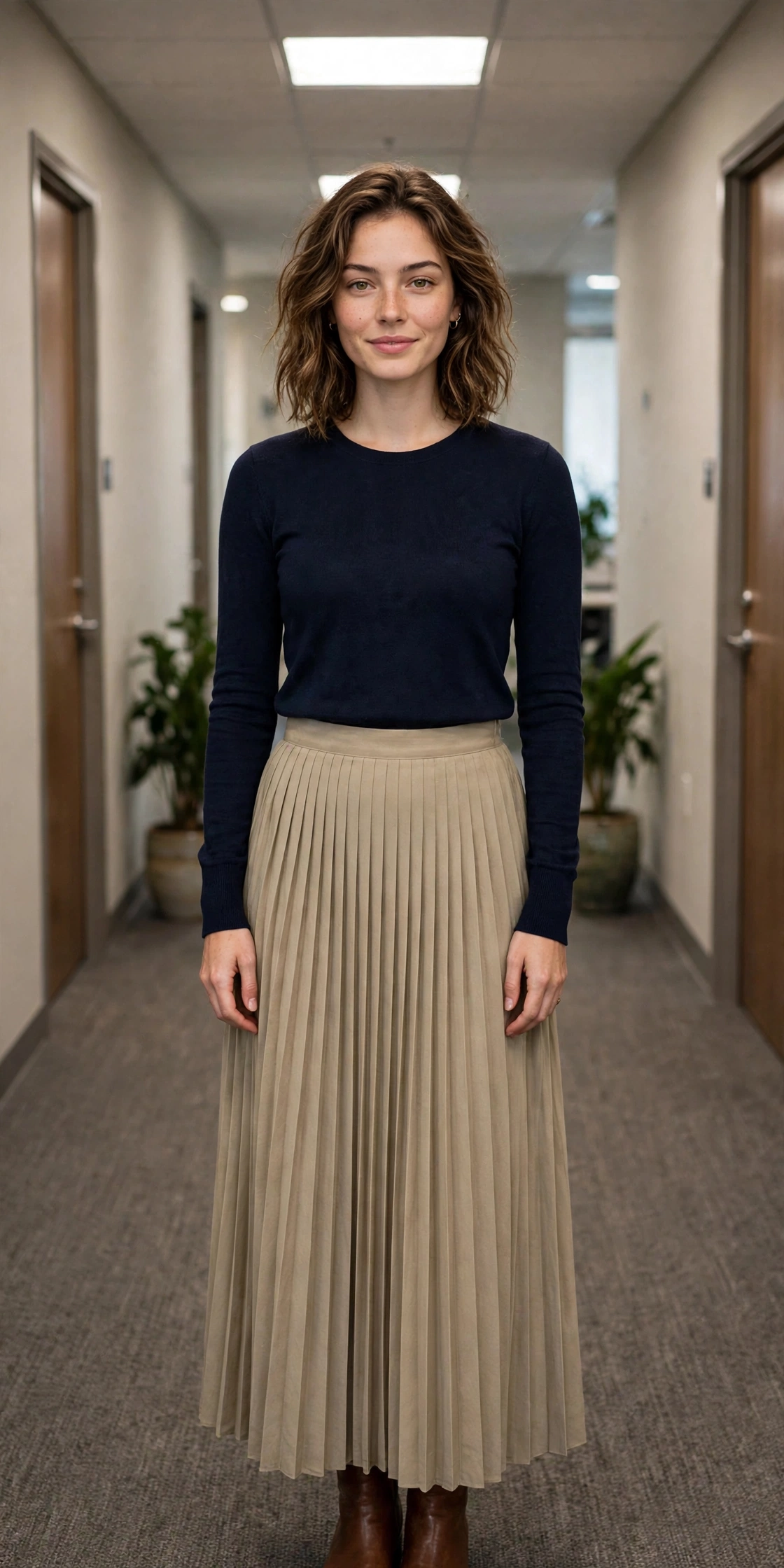
A second formula is a long-sleeve top with a midi skirt. An A-line or pleated midi skirt balances the coverage of the top, because the skirt adds movement while the top keeps the upper body neat. This combination works for office days, family gatherings, and events, depending on fabric: a knit top with a cotton midi skirt is casual, while a crepe top with a satin or wool midi skirt is dressier. Keep the hem of the top at or just above the waistband of the skirt, either tucked or half-tucked, so the waistline stays visible and the outfit keeps its shape.
A third formula is layering: a long-sleeve top under a sleeveless dress, a pinafore, or a vest. This is a practical way to make sleeveless pieces modest without buying a whole new wardrobe, and it looks modern when the underlayer is smooth and the colors work together. A black or white long-sleeve top under a patterned dress is the easiest version. A colored top under a neutral dress can also work, if the color appears nowhere else in the outfit and the dress is plain enough to let it show.
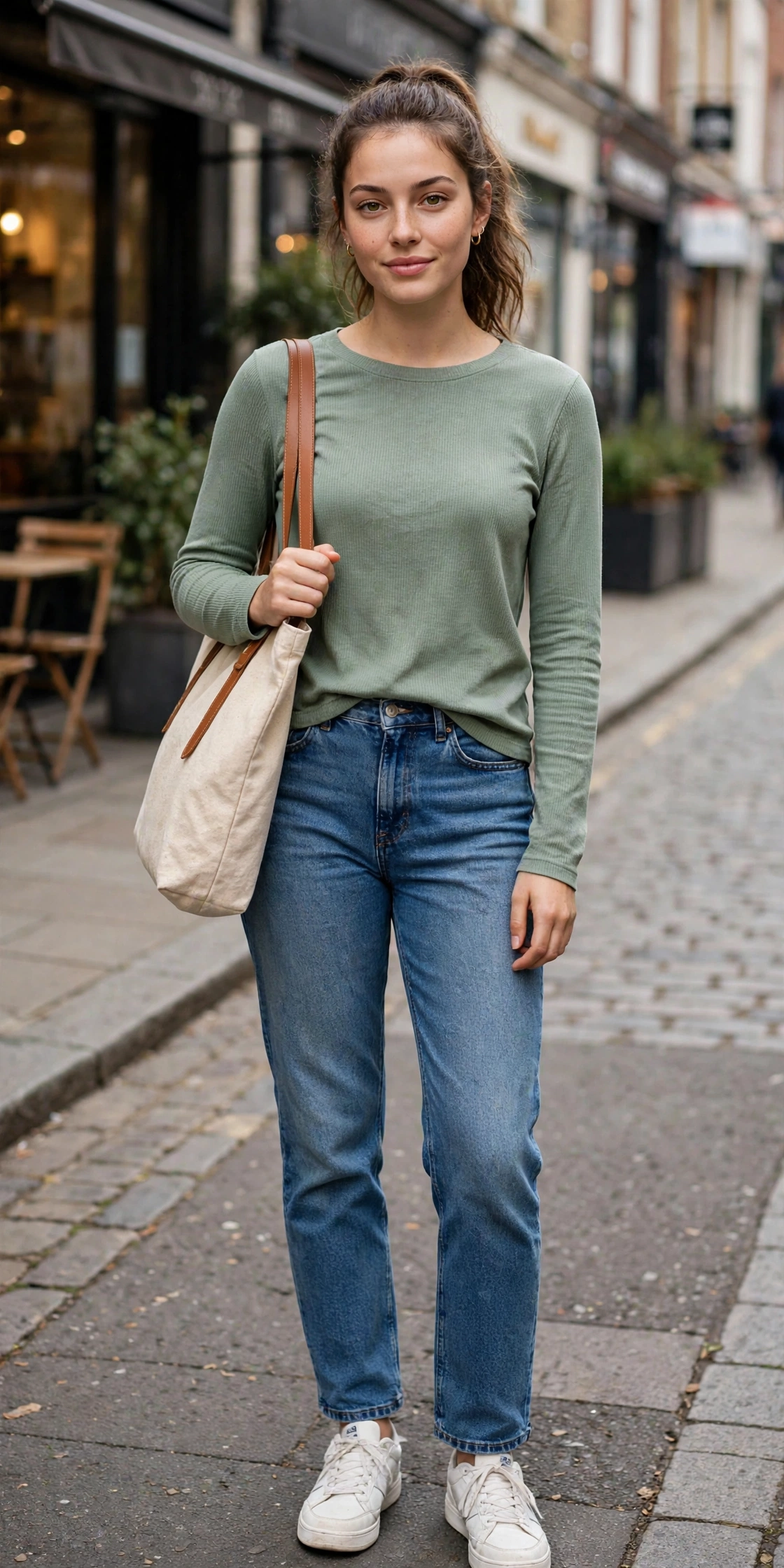
For casual days, pair a long-sleeve top with well-fitting jeans and sneakers or flat boots. The key is the same as ever: a clean fit, a bottom that is not baggy, and shoes that match the occasion. A half-tuck into high-waisted jeans defines the waist and prevents the top from looking like a tunic when you wanted a top. A denim jacket over the top on cooler days works, as long as the sleeves of the top do not bunch heavily under the jacket sleeves; if they do, choose a thinner top for jacket days.
For work, pair a structured long-sleeve top with tailored trousers or a pencil or A-line skirt, plus a blazer if your office expects one. The blazer should fit over the top without pulling at the buttons, which is another reason to prefer smooth, not bulky, sleeves for work tops. Keep accessories simple: a watch, studs, and a structured bag. The overall effect should be neat and calm, with the top as a reliable base rather than the loudest piece in the room.
Layering Without Bulk
Layering is where modest dressing often goes wrong, because adding layers can quickly add bulk. The fix is to layer thin over thin, and to make each layer visible in a deliberate way. A thin long-sleeve top under a cardigan works because both layers are light. A thick sweater under a tight blazer does not, because the blazer cannot close and the sleeves bunch. If you need warmth, choose one warm layer, such as a coat or a thick cardigan, rather than three medium layers that fight each other.
Order matters too. The layer closest to the body should be the smoothest and thinnest, so it does not create lumps under the next layer. The outer layer can be more textured or structured. Check the outfit from the side, not just the front, because bulk shows most clearly in profile. If the side view looks puffy, remove a layer or swap a thick layer for a thinner one in the same color.
Scarves, vests, and open shirts are useful layering pieces because they add coverage and style without adding sleeve bulk. A long scarf can add color and warmth while keeping the neckline modest. An open button-up shirt worn as a light jacket over a long-sleeve top adds a second color or pattern without changing the sleeve fit. A vest over a long-sleeve top is a classic modest combination that looks modern when the vest is well cut and the top underneath is plain.
Shopping Checklist for Long Sleeve Modest Tops
Before buying, run through a short checklist. Does the shoulder sit correctly? Does the sleeve end at the wrist and allow movement? Does the hem stay put when you sit? Is the fabric breathable enough for the season and dense enough for your coverage preference? Does the neckline sit flat without gaping? Can you picture at least three outfits with pieces you already own? If the answer to most of these is yes, the top is a good buy. If several are no, the top will probably sit unworn, no matter how nice it looked on the hanger.
Common pitfalls are worth naming. Buying a size up for extra coverage often backfires, because the shoulders droop and the sleeves lengthen, making the top look oversized rather than modest. Instead, look for brands or cuts that offer longer lengths or taller options, or choose a style designed with a longer hem. Another pitfall is choosing a top that is modest only when standing still; if it rides up when seated or lifts when you reach, it is not truly giving you the coverage you want. A third pitfall is ignoring care: a top that needs constant ironing or special washing will be worn less often than a similar top that can be washed and worn easily.
Price and quality are related but not identical. A higher price does not guarantee better fabric or fit, and a modest price does not guarantee poor quality. Check the fabric content, the seam finishing, and the recovery after stretching, rather than trusting price alone. A top with clean seams, even stitching, and fabric that springs back is usually a better buy than a more expensive top with loose threads and fabric that stays stretched out.
Finally, build a small rotation rather than buying many similar tops at once. Start with three versatile colors — for example black, white or cream, and one muted color you love — in a fit you trust. Wear them, learn which sleeve shape and neckline you reach for most, and then add more colors or one patterned top. A rotation of a few excellent tops will look more modern than a closet full of almost-right tops, and it will make getting dressed faster, because every top in the rotation already passes your fit and fabric tests. That is the real secret of long sleeve modest tops that look current: fewer, better pieces, chosen for how they behave on a normal day, not just how they look on a hanger.
Do long-sleeve tops look old-fashioned?
Not when the fit is clean and the fabric holds its shape. A boxy, thin, or wrinkled top can look dated, but a well-cut top with a neat shoulder, a wrist-length sleeve, and a smooth fabric looks modern. Focus on proportion and polish rather than on coverage alone, and the top will read as intentional.
What fabric is best for everyday long-sleeve tops?
Cotton blends with a little stretch, smooth jersey, and ponte knits are strong everyday choices because they hold their shape, resist wrinkling, and feel comfortable. For warm weather, choose breathable cotton or linen blends; for cold weather, choose ribbed or fine-gauge knits. Avoid heavy, non-breathable synthetics for all-day wear.
How long should the sleeves be?
In most cases, the sleeve should end at the wrist bone or just past it, without covering the hand. It should let you bend your elbow and reach forward without pulling the hem up sharply. If a sleeve is meant to be loose, it should still finish cleanly at the wrist rather than hanging as an unfinished tube.
Can I wear a long-sleeve top under a sleeveless dress?
Yes, and it is one of the most useful modest layering tricks. Choose a smooth, thin top in a color that works with the dress — black or white for a patterned dress, or a single accent color for a plain dress. Make sure the top does not bunch under the dress straps and that the neckline sits neatly.
How do I keep long sleeves from looking bulky under a jacket?
Choose a thin, smooth top for jacket days, and make sure the blazer or coat fits over it without pulling. Layer thin over thin, check the outfit from the side for puffiness, and save thicker or balloon sleeves for days when you will not need a tight outer layer over them.
What bottoms go best with a modest long-sleeve top?
Straight-leg or wide-leg trousers, well-fitting jeans, and midi skirts all work well. Keep the bottom clean and simple so the outfit has one clear shape, and define the waist with a tuck or half-tuck when the top is long. Avoid pairing a loose top with a baggy bottom, because two loose pieces together usually look shapeless.