Start with neutrals, not with another loud color. A kelly green blouse looks best next to white, cream, black, navy, grey, tan, or denim, because those colors let the green do the talking instead of competing with it. That one rule solves most outfits before you even open your closet: pick the blouse, pick one neutral bottom, add simple shoes and one calm accessory, and stop. The green is already the statement. Everything else in the outfit has a supporting job. Kelly green is a vivid, yellow-leaning green, brighter than forest green and clearer than olive. That brightness is why it photographs well and why it wakes up a plain pair of jeans, but it is also why it can clash fast. Pair it with a color that fights for attention — bright red, hot pink, orange, or a busy multi-color print — and the eye does not know where to rest. The outfit starts to look like two outfits at once. Neutrals fix that by giving the green a quiet frame, and they work in every season, which makes this blouse far more useful than its bold color suggests.
The second rule is just as simple: one bold piece per outfit. If the blouse is the bold piece, the rest should be calmer in color, simpler in pattern, and cleaner in shape. That does not mean boring. A well-fitting pair of white trousers, dark jeans with a clean hem, or a navy skirt can look sharp precisely because the green lifts them. Texture can add interest without adding color competition: a linen trouser, a suede shoe, a woven tote, or a matte cotton skirt all give the eye something to enjoy without starting a color argument.
How to Style a Kelly Green Blouse for Work, Weekends, and Evenings
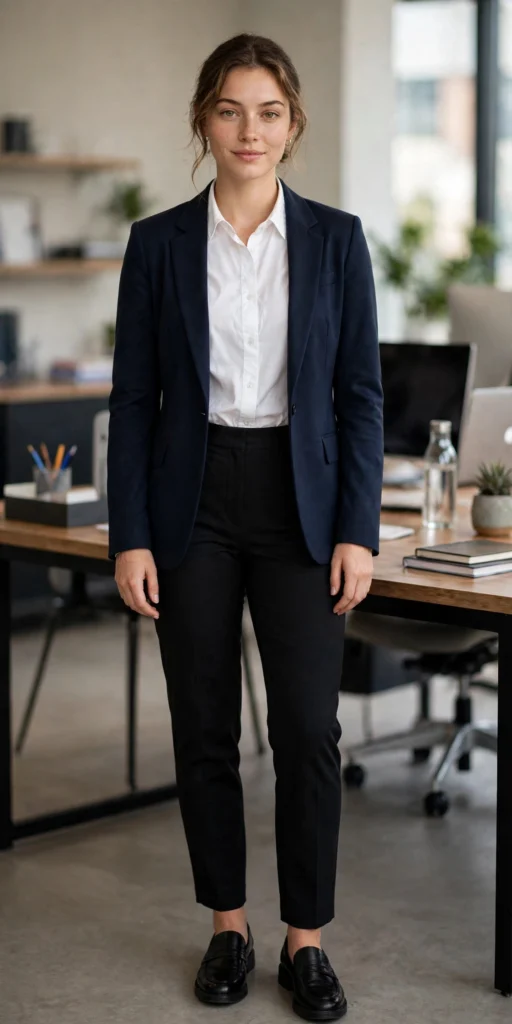
For work, tuck the blouse into a high-waisted black or navy pencil skirt, or into tailored charcoal trousers, and add closed-toe shoes in black or nude. Keep jewelry small — studs, a thin bracelet, a simple watch — and carry a structured bag in black, tan, or navy. If your office is more casual, dark straight-leg jeans with loafers and a blazer in navy or charcoal will read as polished without feeling stiff. The key test is the mirror test at arm’s length: if you notice the blouse first and then the whole outfit, it works. If you notice three separate pieces competing, remove one.
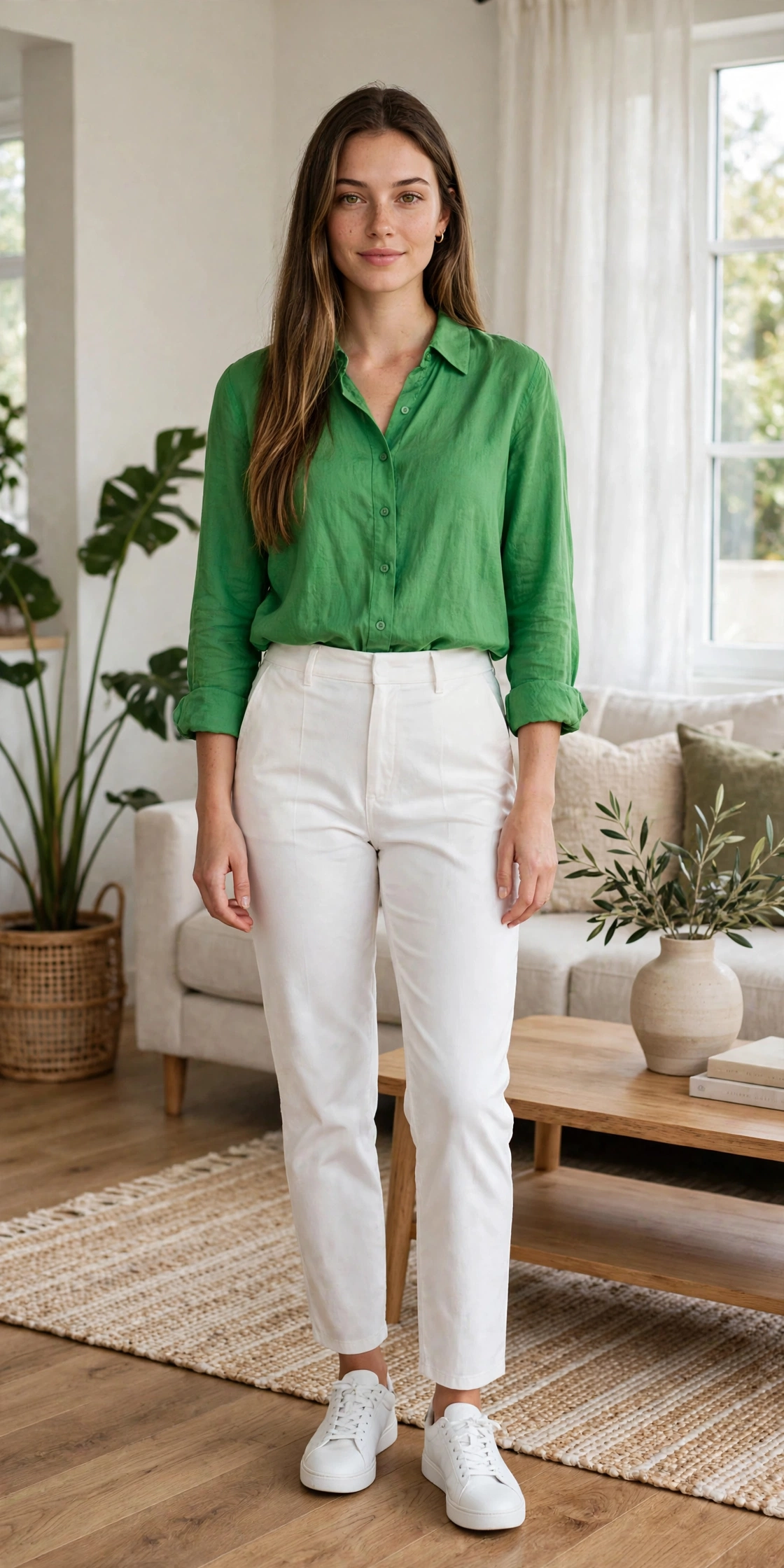
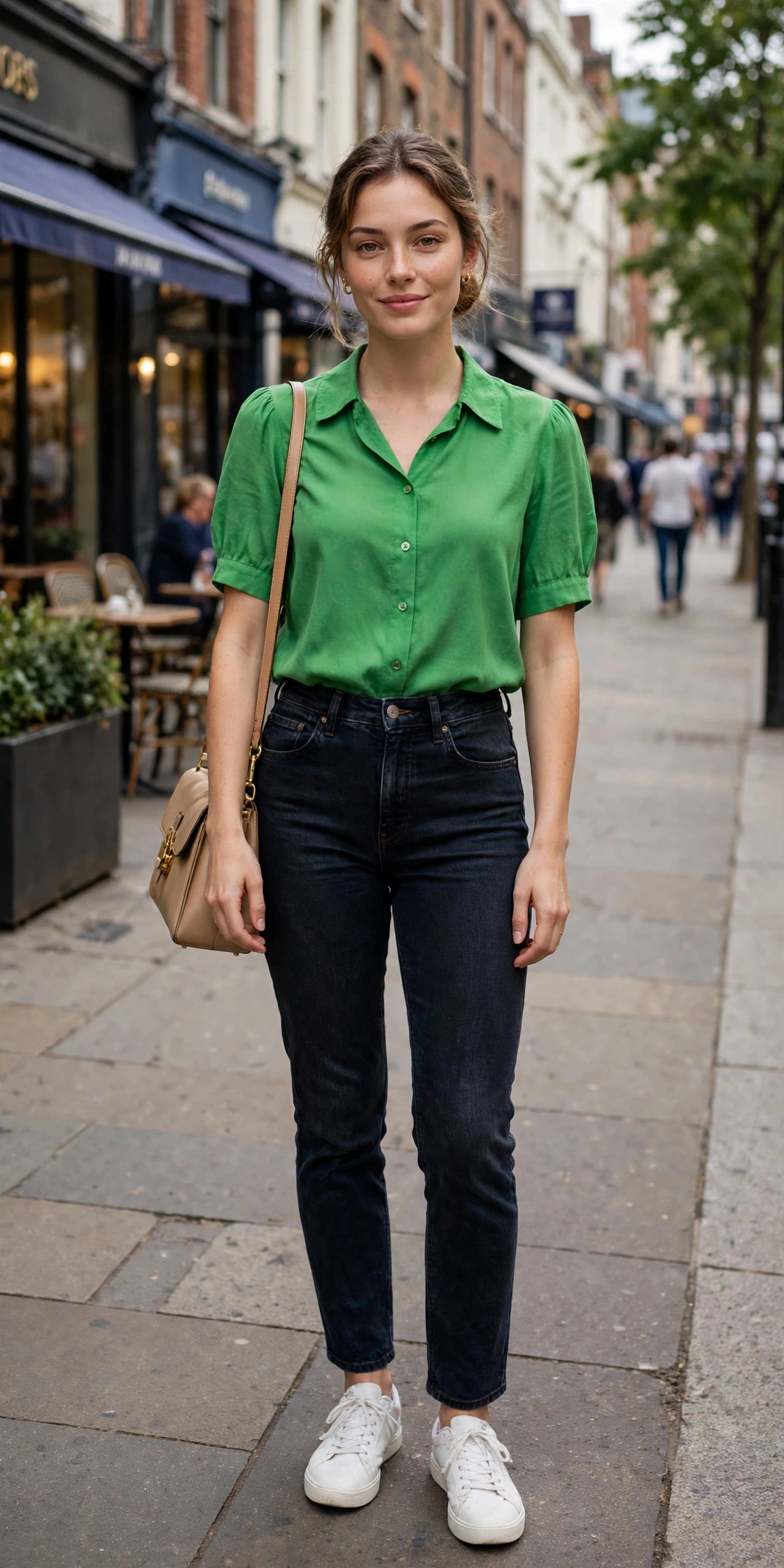
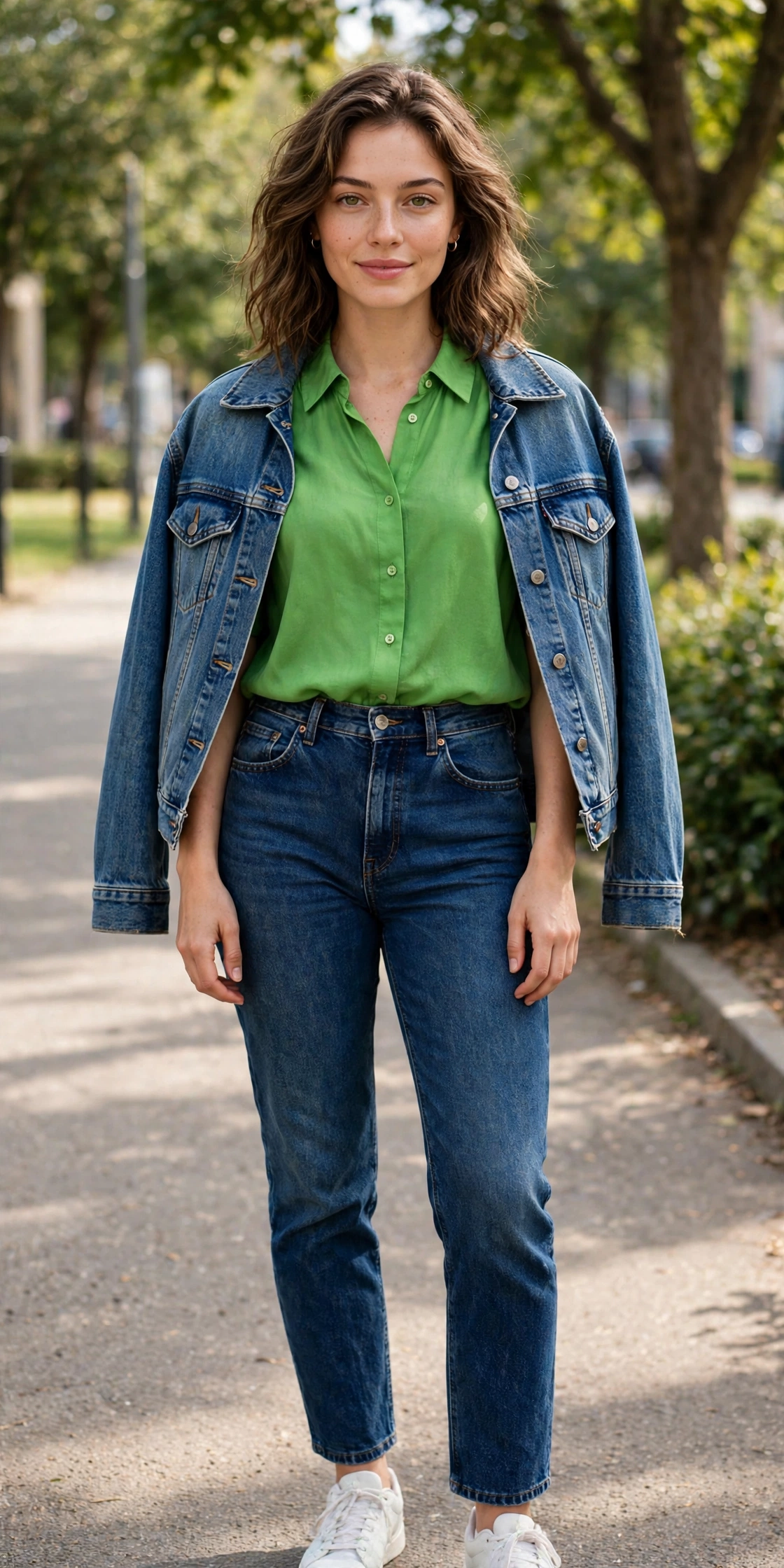
For weekends, the easiest outfit is the blouse with medium or dark wash jeans and white sneakers or tan sandals. Half-tuck the front if the blouse is long, so your waistline stays visible and the outfit does not look boxy. A denim jacket over the shoulders works on cooler days, because denim is effectively a neutral here and its blue tones sit calmly next to green. A crossbody bag in tan or cream keeps the look relaxed. Avoid adding a second bright layer, such as a red cardigan or a neon bag, unless you are deliberately dressing for a party and want that high-energy clash.
For evenings, let the fabric do the upgrading. A silk or satin version of the blouse pairs well with black wide-leg trousers or a black midi skirt, plus heeled sandals and a small clutch. Gold jewelry tends to flatter kelly green, because warm gold echoes the yellow undertone in the green, while silver can also work if the rest of your metals are silver. Pick one metal and stay with it, rather than mixing gold earrings, a silver bag chain, and a rose-gold watch. A dark blazer over the shoulders adds polish for dinner, and removing it at the table still leaves a complete outfit underneath.
The Color Pairings That Work, and the Ones to Skip
White is the safest partner and the freshest. White trousers, a white skirt, or white jeans make kelly green look crisp and summery, and the combination works for brunch, work in a relaxed office, or a daytime event. Cream and ivory are slightly softer versions of the same idea and suit cooler weather or more formal settings. If white feels too stark for you, try light grey or stone, which soften the contrast without muddying the green.
Black is the most reliable partner for evening and for work. Black trousers, a black skirt, or black jeans ground the brightness and make the outfit read as intentional rather than loud. Navy is a close second and often looks more interesting than black in daylight, because navy and green share a cool depth even though green leans warm. Try navy trousers with the blouse and tan shoes for a combination that looks put together without trying hard.
Denim deserves its own mention, because it is the everyday partner most people already own. Light wash denim keeps the outfit casual and summery, while dark wash denim makes it look neater and slightly dressier. Both work. What matters more is the wash being even and the fit being clean; faded, ripped, or baggy denim will drag the blouse down to a sloppy level, while a well-fitting pair lifts it. Tan, camel, and beige are also strong partners, especially in autumn, when a camel coat or tan boots warm up the green without competing with it.
Now the pairings to handle with care. Red is the direct complement of green on the color wheel, which means red and green together create maximum contrast. That can look festive in December, but in an ordinary outfit it often reads as a holiday costume rather than a style choice. If you love red, keep it tiny — a red lip, for example — rather than a red skirt or bag. Hot pink and orange create a similar high-voltage clash; they can work in a bold color-blocking outfit if the shapes are very simple, but for most days they make the outfit harder to wear and harder to photograph well.
Purple is another tricky partner, because purple and green can look muddy together unless both shades are carefully chosen. A deep plum skirt with a kelly green top can work in the evening if the rest of the outfit is black, but a bright purple will usually fight the green. Multi-color prints are risky for the same reason: a floral skirt that already contains green, pink, yellow, and blue will compete with the blouse instead of supporting it. If you want a print with this blouse, choose a print that is mostly neutral with only a small amount of green, or a subtle stripe or polka dot in black and white.

Fit Checks That Make the Color Work Harder
Color gets the attention, but fit decides whether the outfit looks good up close. Start with the shoulder seam: it should sit at the edge of your shoulder, not drooping down your arm or pulling inward. A blouse that is too tight across the bust will pull at the buttons and create gaps, which distracts from the color and looks uncomfortable. A blouse that is too loose through the body will look shapeless, especially in a bright color that already draws the eye. The fix is usually a half-tuck, a French tuck, or a full tuck, depending on the bottom you are wearing.
Check the sleeve length and shape. A three-quarter sleeve often flatters this kind of blouse, because it shows the wrist and a bracelet without adding bulk. A long sleeve should end at the wrist bone, not cover the hand. A short sleeve should not cut into the upper arm. If the blouse has a collar, make sure it lies flat and does not flip up on one side; a collar that will not behave is worth a quick press before you leave, because a bright color makes small untidiness more visible.
Length matters too. A blouse that ends right at the waistband of high-waisted trousers is ideal for tucking. A longer blouse can be half-tucked into jeans or worn untucked over leggings only if it covers the waistband cleanly and does not flare out awkwardly. Try the sit test: sit down in the outfit and check whether the blouse rides up, pulls, or bunches. An outfit that looks fine standing but bunches badly when seated will bother you all day, and bright colors make bunching more noticeable.
Fabric choice changes how formal the same color reads. Cotton and linen versions are casual and breathable, good for daytime and warm weather, but they wrinkle, so keep a steamer or iron handy. Silk, satin, and crepe versions drape more smoothly and read as dressier, which suits work and evening. A stiff polyester blouse can look shiny in photos and may not breathe well, so check the fabric content before buying and, if possible, try it on under bright light to see how it photographs.
Accessories, Shoes, and Bags Without the Clash
Shoes are an easy place to keep the outfit calm. Nude, tan, black, white, and navy shoes all work, and the choice should follow the occasion: white sneakers for a casual day, loafers for work, heeled sandals for evening, tan ankle boots for autumn. Avoid shoes in a competing bright color unless the shoe is the only other bold piece and you have deliberately planned a color-block look. A bright shoe plus a bright blouse plus a bright bag is three statements, and the outfit falls apart.
Bags follow the same logic. A tan leather tote, a black structured handbag, a cream crossbody, or a woven straw bag in summer all support the blouse. A bag in a loud print or a neon color will compete, so save those bags for outfits built around neutrals. If you carry a patterned scarf, keep it small and mostly neutral, or drape it over a neutral coat rather than knotting it right against the blouse where the patterns collide.
Jewelry should be simple and in one metal family. Gold studs, a thin gold chain, and a plain watch are enough for most outfits with this blouse. Pearls also work well, because their soft white sheen echoes the white and cream pairings that flatter green. Statement earrings can work for evening, but choose either statement earrings or a statement necklace, not both, and keep the rest of the jewelry quiet. The blouse is already doing the visual work; jewelry should finish the outfit, not restart it.
Makeup and nails are worth a quick thought too, because they sit close to the blouse. A neutral lip — soft pink, nude, or a muted rose — keeps the focus on the outfit as a whole. A bright red lip can work for evening, but it adds a second bold color near the face, so wear it only when the rest of the outfit is very calm, such as black trousers and minimal jewelry. Nude, soft pink, or classic white nails are safe; neon nails will compete in photos.
Seasonal Styling: Spring Through Winter
In spring, pair the blouse with white or light-wash jeans, ballet flats or loafers, and a light trench or denim jacket. The freshness of the green suits the season, and the light layers keep the outfit from feeling heavy. A straw tote or a cream crossbody finishes the look. Avoid heavy dark layers in spring unless the weather demands them, because they can make the bright green look out of place.
In summer, the blouse works with white linen trousers, a white midi skirt, or light denim shorts for casual days. Breathable fabrics matter more than anything else in heat, so choose cotton or linen versions and keep accessories light. White sandals and a woven bag suit the season, and sunglasses in a neutral frame keep the outfit grounded. If you wear the blouse to a summer event, a white or cream skirt will look more polished than shorts while staying cool.
In autumn, the blouse pairs beautifully with camel, tan, and dark denim. Try it under a camel coat with dark jeans and ankle boots, or tucked into a dark midi skirt with tights and boots. The warm neutrals of autumn soften the brightness of the green and make it feel seasonal rather than summery. A burgundy accessory is a possible autumn accent, but keep it to one item, such as boots or a bag, rather than a full burgundy outfit.
In winter, layer the blouse under a navy or charcoal blazer or a dark coat, with black trousers or dark jeans and boots. The blouse becomes a pop of color inside a darker outfit, which is often more flattering in winter than a head-to-toe bright look. If the blouse is thin, layer a neutral camisole underneath for warmth without adding bulk. A dark wool coat over the outfit keeps the green as a surprise when the coat comes off indoors, which is a pleasant effect at dinners and gatherings.
Building More Than One Outfit From One Blouse
A good test of any bold piece is whether it earns its closet space across at least three outfits. With this blouse, the three easiest are: white trousers and loafers for a fresh daytime look; dark jeans and a navy blazer for work; and black wide-leg trousers and heeled sandals for evening. If you can picture yourself wearing all three without buying anything new, the blouse is a useful addition, not a one-time novelty. If you can only picture one outfit, and it requires a new skirt, new shoes, and a new bag, the blouse may be more trouble than it is worth.
Try the outfit combinations at home before an important day, and photograph them. Photos reveal clashes that mirrors hide, because a photo flattens the outfit the way other people see it. If a combination looks busy in a photo, simplify it: remove one accessory, swap a patterned piece for a plain one, or change a bright shoe to a neutral. The goal is not to make the blouse quiet; it is to make everything around it quiet enough that the blouse can shine.
Finally, store and care for the blouse so the color stays true. Keep that neutral frame, one bold piece, and simple accessories in mind, and a kelly green blouse becomes one of the easiest bright pieces to wear well. Wash it with similar colors, avoid harsh bleach, and dry it away from direct sun if the label advises it, because fading turns kelly green into a duller shade that is harder to style. Press or steam it before wearing, since wrinkles show more on bright, smooth fabrics. A well-kept bright blouse looks intentional; a faded, wrinkled one looks accidental, and no pairing trick can fix that.
What colors go best with a kelly green top?
White, cream, black, navy, grey, tan, and denim are the most reliable partners. They frame the green without competing with it, and they work across work, weekend, and evening outfits. Start with one of those neutrals as your bottom, then add shoes and a bag in the same calm family.
Can I wear green with blue jeans?
Yes, denim is one of the easiest partners for this color. Dark wash jeans look neater and slightly dressier, while light wash jeans look more casual and summery. Keep the fit clean and the rest of the outfit simple, and the combination will look relaxed and intentional rather than thrown together.
Is red a bad match for green in an outfit?
Red and green together create very high contrast, so a full red piece next to the blouse often reads as festive or costume-like. A tiny red accent, such as a lip color, can work when the rest of the outfit is calm, but a red skirt, bag, or jacket next to the blouse is usually a clash to avoid.
How do I dress up this blouse for evening?
Choose a silk or satin version, pair it with black wide-leg trousers or a black midi skirt, add heeled sandals, a small clutch, and simple gold jewelry. Keep the rest of the outfit dark and plain so the blouse and the fabric sheen carry the evening look, and add a dark blazer if you want an extra layer of polish.
What shoes should I avoid with a bright green blouse?
Avoid shoes in a competing bright color, such as hot pink, orange, or neon shades, unless you have deliberately planned a simple color-block outfit. Nude, tan, black, white, and navy shoes are safer, and the style should follow the occasion, from sneakers for casual days to heeled sandals for evening.
How can I tell if my outfit is clashing before I leave?
Stand back from the mirror, then take a quick photo of the outfit. If your eye jumps between several bright or busy pieces instead of settling on the blouse and then the whole outfit, simplify. Remove one accessory, swap a patterned piece for a plain neutral, or change a bright shoe to a neutral, and check again.