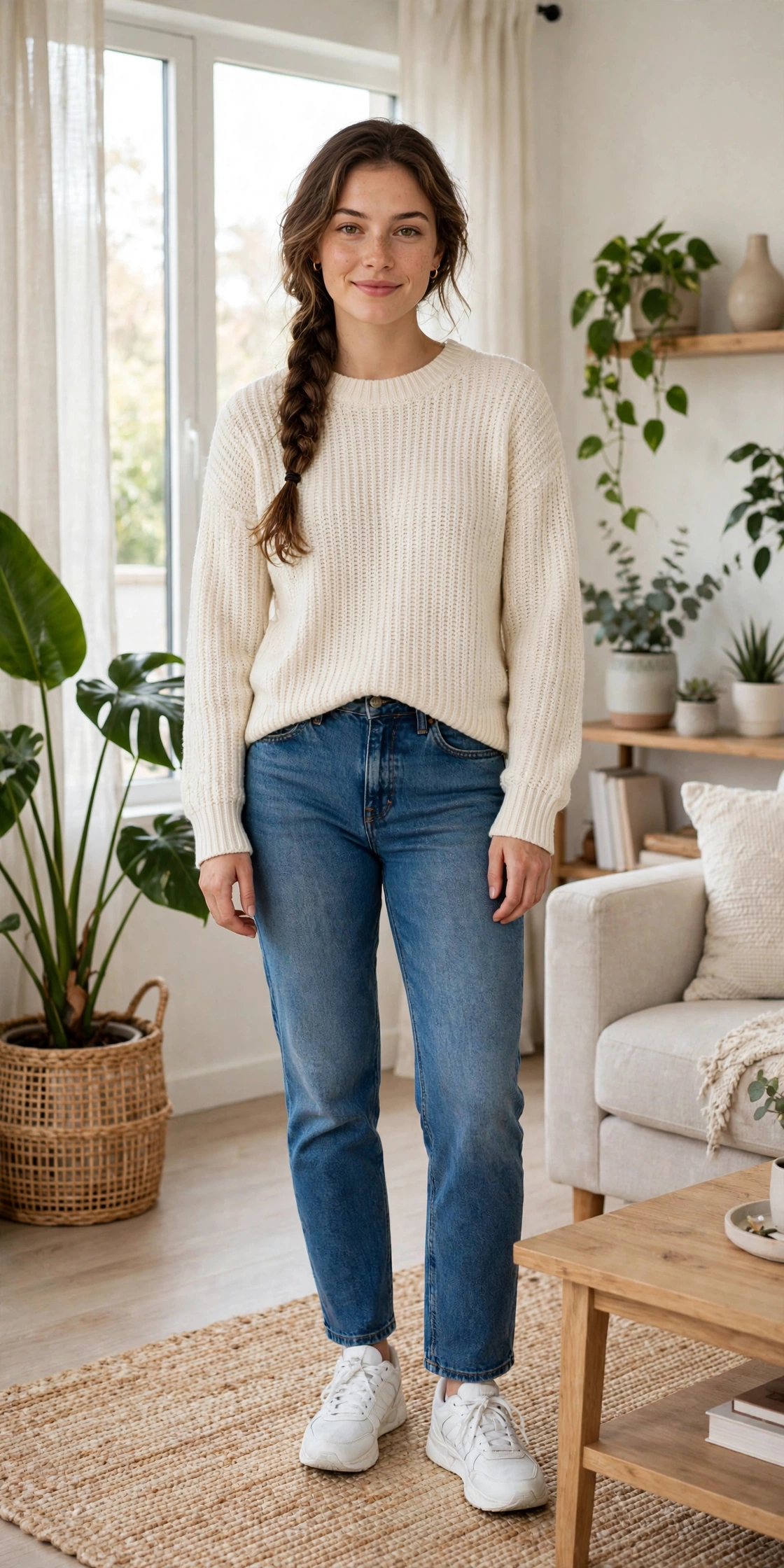
A good sweater should fit your shoulders, give you room to move and layer, and keep its shape after washing. As a quick answer: choose a sweater where the shoulder seam sits at the edge of your shoulder, the body skims your waist without pulling across the bust or stomach, the sleeve reaches your wrist bone, and you can lift your arms and sit down without the hem riding up sharply. If you plan to layer it over a shirt, test it over that shirt, not over a thin top. Fit is more important than size label, because knitwear stretches, relaxes, and varies widely between brands.
This women’s sweater fit guide explains how to judge sweater fit in each area, how different knit types and fabrics behave, how to choose a fit for your body shape and lifestyle, and how to care for knitwear so it lasts. It also covers outfit ideas, common mistakes, and answers to the questions shoppers ask most often in the USA.
Women’s Sweater Fit Guide: Five Fit Points to Check Every Time
You can judge most sweaters in under a minute if you check these five points in order.
1. Shoulders
The shoulder seam is the anchor of a sweater. If it sits too far down the arm, the sweater will look oversized even if the body fits, and the sleeves will be too long. If it pulls inward toward the neck, the sweater will feel tight across the upper chest and the sleeves may feel short. For a classic fit, the seam should sit right at the bony edge of your shoulder. For a deliberately relaxed or oversized style, the seam may drop an inch or two, but that should look intentional, with a looser body to match, not like a mistake in sizing.
Raglan sleeves, where the sleeve seam runs diagonally from the neck to the underarm, are more forgiving on shoulders because there is no sharp shoulder point. Drop-shoulder styles are also forgiving, but they add width, so they suit a relaxed look better than a tailored look. If you have narrow or sloping shoulders, a set-in sleeve with a clear shoulder seam often gives a neater line. If you have broad shoulders, a raglan or a slightly dropped shoulder can prevent pulling across the upper back.
2. Bust and chest
A sweater should lie smooth across the chest without horizontal pull lines, gaping between buttons on a cardigan, or a stretched pattern that distorts. Knit fabric has give, so a small amount of stretch is normal, but visible strain lines mean the sweater is too small or the knit is too tight for your shape.
If you have a fuller bust, look for sweaters with a little more room through the body, a V-neck or open cardigan front that creates a vertical line, and a knit that is not too chunky at bust level. Very thick, textured knits add volume, so a finer knit may be more flattering if you want a smoother line. If you have a smaller bust, texture, patterns, and slightly cropped or boxy shapes can add shape without needing extra padding or structure.
Test a sweater by raising your arms and twisting gently. The fabric should move with you and return to place. If it stays stretched out or pulls up a lot at the hem, the fit is too tight or the knit has poor recovery.
3. Waist and hem
The waist and hem decide whether a sweater looks neat or sloppy. A classic sweater hem should sit at or just below the waistband of your trousers or skirt, covering the waistband but not hiding the whole hip. A cropped sweater ends above the waist and works best with high-waisted bottoms. A tunic sweater ends at mid-thigh or lower and needs slimmer bottoms to balance it.
Check the hem from the side as well as the front. A ribbed hem that grips the waist can ride up when you sit, while a loose hem may flare out. Neither is wrong on its own, but the hem should stay roughly where it started after you sit and stand again. If you plan to tuck a sweater in, choose a finer knit with a hem that tucks without bulk. Chunky knits rarely tuck neatly and are better worn untucked or half-tucked at the front.
4. Sleeves
Sleeve length and width matter as much as body fit. With arms relaxed at your sides, the sleeve should reach your wrist bone, covering the cuff of a shirt underneath by a small amount but not hiding your hands. When you bend your elbow, the sleeve should not pull back so far that a large gap of forearm shows, unless that is the intended three-quarter style.
Sleeve width is also important. A slim sleeve looks neat under a coat, while a wide or balloon sleeve makes a statement but can be impractical for cooking, typing, or layering under a fitted jacket. If you wear a coat often, test the sweater under that coat: a bulky sleeve that bunches at the elbow under a coat will bother you all winter.
5. Overall ease
Ease is the extra room between your body and the garment, beyond your exact measurements. A sweater with no ease will feel tight and show every layer underneath. A sweater with too much ease will look shapeless. For everyday knitwear, a comfortable ease is usually one to three inches around the bust and waist compared with your body measurement, depending on whether you want a close, classic, or relaxed fit. Oversized sweaters intentionally add more ease, but they still need a good shoulder and sleeve fit to look deliberate rather than simply too big.
You can test ease by pinching the fabric at the side seam. If you can pinch a small fold easily, there is room to move. If the fabric is taut and you cannot pinch it, the sweater is too tight for comfortable layering.
Fit by sweater style
Different sweater styles are designed to fit differently, so judging them all by the same standard leads to confusion.
| Style | Intended fit | Watch out for |
|---|---|---|
| Classic crew neck | Skims the body, shoulder at edge | Pulling across bust, sleeves too short |
| V-neck | Similar to crew, with open neckline | Neckline gaping if too loose |
| Turtleneck / mock neck | Close at neck, classic body | Neck too tight, body too short when layered |
| Cardigan | Open front, should close without gaping | Buttons straining, hem flaring |
| Oversized / chunky | Loose, dropped shoulder, long body | Looking shapeless, sleeves covering hands |
| Cropped | Ends above waist | Riding up, pairing only with high waists |
| Tunic | Long, covers hips | Too much volume with wide bottoms |
| Fitted / slim knit | Close to body, fine knit | Showing layers underneath, tight at waist |
A turtleneck needs special attention at the neck. It should sit comfortably without pressing on the throat or leaving a large gap that collapses. A mock neck is a good compromise if a full turtleneck feels restrictive. A cardigan should be tested both open and closed. Many cardigans are worn open, but if you ever button it, it should close smoothly without the buttons pulling.
Oversized sweaters are popular, but they still have a fit. The shoulders may drop, the body may be wide, and the sleeves may be long, but the sweater should not swallow your hands completely or hide your shape entirely unless that is the look you want. Pairing an oversized sweater with slim bottoms, such as straight jeans, leggings, or a slim skirt, keeps the outfit balanced.
Knit types and how they affect fit
The way a sweater is knitted changes how it stretches, drapes, and holds its shape.
Fine-gauge knits use thin yarn and small stitches. They drape smoothly, layer well under coats and blazers, and are a good choice for work and for fitted looks. They show fit more clearly, so size accuracy matters more with fine knits.
Medium-gauge knits are the everyday middle ground. They have enough structure to hold a shape, enough softness to drape, and they work for most casual and smart-casual outfits. Most classic crew necks and V-necks fall in this range.
Chunky-gauge knits use thick yarn and large stitches. They are warm and cosy, but they add visual bulk and can be heavy. They are best for relaxed, casual outfits and for colder days when you do not need to layer a coat tightly over them. Chunky knits also stretch more under their own weight, so a long chunky sweater may grow longer over a day of wear.
Ribbed knits stretch and recover well, which makes them good for fitted cuffs, hems, and turtlenecks. A fully ribbed sweater will hug the body more than a flat knit of the same size, so you may prefer a slightly looser size in ribbed styles.
Cable knits add texture and thickness at the front, which can add volume at bust and waist level. They look classic and warm, but they are less suitable if you want a very slim line.
Open or pointelle knits have small holes or patterns in the fabric. They are lighter and more breathable, good for transitional weather in spring and autumn in many parts of the USA, but they need a layer underneath for modesty and warmth.
When you shop, read the fabric and knit description, not just the photo. A photo can hide thickness, stretch, and weight, while the description usually gives clues about gauge and drape.
Fabric guide: what lasts and what needs care
Fabric determines warmth, softness, pilling, and how a sweater survives washing. No fabric is perfect for every use, so choose by priority: warmth, easy care, softness, or durability.
Wool is warm, breathable, and holds its shape well when cared for properly. Merino wool is softer and finer than regular wool and is a good choice for sweaters worn close to the skin. Lambswool is soft and warm but can be slightly less durable. Wool generally needs gentle washing or dry cleaning, depending on the label, and it can felt if washed in hot water.
Cashmere is very soft and warm for its weight, but it is delicate, pills more easily, and needs gentle care. It is best for special sweaters you wear less often, rather than a daily workhorse you wash weekly.
Cotton is breathable, easy to wash, and good for milder climates and transitional seasons. Cotton knitwear is less warm than wool, can stretch out of shape if it is heavy, and may feel less cosy in deep winter. Cotton blends with a small amount of synthetic fibre often hold shape better than pure cotton.
Acrylic and synthetic knits are affordable, lightweight, and easy to wash, but they can pill, feel less breathable, and may not last as long as natural fibres in daily wear. They are useful for trendy or occasional styles, but for a sweater you plan to wear for years, natural fibres or high-quality blends usually age better.
Blends combine fibres to balance benefits. A wool blend with a small amount of nylon or polyester may be more durable and less prone to stretching than pure wool. A cotton and cashmere blend may be softer than pure cotton but easier to care for than pure cashmere. Read the percentage breakdown on the label: a sweater described as a wool blend may contain only a small amount of wool, so check the numbers, not just the name.
Pilling happens when short fibres rub together and form small balls on the surface. It is normal in soft knits, especially under the arms and where a bag strap rubs. A fabric shaver or a gentle sweater comb can remove pills without damaging the knit, and choosing tighter, smoother knits reduces pilling in high-friction areas.
Choosing fit for your body shape and lifestyle
There is no single best sweater fit for all women. The best fit depends on your shape, your daily activities, and the rest of your wardrobe.
If you are petite, a classic or slightly cropped sweater often works well because it does not overwhelm your frame or hide your waist. Avoid very long, heavy tunic sweaters unless you pair them with slim bottoms and a heel, because the extra length can shorten the leg line. Check sleeve length carefully, since standard sleeves may be long on a petite frame.
If you are tall, longer sweaters and tunic styles can look balanced, and standard sleeves may feel short. Look for brands that offer tall sizes or longer sleeve options, rather than sizing up, which adds width as well as length. A classic sweater that ends at the waist may look short on a long torso, so a slightly longer body length may be more comfortable.
If you have a curvy shape, a sweater with a little stretch, a V-neck or open cardigan, and a hem that skims rather than clings usually works well. Avoid very boxy, stiff knits that hide the waist completely if you prefer definition, and avoid very tight fine knits that show every layer underneath. A wrap-style cardigan or a sweater with a slightly shaped waist can give definition without tightness.
If you work at a desk, choose sweaters that do not bunch at the elbows when you type and do not ride up when you sit. Fine and medium knits are usually better for desk work than very chunky knits. If you are active, walking, or caring for children, choose washable, durable knits that can handle frequent washing and movement, and avoid very wide sleeves that get in the way.
If you live in a warm climate, such as Florida, southern California, or Texas, lightweight cotton or fine-gauge sweaters for cool evenings may be more useful than heavy wool. If you live in a cold climate, such as the Northeast or Midwest, invest in warmer wool and medium-to-chunky knits that layer well under a coat from the Jackets and Coats category, and keep lighter knits for indoor layering.
Outfit ideas that use fit well
Good fit makes outfit building easier, because the sweater itself does the work and the rest of the outfit can stay simple.
Classic everyday: A medium-gauge crew neck in a neutral colour, straight jeans, and ankle boots. Tuck the front lightly if the knit is fine, or leave it untucked if it is medium weight. Add a scarf in cold weather, but keep the scarf light so it does not add bulk at the neck.
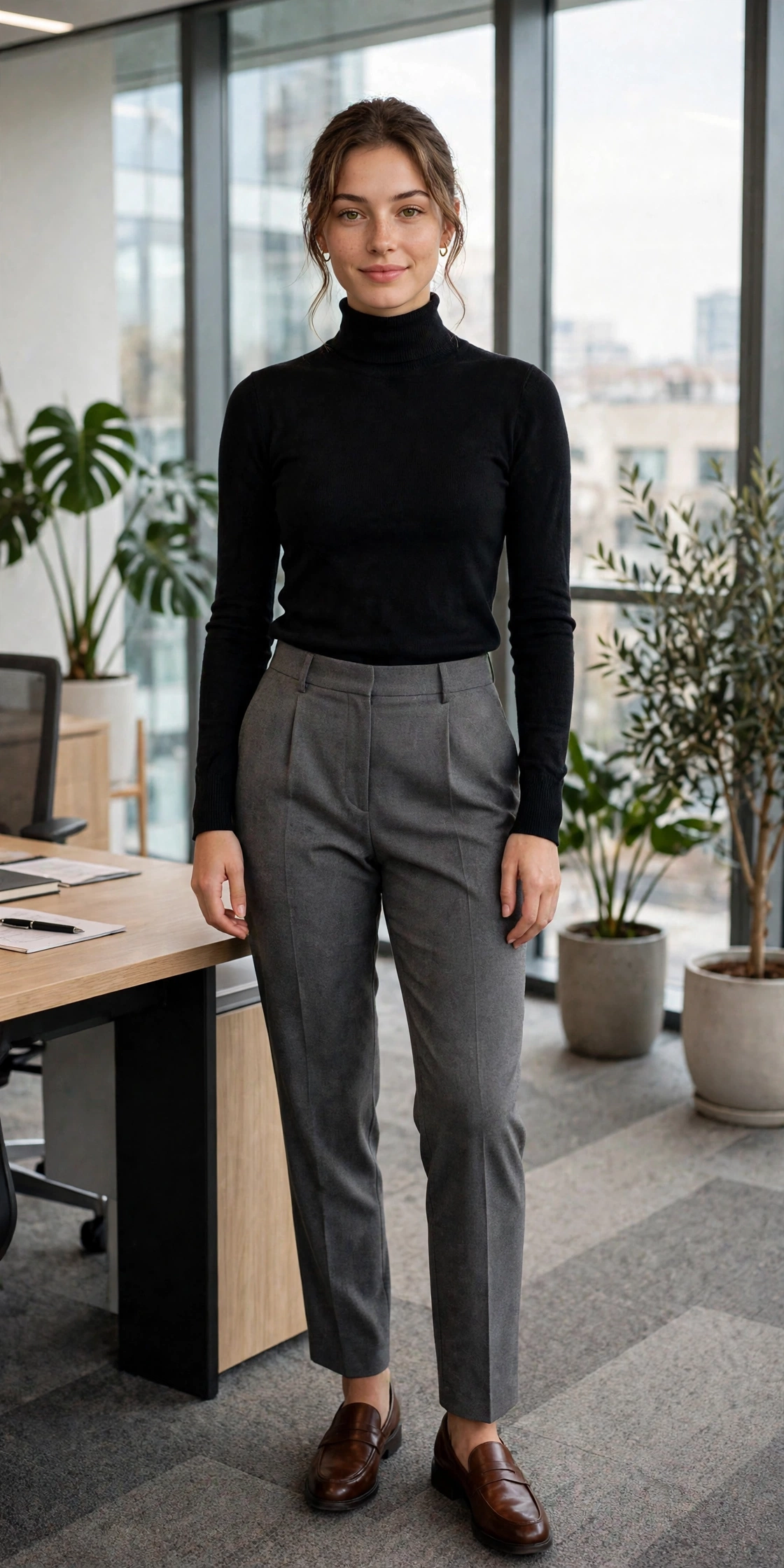
Work smart: A fine-gauge V-neck or turtleneck, tailored trousers, and loafers or heeled boots. Choose a sweater that skims the waist and does not bunch under a blazer. A cardigan worn open over a blouse is another work option, as long as it does not gape when closed.
Relaxed weekend: An oversized chunky sweater, leggings or slim jeans, and trainers or flat boots. Keep the bottom half slim so the outfit stays balanced. A crossbody bag keeps hands free without adding bulk at the shoulder.
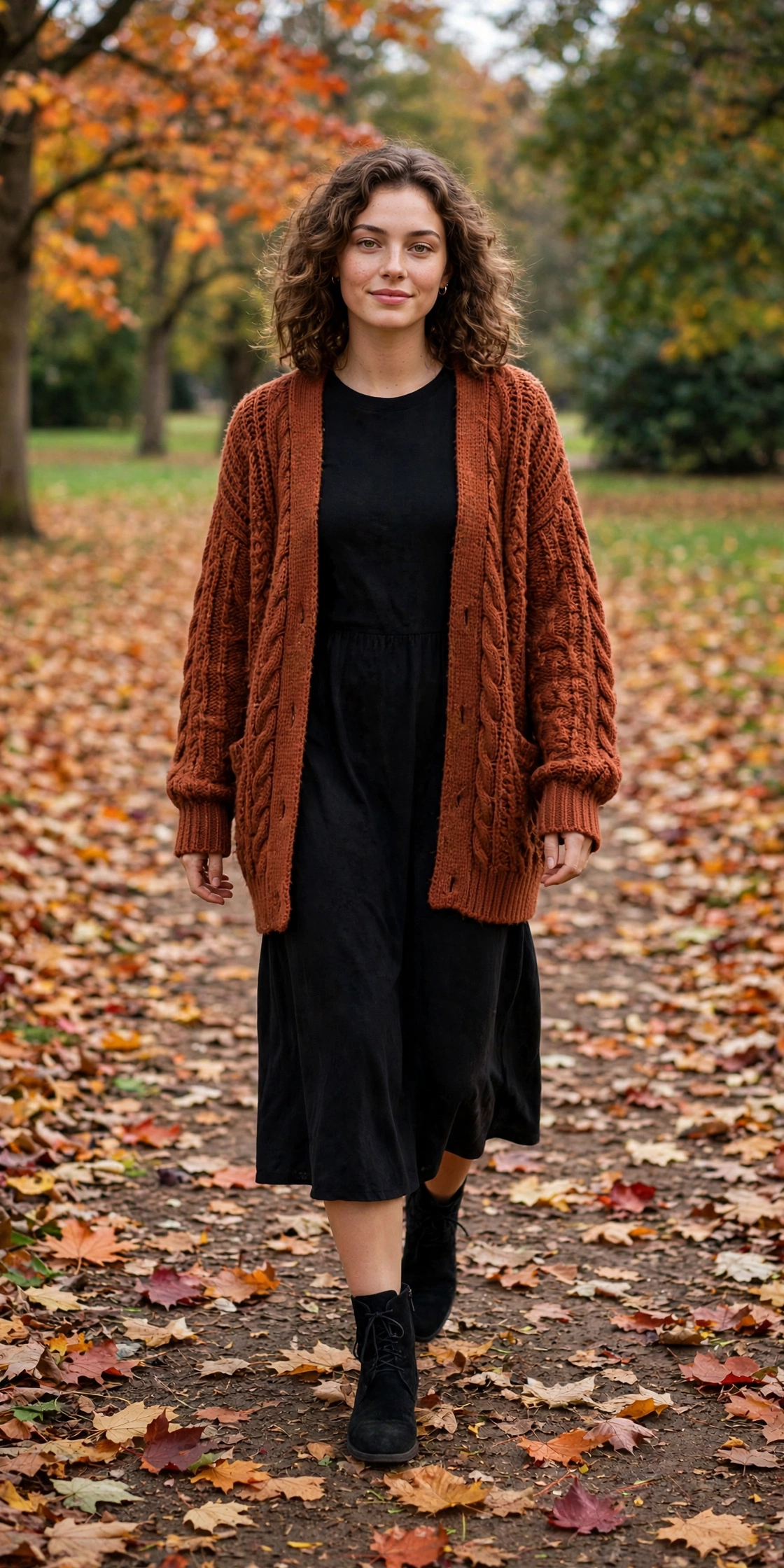
Dress layering: A fitted cardigan over a dress, with the cardigan ending at the waist or hip, preserves the dress shape while adding warmth. A cropped cardigan works well with a high-waisted dress, while a longer cardigan suits a straight dress. Avoid a bulky sweater over a full dress, because the combination can look heavy.
Transitional weather: A light cotton sweater or open knit over a T-shirt, with jeans and trainers. This is a good use for the Sweaters and Knitwear category in spring and autumn, when a coat is too much but a T-shirt alone is too cool.
In each outfit, let one piece be the focus. If the sweater is chunky, patterned, or brightly coloured, keep the bottoms and accessories simple. If the sweater is plain and fine, you can add a patterned scarf, statement earrings, or a coloured bag without overwhelming the look.
Common mistakes to avoid
Buying the size you always buy without checking the knit. A fine knit, a chunky knit, and a ribbed knit in the same labelled size can fit very differently. Always check the measurements and, if possible, try the sweater on over a layer.
Choosing a sweater that only fits over a thin top. Winter sweaters are layered. If it fits perfectly over a camisole but pulls over a shirt, it will not work in real winter outfits.
Ignoring sleeve length. Sleeves that are too long look sloppy and get in the way, while sleeves that are too short make the sweater look small even if the body fits. Sleeve length is harder to alter in knitwear than in woven shirts, so get it right at purchase.
Wearing a heavy sweater under a fitted coat. Bulky sleeves and a thick body under a structured coat create bunching and discomfort. Keep heavy sweaters for open coats and casual jackets, and choose finer knits for fitted coats.
Washing knitwear like T-shirts. Hot water, harsh agitation, and high heat in the dryer can shrink wool, stretch cotton, and damage cashmere. Follow the care label, wash in cool water, and dry flat when the label recommends it. This single habit extends the life of knitwear more than any other step.
Keeping a pilled sweater instead of caring for it. Pilling is normal and removable. A quick pass with a fabric shaver can make a favourite sweater look new again, and it is better than replacing a well-fitting sweater because of surface pills.
Buying many similar sweaters instead of different fits. A wardrobe with three identical crew necks in different colours is less useful than a wardrobe with a crew neck, a V-neck, a cardigan, and a turtleneck that cover different outfits, necklines, and layering needs.
Care guide so knitwear lasts
Care starts with washing less often. Sweaters do not need washing after every wear unless they are stained or smell. Air them out between wears, spot-clean small marks, and wash only when needed. This reduces wear, fading, and pilling.
When you do wash, turn the sweater inside out, use a gentle or wool cycle in cool water, and use a mild detergent. Avoid fabric softener on wool, because it can coat fibres and reduce breathability. For hand washing, soak briefly, gently squeeze without wringing or twisting, and rinse in cool water.
Dry knitwear flat on a towel, reshaping it to its original dimensions while it is damp. Hanging a wet sweater stretches it, especially heavy wool and cotton knits. Once dry, fold sweaters rather than hanging them, because hanging stretches the shoulders and body over time. Use a sturdy hanger only for short-term hanging of light cardigans, and fold heavier sweaters in a drawer or on a shelf.
Store sweaters clean and dry, with space to breathe. Cedar blocks or lavender sachets can help deter moths without strong chemical smells. If a sweater does develop a moth hole, a small repair or a decorative patch can save a favourite piece, especially if the fit is perfect.
Check seams, cuffs, and hems regularly. A loose thread at a cuff is easier to fix early than a unravelled seam later. Keep a small sewing kit for simple repairs, and take valuable cashmere or wool sweaters to a professional cleaner if you are unsure about washing them at home.
Size chart thinking: how to read measurements online
Online size charts for knitwear usually list bust, waist, hip, and length measurements for the garment, not for the body. Compare the garment measurements with a sweater you already own that fits well, rather than comparing only with your body measurements. Lay your favourite sweater flat, measure across the bust, waist, and length, and write those numbers down.
Also check whether the retailer lists the model’s height and the size she is wearing. A sweater shown on a tall model may look cropped on a shorter shopper, and a sweater shown as oversized on the model may look simply large on someone else. Customer reviews that mention height, usual size, and whether the sweater runs large or small are useful, but treat them as clues, not as guarantees, because knitwear varies by batch.
If you are between sizes, the choice depends on the knit and the intended fit. For a fine, fitted knit, size up if you plan to layer. For a chunky, oversized knit, size down if you want a less voluminous look. For a cardigan you plan to button, size up if the buttons strain. When in doubt, order two sizes if returns are free, try both over a layer at home, and keep the one that passes the five fit points.
Frequently asked questions
Should a sweater be tight or loose?
Neither extreme is best for most people. A classic sweater should skim the body with enough ease to move and layer, but not so much ease that it looks shapeless. Tight sweaters restrict movement and show layers underneath, while very loose sweaters can hide your shape and bunch under coats. Choose the ease that matches the style: close for fine knits, classic for medium knits, relaxed for oversized styles.
How do I know if a sweater is too small?
Signs include pull lines across the bust or stomach, buttons gaping on a cardigan, sleeves pulling back when you bend your arms, the hem riding up when you sit, and feeling restricted when you raise your arms. If you notice more than one of these signs, try a larger size or a different knit with more stretch.
How do I stop sweaters from stretching out?
Fold sweaters instead of hanging them, dry them flat, avoid hanging them wet, and do not pull at the hem or cuffs when you take them off. Choose blends with a little synthetic fibre or tighter knits if stretching is a recurring problem, and reshape the sweater while it is damp after washing.
Can I wear a sweater in summer?
Lightweight cotton, linen-blend, or open-knit sweaters can work on cool summer evenings, especially in coastal or northern parts of the USA. Heavy wool and chunky knits are not suitable for summer, but a fine-gauge sweater is a useful layer for air-conditioned rooms and evening walks.
What sweater fit works best under a coat?
A fine or medium-gauge sweater with slim sleeves works best under a fitted coat. Test the combination at home: put the sweater on, then the coat, and check for bunching at the elbows, pulling at the shoulders, and difficulty closing the coat. If the coat will not close comfortably, the sweater is too bulky for that coat.
How many sweaters do I need?
There is no fixed number, but a useful starting wardrobe includes a neutral crew neck, a V-neck or turtleneck, a cardigan, and a relaxed weekend sweater in a colour you love. From there, add colours and textures that match your existing trousers, skirts, and coats, rather than buying duplicates of the same fit.
Final fit checklist
- Shoulder seam at the edge of your shoulder, or intentionally dropped for an oversized style.
- No pull lines across bust, waist, or stomach.
- Sleeve reaches the wrist bone and does not pull back sharply when you bend your arm.
- Hem sits where you want it and stays there after sitting and standing.
- Room to layer over a shirt without straining.
- Sleeves fit under your usual coat without bunching.
- Fabric and care requirements match how often you will wear and wash it.
- The sweater works with at least three outfits you already own.
A sweater that passes this women’s sweater fit guide checklist will not only fit well on the day you buy it, but will also stay comfortable and look good after many wears. Start with fit, choose a fabric you can care for, and build outfits around the sweaters that already work in your wardrobe. That approach saves money, reduces returns, and gives you knitwear that truly lasts.