
A blouse is one of the most versatile pieces in a work wardrobe. The same blouse can look crisp with tailored trousers on Monday, relaxed with dark jeans on a casual Friday, and polished under a blazer for a client meeting. The difference between a blouse that elevates an outfit and one that frustrates you all day usually comes down to fit, fabric, and a few styling choices: how you tuck it, what you layer over it, and which bottoms and shoes you pair it with.
This guide explains how to style blouse for office USA readers in practical terms. You will learn how to choose a blouse that fits your bust, shoulders, and torso, which fabrics work best for long workdays, how to tuck and layer without bulk, and how to build complete outfits for different office cultures and seasons. There are tables, checklists, outfit formulas, and answers to common questions, so you can use this guide when you shop and when you get dressed.
The Short Answer First
For most offices, start with a blouse that fits comfortably at the shoulders and bust without gaping or pulling, uses an opaque fabric that holds its shape — such as cotton poplin, crepe, or a structured blend — and ends at a length that tucks neatly into high- or mid-rise trousers or a skirt. Pair it with tailored trousers or a pencil or A-line skirt, polished shoes, and a blazer or cardigan when needed. Add one simple accessory, such as a watch or delicate necklace, and keep the rest of the outfit quiet so the blouse can do its work. That formula is professional, comfortable, and easy to adapt.
The sections below explain each part of that formula and how to adjust it for your body, your office, and your personal style.
Fit First: Shoulders, Bust, and Torso Length
Blouse fit problems are common because bust, shoulder width, and torso length do not always align with a single size. A blouse that fits your shoulders may gap at the bust. A blouse that fits your bust may be too wide at the shoulders or too long in the torso. Knowing where to prioritize helps you shop smarter.
The Shoulder Test
For a button-up blouse, the shoulder seam should sit close to the natural edge of your shoulder. If it falls down your arm, the blouse will look oversized and the collar and sleeves will shift throughout the day. If it pulls inward, the upper back and chest will feel tight, especially when you reach forward to type or write. For a blouse without a defined shoulder seam, such as a soft pullover style, check that the garment sits evenly and does not slide off one shoulder.
The Bust Test
Button gaping is the most common blouse complaint. To test it, button the blouse fully, sit down, and lean slightly forward. If buttons pull open or fabric strains between buttons, the blouse is too tight at the bust, even if it fits elsewhere. Solutions include sizing up and tailoring the waist, choosing a blouse with a hidden button placket, wearing a camisole underneath, or choosing a different cut — such as a V-neck or wrap style — that accommodates the bust more comfortably.
Also check for horizontal wrinkles across the bust or back, which signal tightness, and for excess fabric that balloons when you tuck the blouse in, which can signal that the blouse is too large or too boxy for your frame. A blouse should skim, not cling and not billow.
Torso Length and Tucking
Torso length determines whether a blouse tucks neatly or bunches. A blouse designed to be tucked in should be long enough to stay tucked when you sit and stand, but not so long that it creates bulk under trousers or a skirt. A blouse designed to be worn untucked should end around the hip or just below the waistband, with a hem that looks intentional — straight, curved, or slightly high-low — rather than unfinished.
When you try a blouse on, tuck it in the way you would wear it to work, then sit, stand, and walk. Check the mirror from the side and back as well as the front. If the tuck creates a large pouch of fabric at the waist, try a different tucking method, such as a French tuck (tucking only the front) for a more relaxed look, or a full tuck with a belt to define the waist. If you prefer not to tuck, pair the blouse with high-rise trousers or a skirt so the proportions still look balanced.
Sleeve Fit
Sleeve length and width affect comfort all day. Long sleeves should end at or just past the wrist bone without covering your hands, and should allow you to bend your elbows comfortably. If you roll sleeves, they should stay rolled without constant adjustment. Short sleeves should sit comfortably on the upper arm without cutting in. Three-quarter sleeves are a practical middle ground for many offices: they look polished, stay out of the way when typing, and work across seasons with or without a layer on top.
Fabric Guide: What Works for a Full Workday
Fabric choice affects how a blouse looks at the end of the day, how it feels in a warm or air-conditioned office, and how much ironing or steaming it needs. Here is a practical comparison.
| Fabric | Best for office wear | Care and comfort notes |
|---|---|---|
| Cotton poplin | Crisp, classic button-up blouses | Breathable and structured; can wrinkle, so steam or press as needed |
| Cotton blends | Everyday blouses that need less ironing | Easier care than pure cotton; check stretch content for comfort |
| Crepe | Polished blouses with beautiful drape | Often wrinkle-resistant; good for meetings and travel days |
| Silk and silk blends | Dressier blouses for polished offices | Luxurious drape; many require dry cleaning or gentle hand washing |
| Chiffon and georgette | Soft, feminine blouses, often layered | Usually need a camisole underneath for opacity; delicate care |
| Ponte and stable knits | Comfortable, structured pullover blouses | Hold shape well; good for long desk days |
| Linen blends | Warm-weather offices | Breathable; pure linen wrinkles, blends wrinkle less |
| Satin | Evening or dressy office events | Can show wrinkles and water marks; best as an accent, not an everyday workhorse |
For a first office blouse, cotton poplin or crepe in white, light blue, black, or navy is a reliable choice. Both look professional, pair with many bottoms, and hold up through a workday better than very sheer or very delicate fabrics. Once you have a reliable neutral blouse, add a second in a color, soft print, or textured fabric that suits your office culture.
Opacity is essential for work blouses. Try the blouse on in bright light, including natural daylight if possible. If you can see your bra, camisole, or skin clearly through the fabric, the blouse needs a layer underneath or is not suitable as a standalone work piece. White blouses are especially prone to sheerness, so check them carefully and choose nude or white undergarments that match your skin tone or the blouse, rather than dark or bright colors that show through.
Neckline and Collar Choices for the Office
Neckline and collar shape change the whole feel of a blouse, even when the rest of the outfit is the same. Here are common options and how they work for offices.
- Classic pointed collar: The most traditional office choice. It looks sharp under a blazer, frames the face neatly, and works with tailored trousers and skirts. Make sure the collar points lie flat and do not curl outward after washing.
- Mandarin or band collar: A clean, modern option without collar points. It looks polished and minimal, and pairs well with both trousers and skirts. It is a good choice if you prefer a less traditional look.
- V-neck: Flattering and versatile. A modest V-neck elongates the neck and works well with necklaces. A very deep V-neck may need a camisole for conservative offices.
- Crew or round neck: Simple and neat. Pullover blouses with a crew neck are easy to layer under cardigans and blazers, and they suit relaxed business-casual offices.
- Tie-neck or bow blouse: Adds softness and polish. The tie can be worn as a bow, a loose knot, or tucked in for a cleaner look. This style works beautifully for meetings and presentations, but keep the bow proportionate so it does not overwhelm a blazer lapel.
- Peplum or ruffled details: These add shape and personality, but they also add volume. A subtle peplum can define the waist nicely with slim trousers or a pencil skirt. Large ruffles are better saved for less formal days or evening wear, unless your office welcomes statement styling.
When choosing a neckline, do the lean test: lean forward as if picking up a file or talking to someone seated across a table. If the neckline reveals more than you are comfortable with in a work setting, add a camisole, choose a higher neckline, or save that blouse for non-work wear.
Color and Print: Building a Blouse Collection That Mixes
Start your office blouse collection with neutrals and one or two soft colors. White, light blue, black, navy, cream, and soft grey pair with almost every trouser, skirt, and jacket you own. A white blouse is the hardest-working piece in many wardrobes, but only if it fits well and is opaque. A light blue blouse is slightly softer than white and pairs beautifully with navy, grey, and black bottoms.
Once neutrals are covered, add color intentionally. Soft shades such as blush, sage, dusty blue, and muted burgundy add variety without clashing with your existing bottoms. Bright colors can work, especially as an accent under a neutral blazer, but a very bright blouse paired with bright trousers can look busy. A useful rule is to pair one color with neutrals, rather than two strong colors together, until you feel confident mixing.
Prints follow a similar rule. Small prints — pin dots, subtle stripes, tiny florals, and micro-geometrics — are easy to style for work and read as polished from a normal distance. Large, bold prints can be beautiful, but they draw attention and can be harder to pair with patterned skirts or statement accessories. If your blouse is printed, keep trousers, skirt, shoes, and bag solid. If your blouse is solid, a printed scarf or a textured skirt can add interest.
Stripes deserve special mention. Vertical stripes on a blouse can elongate the torso and look crisp with dark trousers. Horizontal stripes are more casual and work best in relaxed offices or on casual days. In both cases, stripe width matters: fine stripes look more formal than wide, bold stripes.
Tucking, Layering, and Proportions
How you wear a blouse matters as much as which blouse you choose. These techniques keep outfits looking intentional rather than accidental.
Tucking Methods
- Full tuck: Tuck the entire blouse into trousers or a skirt. Best for structured blouses, high- and mid-rise bottoms, and outfits where you want a defined waist. Smooth the fabric at the waist and check the back in a mirror.
- French tuck: Tuck only the front center of the blouse, leaving the sides and back loose. Best for relaxed offices, softer fabrics, and outfits where a full tuck feels too formal or creates bulk.
- Untucked with a defined hem: Wear the blouse out over trousers or a skirt, but choose a hem length and bottom rise that create a clean line. This works best with shorter blouses and high-rise bottoms, or with a longer tunic-style blouse over slim trousers.
A belt can help a tuck look finished, especially with a full tuck. Choose a belt width that suits the trouser loops and the blouse fabric: a thin belt for delicate blouses, a medium belt for structured cotton or crepe. Avoid a very wide, heavy belt with a fine blouse, because it can overwhelm the outfit.
Layering Without Bulk
Layering is essential for offices with strong air conditioning, variable weather, and meetings that require a more formal look than desk work. The key is to layer in order of weight and to avoid too many thick layers at once.
A light cardigan over a blouse is the softest layering option. Choose a cardigan that is fine-knit rather than chunky, so it does not add visual bulk, and that ends at or below the blouse hem for a clean line. A blazer is the most structured option. It should fit at the shoulders, close comfortably over the blouse without pulling, and allow you to move your arms freely. A sleeveless vest or waistcoat can add polish without the warmth of a full blazer, which is useful in transitional weather.
When layering, check the collar. A pointed collar should sit neatly under a blazer lapel or over a cardigan neckline, not bunch up or fold awkwardly. A tie-neck blouse under a blazer needs enough room at the neck so the tie does not create a lump. Try the full layered outfit on before an important day, not just the blouse alone.
How to Style Blouse for Office USA: Complete Outfit Formulas
Classic Tailored Outfit
White or light blue button-up blouse + black or navy tailored trousers + pointed flats or low heels + blazer + structured tote. This is the safest formula for formal offices, interviews, and client meetings. Swap the blouse color or add a delicate necklace for variety without changing the structure.
Skirt Outfit
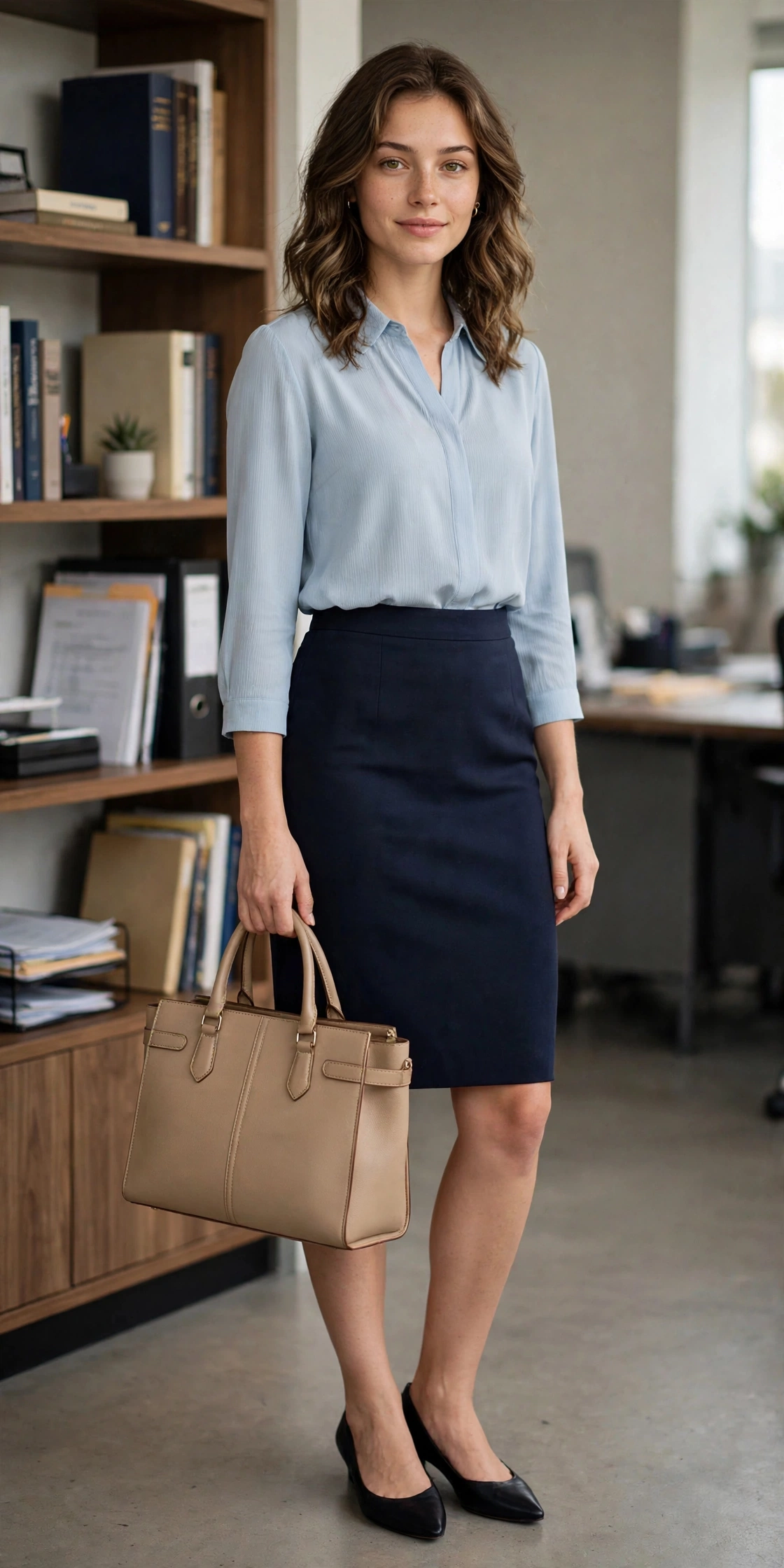
Crepe or silk-blend blouse + pencil skirt (knee length) or A-line skirt + polished shoes + cardigan or blazer. Tuck the blouse in fully and add a belt if the skirt has loops. This outfit looks polished and feminine without being fussy. For comfort, choose a skirt with a little stretch and a waistband that does not dig in when seated.
Business-Casual Outfit
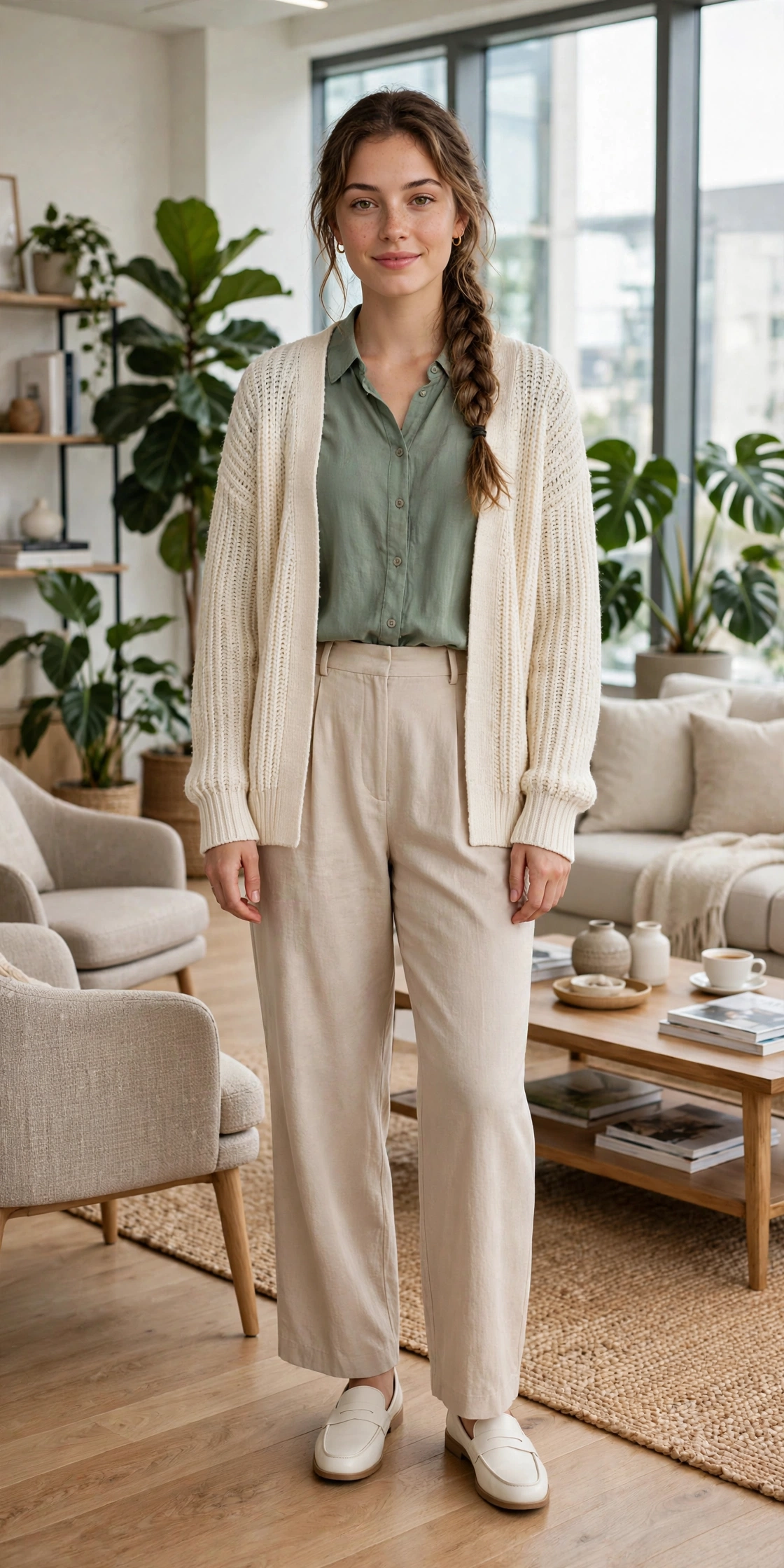
Soft knit or cotton-blend blouse + dark straight jeans or smart chinos (if your office allows them) + loafers + unstructured blazer or cardigan. Keep the blouse polished — opaque, neatly tucked or French-tucked, and free of wrinkles — so the outfit reads as business-casual rather than weekend-casual. A structured bag helps maintain the professional tone.
Warm-Weather Outfit
Short-sleeve or sleeveless blouse + lightweight tailored trousers or a midi skirt + polished sandals or loafers + light cardigan kept nearby. Choose breathable cotton, linen blends, or lightweight crepe. Keep a layer in your bag for air-conditioned rooms, and choose shoes that are polished rather than beach-style.
Cold-Weather Outfit
Long-sleeve blouse + wool-blend trousers or a skirt with tights + boots + wool coat. Layer a thin thermal or camisole under the blouse if needed, but make sure it does not show at the neckline or sleeves. A scarf can add warmth and color, but keep it simple if the blouse already has a tie neck or bold print.
For broader wardrobe building, the Women category and guides on Dresses complement this blouse guide, because the same principles of fit, fabric, and layering apply across tops and dresses.
Shoes, Bags, and Accessories
Shoes should match the formality of the blouse outfit. Pointed flats and loafers work for most office blouse outfits and are comfortable for walking and commuting. Low block heels add polish for meetings without the discomfort of high stilettos. Avoid very casual shoes, such as flip-flops or worn sneakers, with a polished blouse, because the contrast can make the outfit look unfinished.
Bags should be proportional and functional. A medium structured tote carries work essentials and looks intentional with a blouse and trousers or skirt. A crossbody bag works for lighter days. Avoid bags that are so large they overwhelm a delicate blouse, or so small they cannot carry what you need for work.
Accessories should be minimal and purposeful. A watch, small earrings, a delicate necklace, and a simple ring are usually enough. If the blouse has a tie neck, bow, ruffle, or bold print, skip a statement necklace and let the blouse be the focal point. If the blouse is simple and solid, a scarf, a brooch, or a slightly bolder earring can add personality without competing.
Common Mistakes to Avoid
Wearing a sheer blouse without a layer. Sheerness that is fine for evening wear can look unprofessional at work. Always check opacity in bright light and add a camisole or choose a different blouse if needed.
Ignoring button gaping. Gaping buttons distract from an otherwise polished outfit and can feel uncomfortable. Size up, tailor, use a hidden placket, or choose a different cut rather than hoping gaping will not be noticed.
Tucking a blouse that is too long or too bulky. Excess fabric at the waist creates a lumpy silhouette. Choose a blouse length that suits your tucking method, or have a tailor shorten a favorite blouse that is otherwise perfect.
Pairing a delicate blouse with heavy bottoms. A sheer chiffon blouse with heavy wool trousers can look unbalanced. Match fabric weights: light blouses with lighter trousers or skirts, structured blouses with structured bottoms.
Over-layering. A blouse plus a thick sweater plus a blazer plus a scarf can look bulky and feel hot indoors. Choose one main layer over the blouse, and keep additional layers light and removable.
Forgetting to check the back. Blouses can fit perfectly from the front and pull, bunch, or gap at the back. Always check the back view in a mirror, especially for button-up styles and fitted cuts.
Care Tips to Keep Blouses Looking New
Proper care extends the life of office blouses significantly. Wash blouses on a gentle, cool cycle when machine washing is allowed, and button them closed before washing to prevent snagging and button damage. Avoid high dryer heat, which can shrink cotton, damage delicate fabrics, and set wrinkles. Hang blouses to dry or tumble dry on low, then steam or press as needed.
Hang blouses on sturdy hangers that support the shoulders, and button the top button to help the collar keep its shape. For silk or delicate blouses, use padded hangers and garment bags for storage. Treat stains promptly, following the care label, rather than letting them set through repeated washing and drying.
Rotate your blouses so no single blouse is worn several days in a row. Rotation reduces wear, allows fabric to recover, and keeps your work wardrobe feeling fresh. If a blouse is a true favorite, consider buying a second in a different color only after you have confirmed fit and fabric through several full workdays.
Frequently Asked Questions
What is the best blouse color for a job interview?
White, light blue, or another soft neutral is usually the safest choice for an interview, because it looks clean, professional, and pairs with dark trousers or a skirt and a blazer. Make sure the blouse is opaque, well-fitting, and wrinkle-free on the day.
Should office blouses always be tucked in?
Not always. A full tuck is classic for tailored outfits, but a French tuck or a neatly untucked blouse can work in business-casual offices, especially with high-rise trousers or a defined hem. The key is that the tuck or untucked hem looks intentional, not accidental.
Can I wear a printed blouse to a conservative office?
Yes, if the print is small, subtle, and in muted colors, and the rest of the outfit is solid and tailored. Save large, bright, or high-contrast prints for more relaxed offices or casual days, and pair any printed blouse with solid bottoms, shoes, and bags.
How do I stop a blouse from coming untucked during the day?
Choose a blouse long enough to stay tucked when seated, wear high- or mid-rise bottoms with a waistband that holds the tuck, and consider a belt to anchor the tuck. Some people also use a bodysuit-style blouse or a shirt-stay accessory for very active days, though these are personal preferences rather than requirements.
What blouse fabric is best for hot offices or summer?
Breathable cotton, cotton blends, linen blends, and lightweight crepe are good summer choices. Avoid heavy satin, thick ponte, and non-breathable synthetics in hot offices, and keep a light cardigan nearby for air conditioning rather than choosing a heavy blouse for warmth.
Quick Checklist Before You Buy or Wear a Blouse to Work
- Shoulders sit at the natural shoulder edge; no drooping or pulling.
- Bust fits without button gaping or horizontal wrinkles.
- Length works for your preferred tucking method and stays in place when seated.
- Fabric is opaque in bright light and manageable to care for.
- Neckline and sleeves match your workplace dress code.
- You can pair the blouse with at least three bottoms you already own.
- Shoes, bag, and one layer complete the outfit without bulk or distraction.
A well-chosen blouse does not need to be expensive or trendy to work beautifully in the office. When fit, fabric, and styling align, a simple blouse becomes the foundation for many polished, comfortable workdays. Start with a reliable neutral, learn how it works with your trousers, skirts, and jackets, and build your collection from there.