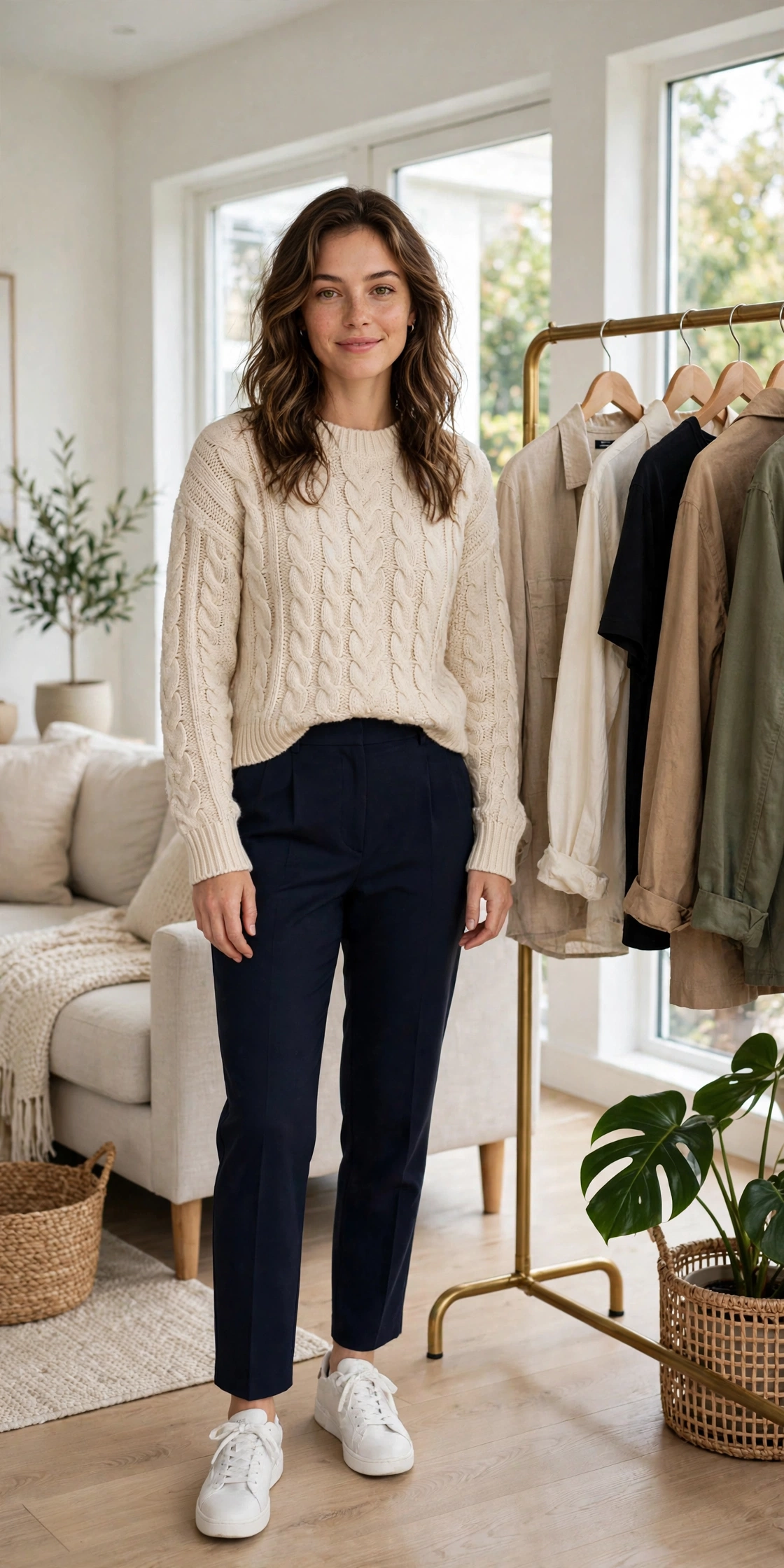
If you want a wardrobe that works, start with the basics. Women’s fashion basics USA shoppers return to again and again are not about owning more clothes. They are about owning the right clothes: pieces that fit well, go together, suit your daily life, and feel comfortable enough that you actually reach for them. A good wardrobe saves you time in the morning, reduces impulse buying, and makes getting dressed feel calm instead of stressful.
This guide explains how to build that kind of wardrobe step by step. You will learn how to define your lifestyle needs, choose fits that flatter without fuss, build a core set of essentials, use color and texture with confidence, create outfits for work, weekends, and evenings, and care for what you own so it lasts. There are checklists, tables, and practical examples throughout, so you can use this as a working plan rather than just inspiration.
Start With Your Real Life, Not a Fantasy Closet
The most common wardrobe mistake is buying for a life you do not live. A closet full of formal dresses will not help if you spend most days at a desk, running errands, and meeting friends for coffee. A closet full of loungewear will not help if you need polished outfits for the office four days a week.
Before you buy anything, write down how you spend a typical week. Be specific. How many days do you work in an office, work from home, or work in a hands-on job? How often do you attend formal events, go out in the evening, exercise, or spend time outdoors? What is the weather like where you live for most of the year? In much of the United States, that means planning for real seasonal change: warm summers, cool autumns, cold winters in many states, and unpredictable spring days.
A simple way to do this is to divide your week into percentages. For example, one person might be 50 percent work, 30 percent casual home and errands, 10 percent social outings, and 10 percent exercise and outdoor time. Another person might be 70 percent casual and 30 percent polished. There is no right answer. The point is to let those percentages guide how much of your wardrobe — and your budget — goes to each area.
Once you know your lifestyle split, look at what you already own with fresh eyes. Try everything on. Keep what fits, feels good, and matches your current life. Set aside what is damaged, uncomfortable, or no longer suits you. This audit is not about throwing everything away. It is about seeing the gaps clearly so new purchases fill real needs instead of duplicating what you already have.
Fit Comes First, Always
Fit is the foundation of women’s fashion basics USA. A simple, well-fitting top will look better than an expensive top that pulls, gaps, or hangs in the wrong places. Fit does not mean tight. It means the garment follows your body comfortably, moves with you, and sits where it is designed to sit.
Start with shoulders. For tops, blazers, and coats, the shoulder seam should sit close to the natural edge of your shoulder, not drooping down your arm or pulling inward. For trousers and jeans, the waistband should sit comfortably without digging in or needing a belt to stay up, and the rise should suit your torso length and comfort. For dresses, check that the waistline — if there is one — sits at your natural waist or where the design intends, and that the bodice does not gap at the bust or pull across the back.
How to Check Fit in the Store or at Home
Use this quick checklist every time you try something on:
- Can you sit, walk, bend, and raise your arms without pulling or discomfort?
- Does the fabric lie smooth across the bust, waist, and hips, without horizontal wrinkles that signal tightness?
- Do buttons stay closed without straining when you sit?
- Does the hem fall evenly, without riding up at the front or back?
- Can you wear the undergarments you would normally wear with it?
If a piece fails two or more of these checks, it is probably not the right size or cut for you, even if you love the color. A good tailor can adjust hems, take in a waist, or shorten sleeves, and those small alterations often turn a good piece into a favorite. What tailoring cannot easily fix is a fundamentally wrong shoulder fit or a bodice that is far too small, so prioritize those areas when you shop.
Understanding Your Measurements
You do not need to memorize fashion rules about body shape to dress well. You do need your own measurements, because sizes vary widely between brands in the USA. Measure your bust at the fullest point, your natural waist at the narrowest point of your torso, your hips at the fullest point, and your inseam from the inner leg to the ankle bone. Write them down and keep them in your phone. When you shop online, compare those numbers to the brand’s size chart rather than guessing based on the size you wore last year from a different brand.
Also pay attention to proportions that matter to you personally. If you have a long torso, you may prefer longer tops and high-rise trousers. If you have shorter legs, a cropped or ankle-length trouser may work better than a full-length style that pools at the shoe. These are practical adjustments, not rules. The goal is comfort and
balance, not fitting a single ideal shape.
The Core Wardrobe: Essentials That Earn Their Place
A core wardrobe is a small set of versatile pieces that mix and match easily. You do not need to buy all of them at once. Build gradually, starting with the items you will wear most often, and choose neutral colors first so each new piece works with what you already own.
Here is a practical starting list. Adapt it to your lifestyle percentages, your climate, and your workplace dress code.
| Essential piece | Why it works | What to look for |
|---|---|---|
| Well-fitting straight or slim jeans in a dark wash | Works for casual days, weekends, and smart-casual outings | Comfortable waist, no excessive fading, length that works with your usual shoes |
| Tailored trousers in black or navy | Polished for work and easy to dress down | Smooth fabric, clean drape, pocket placement that lies flat |
| A white button-up shirt or blouse | Pairs with jeans, trousers, and skirts | Opaque fabric, comfortable bust fit, collar that sits neatly |
| Two or three simple T-shirts or knit tops in neutral colors | Everyday layering and casual outfits | Soft cotton or cotton blend, neckline you like, hem that stays tucked or untucked as intended |
| A versatile midi or knee-length dress in a solid color | One-piece outfit for work, dinners, and events | Flattering neckline, comfortable waist, fabric that does not wrinkle excessively |
| A blazer or structured jacket | Instantly sharpens jeans, dresses, and trousers | Shoulder fit first, single or double button, length that balances your torso |
| A cardigan or knit jacket | Soft layering for offices, travel, and cool evenings | Fine knit that does not add bulk, length that works over tops and dresses |
| A coat suited to your climate | Daily outerwear for months of the year | Warmth, water resistance if needed, room for a layer underneath |
| Comfortable everyday shoes and one polished pair | Covers walking, work, and evenings | Support, correct width, heel height you can actually walk in |
| A simple everyday bag | Carries essentials without overwhelming your outfit | Size that fits your daily items, comfortable strap, secure closure |
Notice what is not on this list: statement pieces, trendy prints, and occasion-only outfits. Those have their place, but they should come after the core is solid. When your core works, adding one interesting piece — a printed scarf, a colored top, a textured skirt — instantly creates several new outfits, because it can pair with many neutrals you already own.
Choosing Quality Over Quantity
Quality does not always mean the highest price. It means fabric, construction, and finishing that will hold up to regular wear and washing. Before you buy, check the seams. They should be straight and secure, with no loose threads. Check buttons and zippers. They should feel sturdy and move smoothly. Hold the fabric up to the light. Very thin, sheer fabric in a piece that should be opaque is often a sign it will wear out quickly.
Read the care label before you buy, not after. If a top you plan to wear weekly is dry-clean only, ask yourself honestly whether you will maintain it. For everyday essentials, machine-washable fabrics often make more sense. Cotton, cotton blends, ponte knit, and many modern crepes offer a good balance of comfort, structure, and easy care.
A useful habit is cost-per-wear thinking. A pair of trousers you wear twice a week for two years costs far less per wear than a trendy top you wear twice, even if the trousers cost more at checkout. This does not mean you should never buy something fun. It means your core pieces deserve the larger share of your budget, because they do the most work.
Color: Start Neutral, Add Personality Gradually
Color is where many wardrobes go wrong, not because people choose bad colors, but because they choose too many unrelated colors at once. A wardrobe built on neutrals makes outfit building much easier.
Good neutral bases include black, navy, charcoal, white, cream, beige, grey, and olive. These colors pair with almost everything. Once you have neutrals in place, add two or three accent colors you genuinely love and that suit your skin tone and hair color. Warm or cool undertones matter less than whether you feel good wearing the color and whether it pairs with your neutrals. Try holding a garment near your face in natural light. If it makes you look tired or washed out, it may not be your best shade, even if you love it on the hanger.
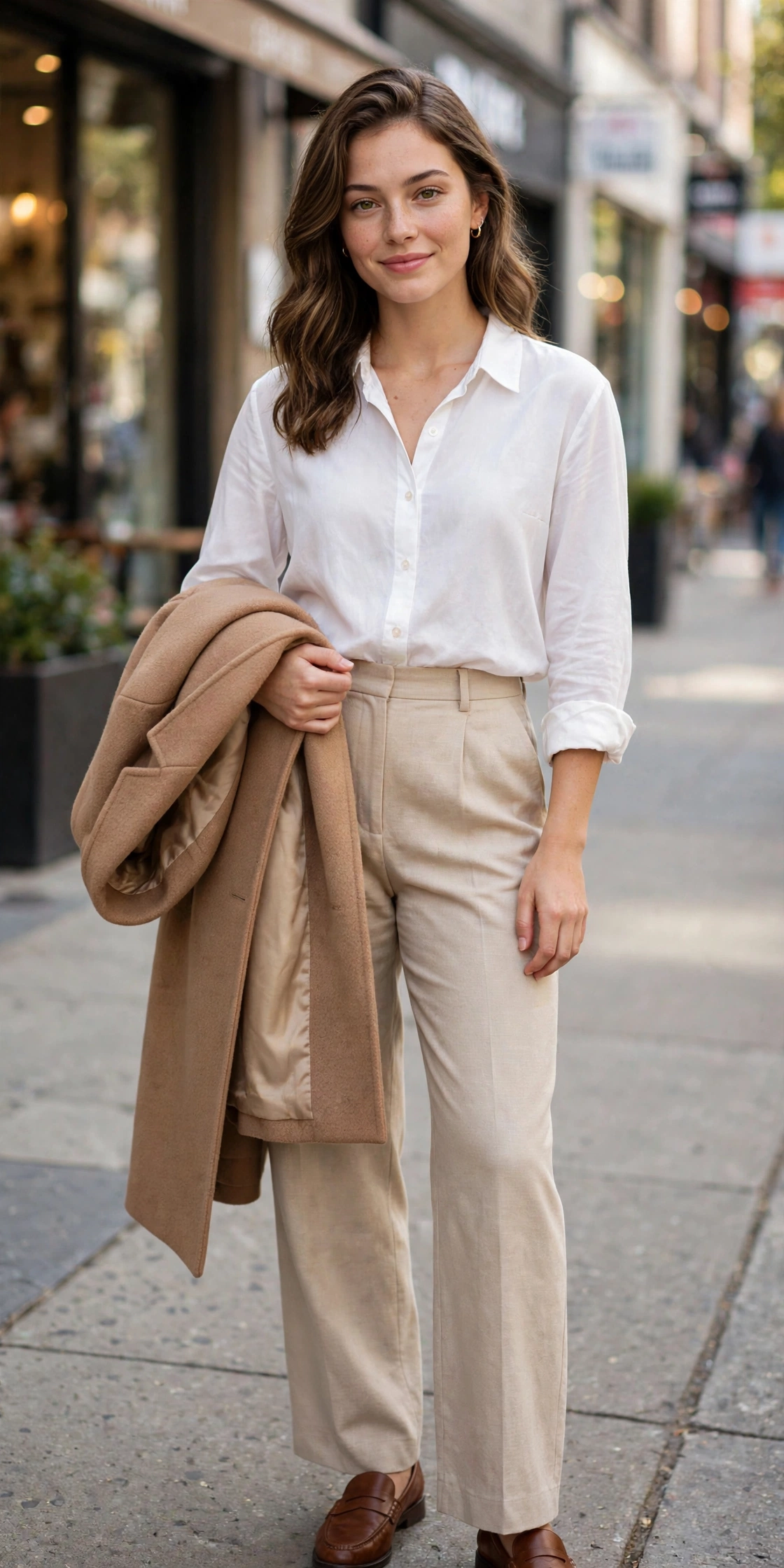
A simple formula for everyday outfits is to use one neutral base, one second neutral or soft color, and at most one accent. For example, navy trousers, a white blouse, and a rust or teal scarf. Or black jeans, a grey knit top, and a camel jacket. This keeps outfits looking intentional without requiring advanced styling skill.
Prints follow the same principle. Start with one print per outfit — a striped top with solid trousers, or a floral dress with solid shoes and a solid bag. Small, classic prints such as stripes, polka dots, and subtle checks are easier to mix than large, bold prints, and they tend to stay wearable for more seasons.
Texture and Layering: The Detail That Makes Basics Look Polished
Texture is what stops a neutral outfit from looking flat. Pair a smooth blouse with textured trousers, a soft knit with structured denim, or a matte dress with a leather bag. The contrast adds visual interest without adding color or pattern.
Layering is equally important, especially in the United States where indoor heating and air conditioning can differ sharply from outdoor temperatures. A good layering system is:
- A comfortable base layer, such as a fitted top or blouse.
- A middle layer for warmth or structure, such as a cardigan, blazer, or knit jacket.
- An outer layer for weather, such as a coat or trench.
Each layer should be easy to remove and carry. Avoid layers that are all the same weight and length, which can look bulky. Vary lengths slightly — for example, a top that ends at the hip, a cardigan that ends just below it, and a coat that ends at mid-thigh — to create a clean line.
For warmer climates or summer months, layering can be lighter: a sleeveless dress with a light cardigan for air-conditioned offices, or a linen shirt worn open over a simple top. The principle stays the same: layers should add comfort and flexibility, not complexity.
Building Outfits From Basics
Once you have core pieces, outfit building becomes a matter of combinations, not new purchases. Here are practical formulas you can adapt.
For Work
- Tailored trousers + white blouse + blazer + polished shoes. Swap the blouse color or add a scarf for variety.
- Midi dress + cardigan or blazer + simple shoes. This is a complete outfit in two or three pieces, ideal for busy mornings.
- Dark jeans (if your workplace allows them) + structured top + blazer. Keep shoes and bag polished so the outfit reads as smart-casual rather than weekend-casual.
If you need more work outfit ideas, explore the Women category and related guides on Dresses and Tops and Blouses, which cover fit and styling for those specific pieces in more depth.
For Weekends and Errands
- Straight jeans + simple T-shirt or knit top + comfortable shoes + light jacket. Add a crossbody bag for hands-free errands.
- Casual dress + sandals or sneakers + denim jacket in warmer months. This is comfortable, put-together, and easy to adjust for temperature.
- Comfortable trousers or leggings-style knit trousers (not workout leggings) + longer tunic top + supportive shoes. The key is that the top provides coverage and the trousers look intentional, not like gym wear.
For Evenings and Social Outings
- Black trousers or a midi skirt + a slightly dressier top + heeled or polished flat shoes + a small bag.
- A solid dress + a statement earring or scarf + a structured jacket. One dressier element is usually enough; you do not need to change everything.
- Dark jeans + a silky or textured blouse + polished shoes. This formula works for dinners, gatherings, and casual celebrations.
A helpful weekly habit is to plan outfits the night before, especially for workdays. It takes five minutes and removes morning decision fatigue. Lay out the full outfit, including shoes and bag, and check that each piece is clean and ready. Over time you will learn which combinations you reach for most, and which pieces rarely get worn — useful information for future shopping.

Common Mistakes to Avoid
Even a good wardrobe can be undermined by a few repeated habits. Watch for these:
Buying the same thing repeatedly. If you own five similar black tops, you do not need a sixth unless one is worn out. Variety in neckline, sleeve length, or fabric is more useful than duplication.
Keeping clothes that do not fit in the hope they will later. Clothes should fit the body you have now. Keeping too-small or too-large pieces clutters your closet and makes it harder to see what you actually have.
Ignoring shoes and bags. Worn-out shoes or a damaged bag can make an otherwise polished outfit look unfinished. Invest in shoe care — cleaning, polishing, and resoling when needed — and replace bags when straps or zippers fail.
Following every trend. Trends can be fun, but a wardrobe built entirely on trends dates quickly and rarely mixes well. If you love a trend, add it as one accent piece paired with your basics, rather than rebuilding your closet around it.
Forgetting comfort. If you are tugging, adjusting, or counting the hours until you can change, the outfit is not working, no matter how good it looks in a mirror. Comfort and style are not opposites. The best basics deliver both.
Fabric Guide: What to Choose and Why
Fabric affects comfort, drape, warmth, and care. Here is a plain-language overview of common choices for everyday women’s clothing in the USA:
- Cotton: Breathable, soft, and easy to wash. Great for T-shirts, shirts, and casual dresses. Can wrinkle, so look for cotton blends if you prefer a smoother finish.
- Linen: Very breathable and ideal for hot weather. Naturally wrinkles, which is part of its relaxed look. Best for summer tops, trousers, and dresses.
- Wool and wool blends: Warm and structured. Good for coats, blazers, and winter trousers. Many wool pieces need gentle washing or dry cleaning, so check the label.
- Ponte knit: A thick, stable knit with stretch. Holds its shape well and works beautifully for trousers, dresses, and jackets that need structure without stiffness.
- Jersey knit: Soft and stretchy. Comfortable for T-shirts, casual dresses, and layering tops. Choose a heavier jersey for a more polished drape.
- Crepe: Smooth, slightly textured, and drapes well. Common for blouses, dresses, and work trousers. Often wrinkle-resistant, which is useful for travel and long workdays.
- Denim: Durable and versatile. Dark-wash denim looks more polished; lighter washes read more casual. Stretch denim adds comfort but can lose shape over time if the stretch content is very high.
When in doubt, touch the fabric, move in it, and sit in it before buying. A fabric that feels stiff, scratchy, or overly clingy in the store is unlikely to feel better at home.
Care: Make Good Clothes Last Longer
Care is part of fashion basics, because even the best pieces wear out quickly if they are washed and stored poorly. A few habits make a large difference.
Wash less often and more gently. Many tops, trousers, and jeans do not need washing after every single wear unless they are soiled or sweaty. Airing a garment, spot-cleaning a small mark, and washing on a cool, gentle cycle will extend its life. Turn jeans and printed pieces inside out before washing to reduce fading.
Dry with care. High heat can shrink cotton, damage elastic, and fade colors. Air-drying knitwear flat helps it keep its shape. If you use a dryer, use a lower heat setting and remove pieces while slightly damp.
Store thoughtfully. Hang structured pieces such as blazers, shirts, and dresses on sturdy hangers. Fold heavy knitwear rather than hanging it, because hanging can stretch the shoulders. Keep shoes with shoe trees or stuffed with tissue to hold their shape, and store bags stuffed and upright rather than flattened under other items.
Do a seasonal review twice a year. At the start of spring and autumn, try on seasonal pieces, repair loose buttons or hems, and note what needs replacing before the season is in full swing. This prevents last-minute panic buying and keeps your wardrobe functional year-round.
Shopping Smart in the USA: A Practical Approach
You do not need a large budget to build a good wardrobe, but you do need a plan. Start with a list based on your audit and lifestyle percentages. Set a realistic budget for the season, and prioritize core pieces first.
Try before you buy when you can. In-store trying helps you judge fit, fabric, and comfort quickly. When shopping online, order from retailers with clear size charts and reasonable return policies, and try everything on at home with the shoes and undergarments you will actually wear with it. Keep tags on until you are sure.
Avoid shopping when you are rushed, tired, or emotional, because those are the moments when impulse purchases happen. A useful rule is to wait 48 hours before buying a non-essential piece. If you still want it and can name at least three outfits you would wear it with, it is more likely to be a useful addition.
Finally, remember that building a wardrobe is gradual. No one needs to replace everything at once. Add one or two well-chosen pieces at a time, wear them, learn what works, and adjust. Over a year, those steady choices add up to a wardrobe that genuinely works for your life.
Frequently Asked Questions
How many clothes do I actually need?
There is no universal number. A functional core wardrobe for many people is around 25 to 40 pieces, excluding underwear, sleepwear, and workout clothes, plus shoes and outerwear. The right number depends on your lifestyle, laundry frequency, climate, and workplace. Focus on versatility and fit rather than hitting a specific count.
What colors should I start with if I am rebuilding from scratch?
Start with black, navy or charcoal, white or cream, and one mid-neutral such as grey or beige. Add accent colors only after those bases are in place. This makes mixing and matching far easier and reduces the chance of buying pieces that only work with one other item.
How do I know if something fits well online without trying it on?
Compare your measurements to the brand’s size chart, read the product measurements if provided, check reviews for comments on whether the item runs small or large, and confirm the return policy before ordering. When the item arrives, try it on immediately with appropriate shoes and undergarments, and use the fit checklist in this guide.
Should I follow body-shape rules?
Use them only as loose suggestions, not rules. What matters more is your own measurements, comfort, proportions, and personal taste. A style that is supposed to suit a certain shape is not useful if you dislike it or find it uncomfortable. Trust fit and how you feel in the garment.
How often should I update my wardrobe?
Do a light review each season and a fuller review once or twice a year. Replace worn-out core pieces as needed, and add new pieces only when they fill a gap or replace something. A wardrobe that works does not need constant updating; it needs maintenance and occasional thoughtful additions.
Your Simple Starting Checklist
- Write down your weekly lifestyle percentages.
- Audit your closet and note real gaps.
- Record your measurements and keep them in your phone.
- Build core neutrals first: jeans, trousers, white blouse, simple tops, versatile dress, blazer, cardigan, coat, everyday shoes, polished shoes, everyday bag.
- Add color and print gradually, one accent at a time.
- Use the fit checklist for every new purchase.
- Plan outfits the night before on busy days.
- Care for clothes gently and review seasonally.
A wardrobe that works is not about perfection or a large closet. It is about fit, versatility, and honesty about your daily life. Start with basics, choose well, and let your style grow from pieces you love wearing. That is the heart of women’s fashion basics, and it is a foundation you can build on for years.